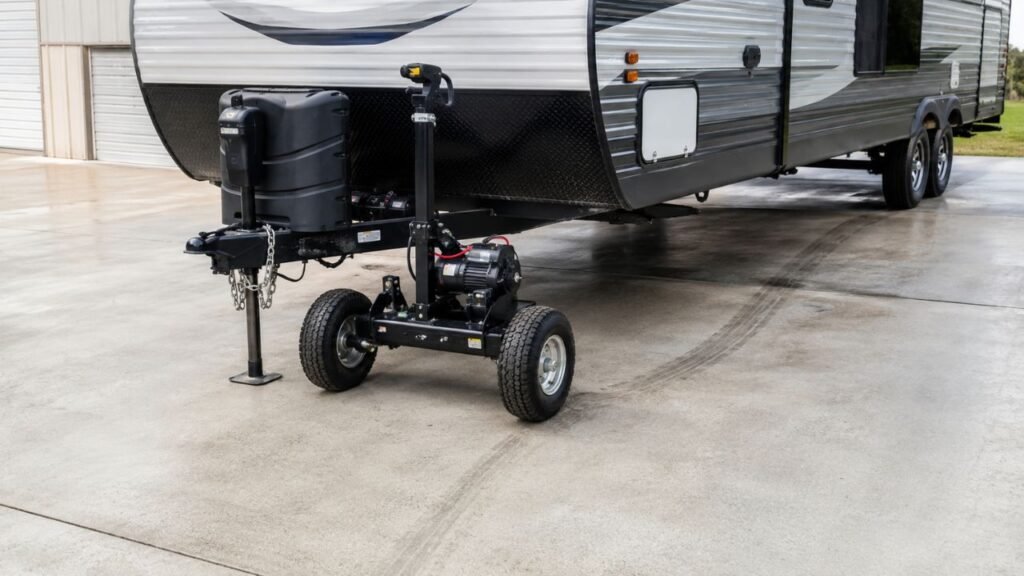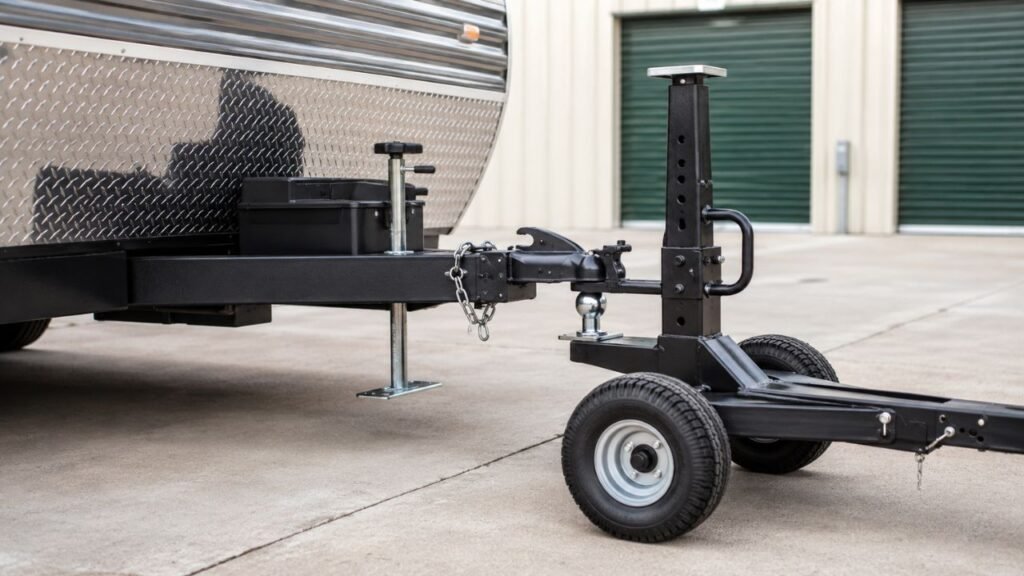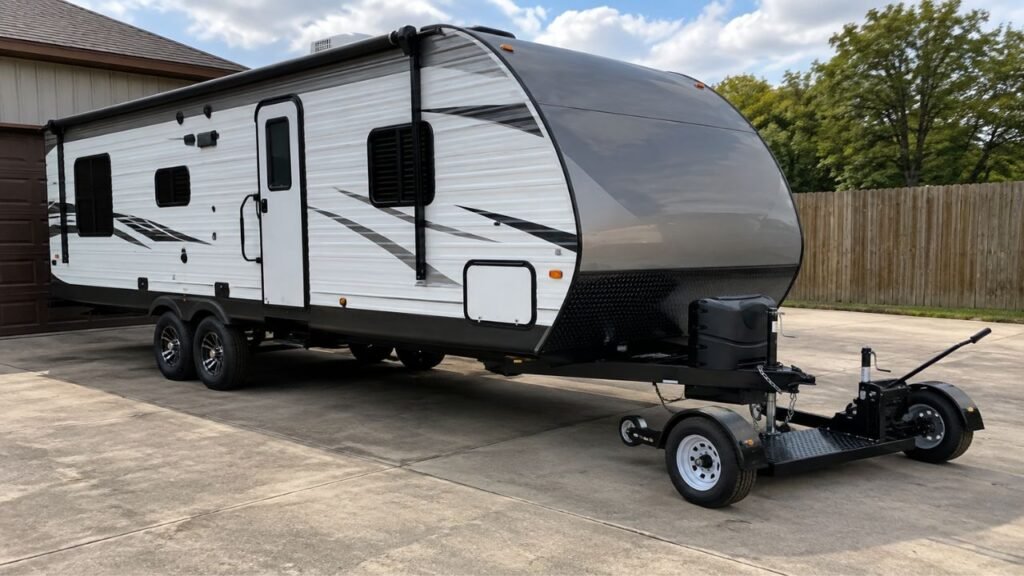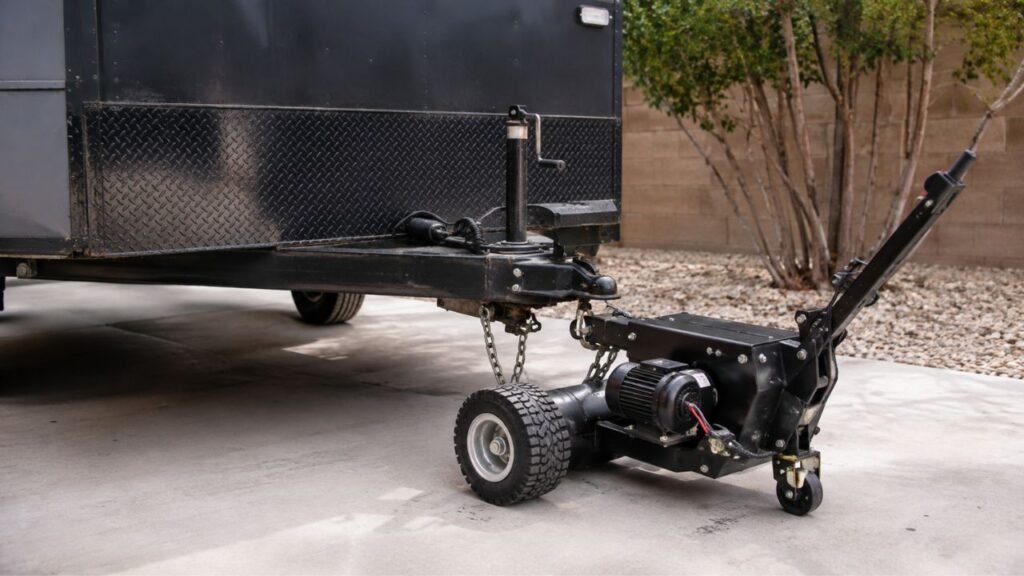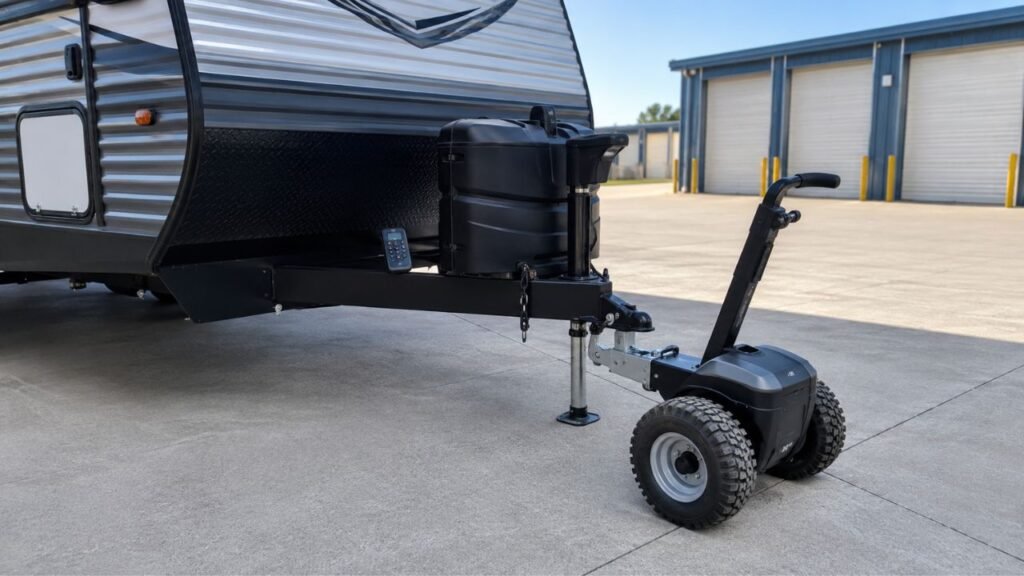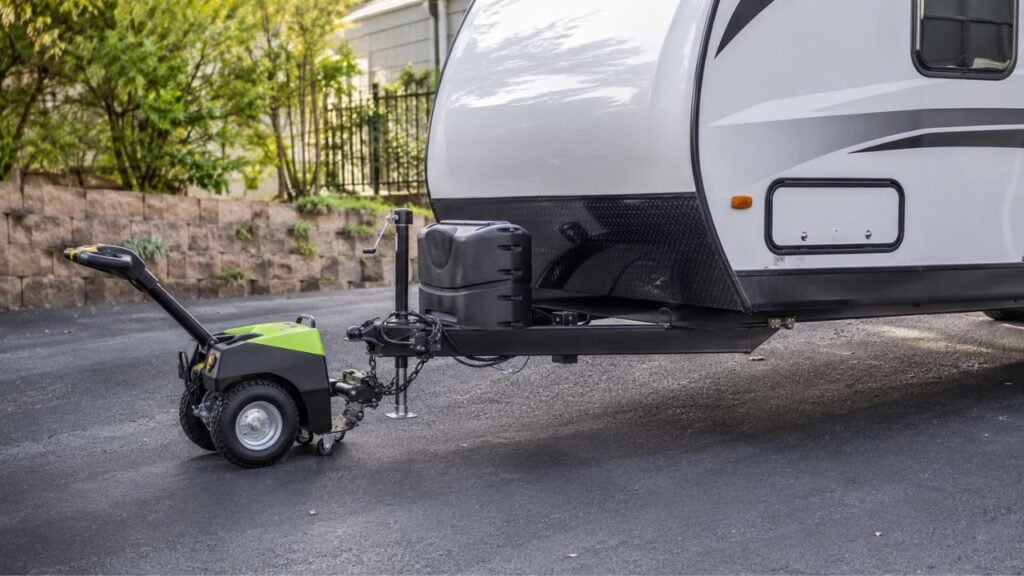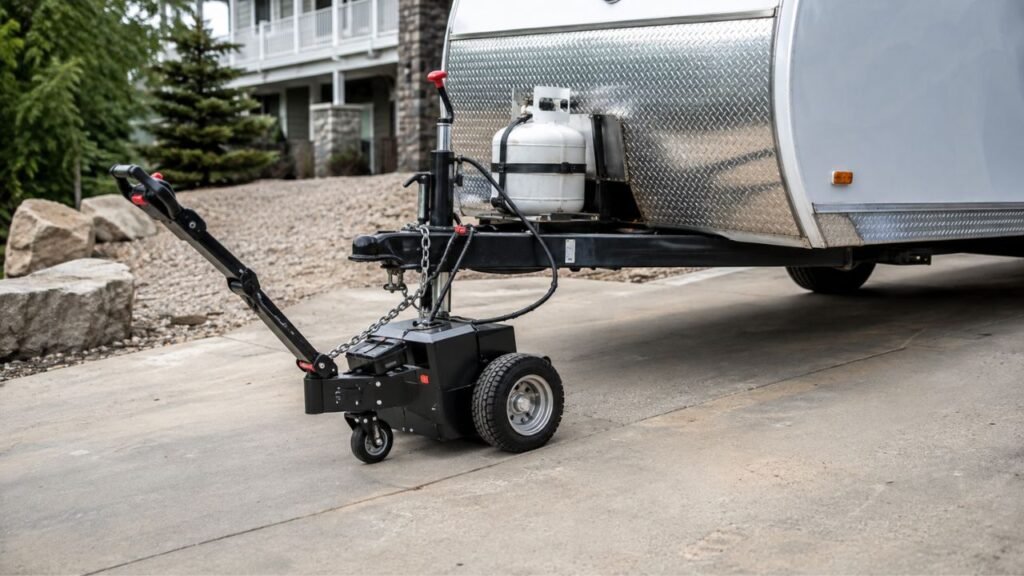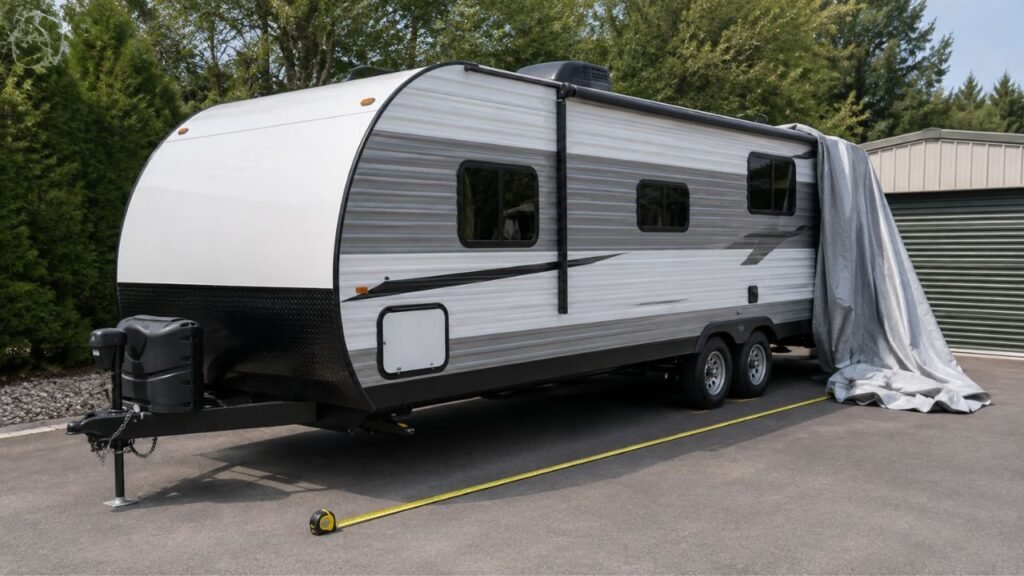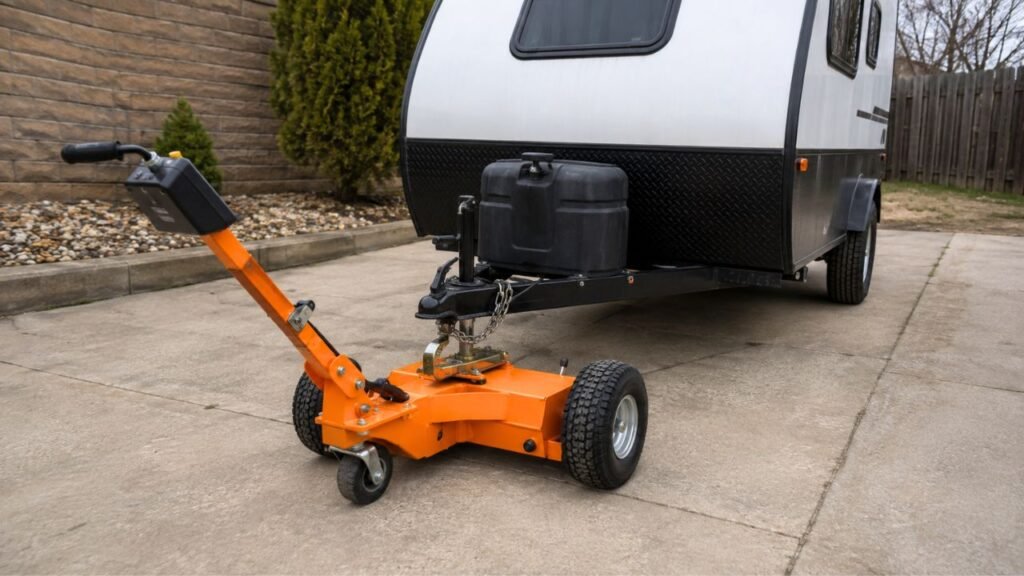
A trailer dolly usually pulls to one side because of uneven tire pressure, unequal weight distribution, poor wheel or caster alignment, an off-center hitch connection, or uneven ground. A damaged wheel, excessive tongue weight, or resistance from the trailer itself can also make the dolly veer instead of tracking straight.
The good news is that most pulling problems are easy to narrow down. I’ll walk you through the symptoms, possible causes, and practical fixes so you can determine whether the problem comes from your dolly, trailer, load, or driveway.
Key Takeaways
- A trailer dolly should generally track straight on flat, hard ground.
- Unequal pneumatic tire pressure is one of the easiest problems to check.
- Uneven trailer loading can place more force on one dolly wheel.
- Excessive or insufficient tongue weight can affect steering and traction.
- A crooked caster can make the dolly consistently veer sideways.
- Sloped pavement can make a perfectly working dolly drift downhill.
- Test the dolly without the trailer to isolate mechanical problems.
- A dragging trailer brake or wheel bearing can mimic a dolly problem.
- Never exceed your dolly’s rated tongue-weight or trailer capacity.
- Bent, loose, cracked, or badly worn parts should be repaired before use.
Is It Normal for a Trailer Dolly to Pull to One Side?
A small amount of sideways drift can happen, particularly on sloped pavement, rough concrete, gravel, or grass. However, a dolly that consistently pulls toward the same side on smooth, level pavement deserves inspection.
First, pay attention to exactly what the dolly is doing.
A dolly that pulls sideways wants to travel left or right even when you steer straight. A dolly that leans sideways may have unequal loading or a tire problem.
A dolly that is simply hard to steer might have excessive tongue weight. Tandem-axle trailers can also resist tight turns because their tires scrub across the pavement.
Those symptoms may feel similar from the handle, but they point toward different problems.
If you’re unsure where to begin, testing the unloaded dolly on level concrete is usually the fastest way to narrow things down.
Trailer Dolly Pulling to One Side: Quick Symptom and Fix Guide
Before taking anything apart, compare what you’re experiencing with the table below. It can point you toward the most likely area to inspect first.
| Trailer Dolly Pulling Symptom | Most Likely Cause of Side Pull | What to Inspect First | Recommended Trailer Dolly Fix |
| Pulls constantly toward one side | Tire, caster, or hardware problem | Dolly wheels and caster | Inflate, clean, adjust, or repair |
| One tire looks more compressed | Unequal tire pressure or loading | Tire PSI and weight balance | Match specified PSI and rebalance load |
| Pull starts after connecting trailer | Trailer load or hitch setup | Coupler and tongue load | Recenter connection and redistribute weight |
| Pull changes on another driveway | Sloped or uneven ground | Surface beneath dolly | Move to flatter, harder ground |
| One drive wheel spins | Unequal traction | Surface and tongue load | Improve traction and weight distribution |
| Dolly is difficult to turn both ways | Excessive tongue weight | Dolly’s tongue-weight rating | Reduce or reposition trailer load |
| Dolly pulls without a trailer | Dolly mechanical problem | Wheels, caster, axle, and frame | Inspect, adjust, or repair components |
| Trailer resists movement on one side | Trailer wheel or brake issue | Trailer tires, brakes, and bearings | Inspect affected wheel assembly |
Why Does a Trailer Dolly Pull to One Side?
Several problems can make a trailer dolly steer unevenly. I recommend starting with the simple checks before assuming the dolly has a serious mechanical problem.
Unequal Tire Pressure Between the Dolly Wheels
If your dolly uses pneumatic tires, check both pressures first.
A tire with lower pressure compresses more under the trailer’s tongue weight. That changes its rolling resistance and can make one side harder to move.
The result is a dolly that constantly wants to turn toward one side.
Don’t judge pressure only by looking at the tires. A heavily loaded tire can appear slightly flattened even when properly inflated.
Use a reliable tire-pressure gauge and compare both tires.
Follow the pressure listed by the dolly manufacturer or printed on the tire where appropriate. Don’t assume every trailer dolly uses the same PSI.
Some dollies use solid rubber tires instead. In that case, pressure isn’t the issue, so move on to wear, damage, or wheel resistance.
One Dolly Tire Is Worn, Damaged, or Different in Size
Matching tire pressure won’t help if the tires themselves aren’t equal.
Check for:
- Uneven tread wear
- Flat spots
- Cracked or damaged tires
- Bent wheel rims
- Mismatched replacement tires
- Debris wrapped around an axle
Try rotating each wheel by hand while the dolly is unloaded.
Both should turn reasonably freely.
If one wheel feels noticeably harder to rotate, inspect its bearing, bushing, axle, and mounting hardware.
A small difference in resistance can become much more noticeable once the trailer’s tongue weight is sitting on the dolly.
The Trailer Is Loaded Heavier on One Side
Trailer weight isn’t only about front-to-back balance.
Side-to-side balance also matters when maneuvering with a dolly.
For example, you may have a heavy battery bank, generator, toolbox, water tank, camping equipment, or cargo positioned mainly on one side.
That uneven load can transfer additional force through the trailer tongue.
One dolly wheel may then carry more load than the other.
Check the trailer before assuming the dolly needs repair.
Look for heavy items near one wall and make sure loose cargo hasn’t shifted during travel.
Whenever possible, redistribute heavy gear more evenly from left to right.
Make sure everything is secured before moving the trailer again.
Tongue Weight Is Too High or Too Low for the Dolly
Tongue weight has a major effect on how a trailer dolly handles.
Too much tongue weight can make a manual dolly extremely difficult to steer. It also increases the force on its tires, caster, hitch post, and frame.
An electric dolly may still move the trailer, but turning can become harder.
Too little usable weight can create another problem.
Some powered dollies depend on enough downward force over the drive tires to maintain traction. If the setup doesn’t load those tires correctly, one can slip instead of pushing the trailer evenly.
Don’t rely on a general percentage alone when choosing a dolly.
Your trailer still needs proper loading, but your dolly also has its own maximum tongue-weight rating and operating requirements.
Compare your actual tongue weight with the specifications for your specific dolly.
If you’re close to the limit, weighing the tongue is better than guessing.
The Dolly Is Not Centered or Level Under the Coupler
Look closely at how the dolly connects to your trailer.
The hitch ball or attachment point should sit correctly beneath the coupler.
Problems can occur if:
- The hitch post is adjusted unevenly.
- The coupler sits crooked on the ball.
- An adapter isn’t seated properly.
- The hitch ball is positioned off center.
- A locking pin isn’t fully engaged.
- The trailer tongue already leans before movement.
A crooked connection places sideways force on the dolly before you even begin moving.
Lower the trailer carefully and confirm that everything sits naturally without twisting the dolly frame.
If your dolly uses an adjustable ball mount, verify that its adjustment hardware is completely secure.
The Swivel Caster Is Crooked, Binding, or Damaged
Many three-wheel trailer dollies use a smaller swivel caster for steering or support.
That caster can create surprisingly strong pulling if it isn’t moving correctly.
Before starting, look at its orientation.
If the caster begins almost sideways, it may resist movement until it swivels into position. On a heavily loaded dolly, that resistance can feel like a steering problem.
Inspect the caster for:
- Gravel or debris
- Bent mounting forks
- Loose mounting bolts
- Worn bearings
- Rust
- Damaged tread
- Restricted swivel movement
With the dolly unloaded, turn the caster manually.
It should swivel smoothly without repeatedly catching.
Don’t force a heavily loaded dolly against a caster that refuses to turn.
The Axle, Frame, or Wheel Mount Is Loose or Bent
Trailer dollies handle considerable downward force.
Over time, hardware can loosen, particularly if the dolly frequently travels over cracks, gravel, curbs, or uneven concrete.
Inspect the main structural areas carefully.
Look at:
- Axle bolts
- Wheel fasteners
- Caster mounting bolts
- Hitch-post hardware
- Handle attachment
- Frame welds
- Adjustment pins
Compare both sides of the dolly.
If one wheel appears farther forward or backward than the other, something could be bent or improperly assembled.
Don’t keep tightening fasteners beyond their intended specifications.
A damaged bolt, distorted frame, or worn mounting hole may need replacement instead.
The Ground Is Sloped, Cracked, Soft, or Uneven
Sometimes nothing is wrong with your dolly.
The ground itself may be steering it.
Most residential driveways aren’t perfectly level. They often slope away from a garage for drainage.
When several hundred pounds of tongue weight sit on relatively small dolly tires, even a modest slope can become noticeable.
The dolly naturally wants to move toward the lower side.
Other troublesome surfaces include:
- Broken pavement
- Concrete expansion joints
- Loose gravel
- Grass
- Soft soil
- Paver gaps
- Deep cracks
- Ruts
Try moving the trailer onto flat concrete and test again.
If the pulling disappears, your dolly probably has a surface or traction problem rather than an alignment problem.
One Drive Wheel Has Less Traction on an Electric Dolly
Electric trailer dollies introduce another possible cause: unequal traction.
One drive tire may grip while another slips.
This often happens on:
- Wet concrete
- Dusty pavement
- Loose gravel
- Damp grass
- Soft soil
Trailer loading can also affect traction.
If the tongue weight isn’t positioned correctly over the dolly’s drive system, one tire may receive less usable downward force.
Watch the wheels while moving slowly.
If one wheel spins while the trailer barely moves, stop before digging a rut or overheating the drive system.
Move to firmer ground and recheck the trailer’s weight setup.
The Dolly Is Overloaded
A trailer dolly may physically connect to a trailer that it shouldn’t safely move.
Always check the manufacturer’s ratings.
Pay attention to both:
- Maximum trailer weight
- Maximum tongue weight
Don’t assume a high trailer-weight rating means the dolly can support unlimited weight at the hitch.
The maximum capacity may also assume ideal conditions, such as firm, level pavement.
Slopes, loose surfaces, obstacles, and sharp turns make the job more demanding.
If your dolly feels unstable, overloaded, or extremely difficult to control, stop instead of forcing it forward.
The Trailer Itself Is Dragging on One Side
This problem gets overlooked surprisingly often.
Your trailer dolly might be working perfectly while the trailer creates the sideways pull.
Possible causes include:
- A partially engaged trailer brake
- A sticking brake assembly
- Tight wheel bearings
- A damaged trailer tire
- A tire rubbing against something
- A wheel sitting in a rut
- An obstruction beneath a tire
- Surge-brake resistance while reversing
Here’s an easy clue.
If the dolly rolls straight without the trailer but immediately pulls once connected, inspect the trailer before adjusting the dolly repeatedly.
Stand beside the trailer while someone moves it very slowly, if you can do so safely.
Watch whether one wheel seems reluctant to rotate.
How Can I Tell Whether the Problem Is the Dolly or the Trailer?
You don’t need to replace parts randomly. A simple isolation test can usually tell you which side of the setup deserves attention.
- Move the trailer and dolly to firm, level ground.
- Chock and secure the trailer before disconnecting anything.
- Inspect both dolly tires for damage and uneven wear.
- Check pneumatic tire pressures with a gauge.
- Inspect the caster and confirm it swivels freely.
- Check the axle, frame, hitch post, and mounting hardware.
- Move the unloaded dolly slowly across the level surface.
- Watch whether it consistently veers toward the same side.
- If it pulls unloaded, focus on the dolly itself.
- If it tracks straight, connect the trailer correctly.
- Test again at very low speed.
- If pulling starts only when loaded, check cargo balance and tongue weight.
- Inspect the trailer’s tires, brakes, and bearings if necessary.
- Repeat the test in the opposite direction when safe.
That last step can be especially useful.
Imagine the dolly pulls toward the left when moving out of your driveway. Turn the setup around and test from the opposite direction.
If it now drifts toward the opposite physical side but still heads downhill, the driveway slope is probably influencing it.
If it always pulls toward the same dolly wheel regardless of direction, focus on that wheel, caster, axle, or frame.
How to Fix a Trailer Dolly That Keeps Veering Sideways
Once you’ve narrowed down the likely cause, make one correction at a time. That makes it much easier to determine which change actually solved the problem.
Set Both Dolly Tires to the Correct Pressure
Check pneumatic tires while they’re cold.
Inflate them according to the specification for your dolly or tire.
Make sure both are operating at the intended pressure.
Don’t intentionally lower one tire’s pressure to “counter” the pulling. That simply hides the real problem and can increase tire wear.
Reposition Uneven Trailer Cargo
Look inside the trailer and identify the heaviest items.
Move cargo away from the overloaded side when practical.
Keep heavier objects low and properly secured.
If you have permanently mounted equipment, such as batteries or tanks, you may not be able to completely equalize side weight.
In that situation, confirm the imbalance isn’t excessive and make sure the dolly remains within its rated limits.
Verify Tongue Weight Is Within the Dolly’s Limits
Check your trailer’s actual tongue weight if steering becomes unusually heavy.
Don’t guess based on the trailer’s empty weight.
Camping equipment, propane cylinders, batteries, water, tools, and cargo can significantly change tongue weight.
Compare the measured figure with your trailer dolly’s specification.
If necessary, reposition trailer cargo while maintaining safe trailer loading.
Level and Center the Dolly Connection
Disconnect the trailer safely and inspect the hitch setup.
Make sure the ball or attachment post is centered.
Adjust the dolly to the correct coupler height.
Reconnect everything and make sure the coupler fully locks.
Check all required pins and retaining clips before movement.
The dolly shouldn’t appear twisted beneath the trailer tongue.
Straighten and Service the Caster Wheel
Remove dirt, stones, string, and other debris around the caster.
Check whether the wheel rolls and swivels freely.
Position the caster so it can naturally follow the intended direction before applying heavy force.
Replace damaged caster parts instead of repeatedly forcing them straight.
Inspect and Tighten Dolly Hardware
Check accessible fasteners before every demanding move.
Pay particular attention to anything supporting the axle, wheels, caster, or hitch assembly.
If hardware repeatedly works loose, don’t simply tighten it before every trip.
Find the underlying reason.
The mounting hole, bolt, bushing, or frame section may already be damaged.
Move the Trailer to a Firmer, Flatter Surface
If possible, move your positioning operation onto concrete or asphalt.
Loose gravel and soft grass increase rolling resistance dramatically.
Sometimes placing the trailer correctly requires repositioning the tow vehicle first so the dolly only handles the final few feet.
That’s safer than trying to overpower a surface the dolly wasn’t designed to handle.
Inspect the Trailer Wheels If the Dolly Checks Out
If every dolly component looks good, shift your attention to the trailer.
Check:
- Tire inflation
- Wheel rotation
- Brake release
- Bearing condition
- Tire clearance
- Ground obstruction
One resistant trailer wheel can easily steer the entire setup sideways.
Why Does My Electric Trailer Dolly Pull to One Side?
Electric dollies can experience the same tire, weight, caster, and surface problems as manual units. However, their drive system introduces a few additional things worth checking.
Unequal Drive-Wheel Traction
Look at both drive tires while moving slowly.
If one slips, determine whether the surface underneath it is wet, loose, dusty, or soft.
Also check whether that tire is worn differently.
Uneven tongue loading can sometimes reduce available traction on one side.
Low Power Can Make Poor Traction More Noticeable
A low battery doesn’t automatically make every electric dolly turn sideways.
However, reduced available power can make an already difficult setup more obvious.
An overloaded dolly struggling on gravel may become harder to control as battery performance drops.
Recharge the battery fully before diagnosing an apparent drive-system problem.
A Drive Wheel or Caster May Be Binding
Disconnect the trailer safely and inspect the moving components.
Look for gravel, damaged bearings, bent mounts, or anything preventing free wheel movement.
One drive wheel that encounters greater mechanical resistance can make the dolly feel like it’s constantly turning.
The Dolly May Be Too Heavily Loaded for the Surface
A powered dolly may handle its rated load comfortably on concrete but struggle on loose gravel.
The trailer hasn’t become heavier.
The amount of resistance the drive system must overcome has increased.
Don’t treat advertised capacity as proof that the dolly can move the same trailer across every surface or grade.
When an Electrical or Drive-System Problem Needs Service
Stop using the dolly if you notice abnormal electrical or drive behavior.
Examples include:
- One powered wheel stops driving.
- The motor makes new grinding noises.
- The dolly repeatedly shuts down.
- Wiring insulation is damaged.
- The control switch behaves unpredictably.
- A drive component becomes unusually hot.
- The dolly suddenly pulls despite a correct mechanical setup.
Those problems are better handled according to your manufacturer’s troubleshooting procedure.
Why Does My Manual Trailer Dolly Keep Pulling Sideways?
Manual trailer dollies are especially sensitive to your pushing angle, tire condition, ground surface, and tongue weight.
If you apply more force with one arm, you may unintentionally steer the dolly slightly sideways. This becomes more noticeable when moving a heavy trailer slowly.
Try standing squarely behind the handle and applying smooth, even pressure.
Avoid trying to make large steering corrections while the trailer is stationary.
Heavy tandem-axle trailers can resist tight turns because their tires must scrub sideways slightly. Starting the trailer moving before making a gradual correction can make steering easier.
Also inspect the two main dolly wheels.
A small difference in tire pressure or rolling resistance is much easier to feel on a manual dolly because your arms are providing the driving force.
Why Does My Trailer Dolly Pull Only on Gravel or Grass?
Gravel and grass create much more rolling resistance than concrete.
The bigger problem is that the resistance usually isn’t equal.
One dolly tire may sink slightly deeper into the ground. That tire now requires more force to move, so the dolly turns toward it.
Loose gravel can produce a similar effect.
One tire may climb over stones while the other digs into them.
Powered dollies can also lose traction, particularly when the surface shifts underneath the drive wheel.
If your dolly works properly on concrete but pulls badly on grass or gravel, don’t immediately adjust its alignment.
The terrain is probably the larger factor.
Use a firmer route when possible and stay within the manufacturer’s approved terrain limits.
Why Is My Trailer Dolly Hard to Turn but Still Tracks Straight?
A dolly that’s difficult to steer isn’t necessarily defective.
High tongue weight can place tremendous pressure on the dolly tires.
The contact area between the tires and pavement increases, making steering harder.
Tandem-axle trailers create additional resistance during tight turns because their tires don’t all follow the same arc.
This can make the trailer feel reluctant to pivot.
Try making wider turns instead of rotating the trailer sharply in place.
Whenever possible, begin moving slowly before steering.
However, extremely heavy steering should still prompt you to verify tongue weight, tire condition, and dolly capacity.
When Should You Stop Using the Trailer Dolly?
Most tracking problems can be diagnosed safely, but some symptoms mean you should stop moving the trailer until the problem is corrected.
- One dolly wheel visibly carries much more weight.
- A wheel refuses to rotate freely.
- The caster repeatedly locks sideways.
- The axle or frame looks bent.
- A weld appears cracked.
- Fasteners repeatedly loosen.
- The hitch connection shifts during movement.
- The dolly makes new grinding or knocking noises.
- One powered wheel suddenly stops driving.
- Electrical wiring appears damaged.
- The trailer starts rolling faster than you can control.
- The surface exceeds the dolly’s recommended slope.
- Trailer or tongue weight exceeds the dolly’s rated capacity.
A trailer may weigh thousands of pounds even though you’re moving it only a few feet.
If something doesn’t feel controllable, stop rather than trying to overpower it.
How to Prevent Your Trailer Dolly From Pulling Sideways
A short inspection before moving the trailer can prevent most unexpected steering problems. It also makes future troubleshooting much easier because you know the dolly started in good condition.
- Check pneumatic tire pressure before use.
- Inspect solid tires for uneven wear or damage.
- Keep casters clean and able to swivel freely.
- Check axle, wheel, and caster hardware periodically.
- Keep replacement tires and wheels matched.
- Balance trailer cargo from left to right.
- Secure cargo so it cannot shift while moving.
- Keep tongue weight within the dolly’s limits.
- Center the hitch connection beneath the coupler.
- Use hard, level ground whenever possible.
- Avoid sudden steering corrections.
- Never force the dolly against an obstruction.
- Inspect the trailer tires and brakes periodically.
- Store the dolly somewhere dry to reduce corrosion.
- Recheck the setup after changing trailer cargo.
Final Words
If your trailer dolly keeps pulling to one side, start with the simplest things first.
Check the tires, ground, trailer loading, tongue weight, and hitch connection. Then inspect the caster, wheels, axle, and frame.
If everything on the dolly looks correct, remember that the trailer itself can create the problem. A dragging brake, tight bearing, low trailer tire, or wheel sitting in a rut can make a good dolly feel impossible to steer.
One of the best tests is also one of the easiest: move the dolly without the trailer on flat pavement.
If it still veers, inspect the dolly.
If it rolls straight until the trailer is connected, concentrate on the trailer, tongue load, hitch setup, and surface.
Related FAQs
Should a Trailer Dolly Track Perfectly Straight?
A trailer dolly should generally track straight on firm, level pavement when its wheels, caster, load, and hitch connection are correct. Minor drift can still occur because of pavement slope, surface texture, or steering input.
Can Low Tire Pressure Make a Trailer Dolly Pull Sideways?
Yes. If one pneumatic dolly tire has lower pressure, it can compress more and create additional rolling resistance. Check both tires with a gauge and use the pressure recommended for your specific dolly.
Can Too Much Tongue Weight Make a Trailer Dolly Hard to Steer?
Yes. Excessive tongue weight places more force on the dolly’s tires and steering components, making turns harder. Always compare your trailer’s actual tongue weight with the dolly manufacturer’s rating.
Why Is One Trailer Dolly Tire Carrying More Weight?
One tire may carry more weight because of uneven tire pressure, side-to-side trailer loading, an off-center coupler connection, uneven ground, or a bent dolly component. Inspect the entire setup before adjusting anything.
Why Does My Trailer Dolly Pull Downhill?
Gravity can make a heavily loaded dolly drift toward the lower side of a sloped driveway. If the dolly tracks normally on level concrete, the slope is probably causing the sideways movement.
Can You Use a Trailer Dolly on a Sloped Driveway?
Some dollies can operate on limited slopes, while others are intended mainly for level surfaces. Check your specific model’s instructions because maximum grade and braking capability vary considerably between dollies.
Why Does My Electric Trailer Dolly Keep Spinning One Wheel?
One drive wheel may spin because of loose gravel, wet pavement, soft ground, uneven tire wear, or poor weight placement over the drive system. Move to firm ground and check the trailer’s tongue load before assuming the motor is faulty.
Can Uneven Trailer Weight Make a Dolly Pull to One Side?
Yes. Heavy cargo concentrated on one side can create unequal forces through the trailer tongue and dolly wheels. Redistributing and securing the load more evenly can improve straight-line tracking.
Why Does My Trailer Dolly Pull Only When the Trailer Is Attached?
If the unloaded dolly moves straight, the problem likely involves trailer loading, tongue weight, hitch alignment, trailer tires, brakes, wheel bearings, or the ground beneath the trailer.
Can a Bent Caster Make a Trailer Dolly Veer?
Yes. A bent, seized, or poorly aligned caster can resist swiveling and force the dolly sideways. Inspect the caster for damage, debris, loose hardware, and restricted movement before using the dolly again.

Jack Collins specializes in RV routes, trail access, and travel logistics. His how-to articles help RV and trailer owners plan smoother trips and avoid common mistakes. Every review focuses on performance, safety, and value.