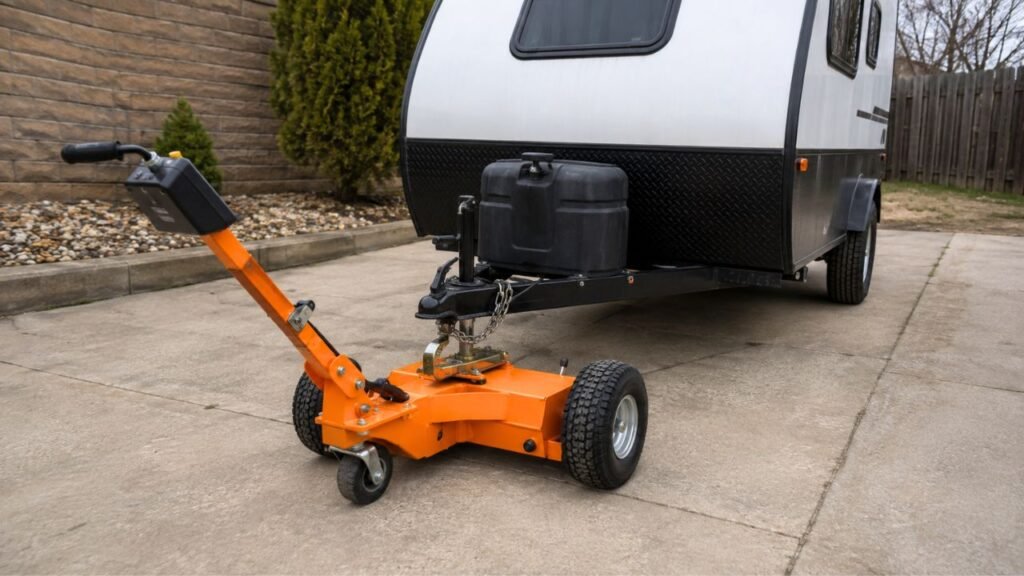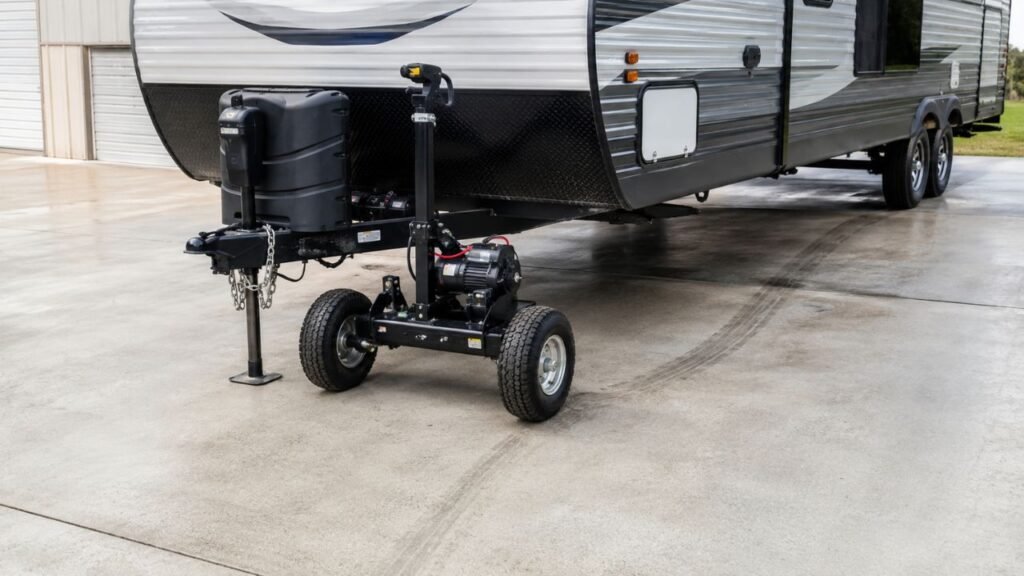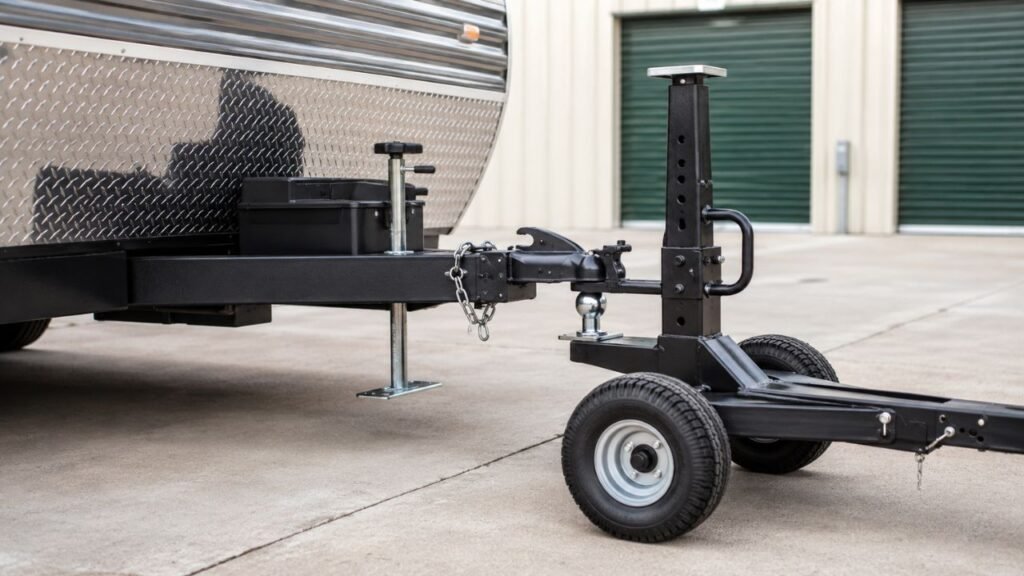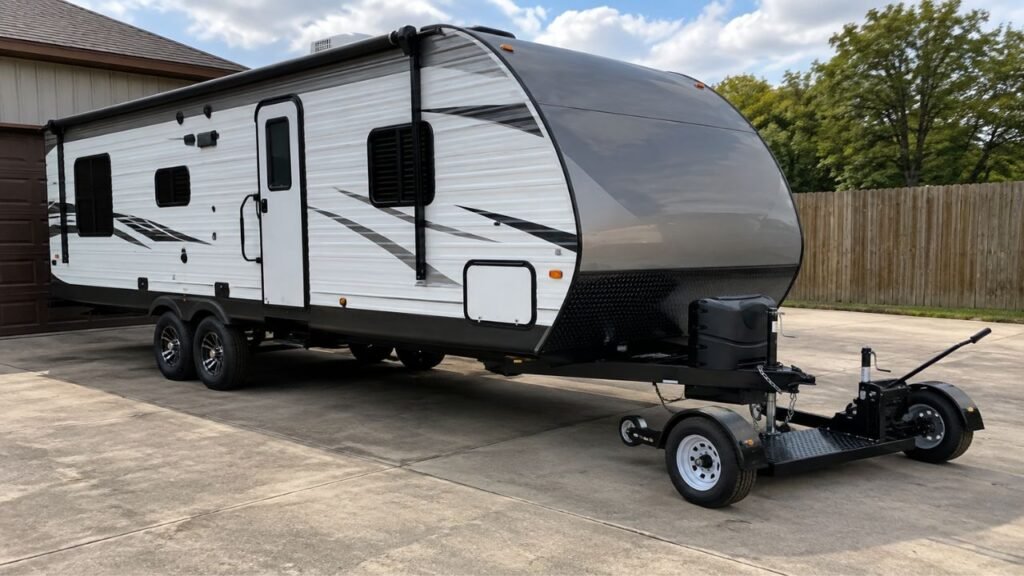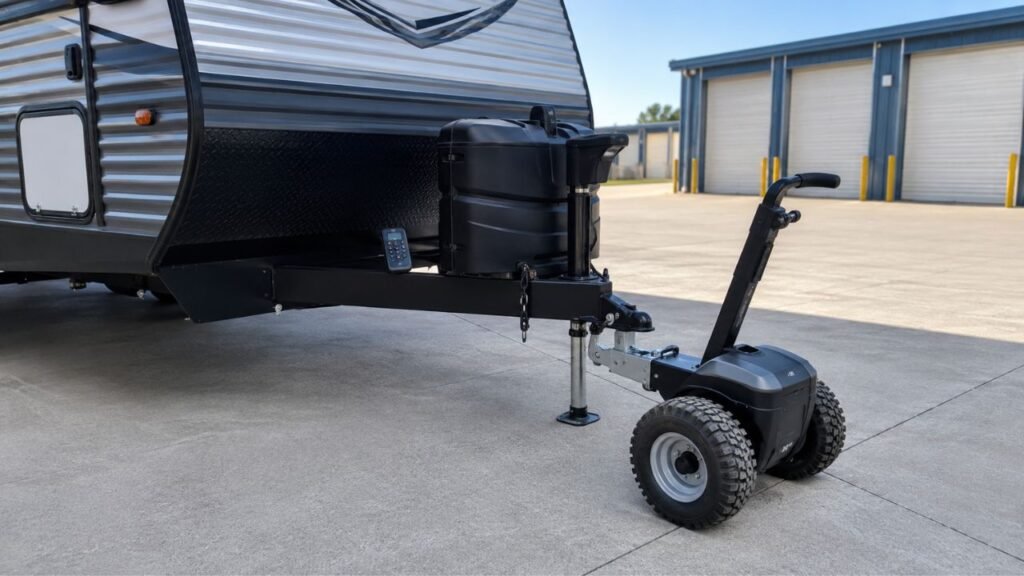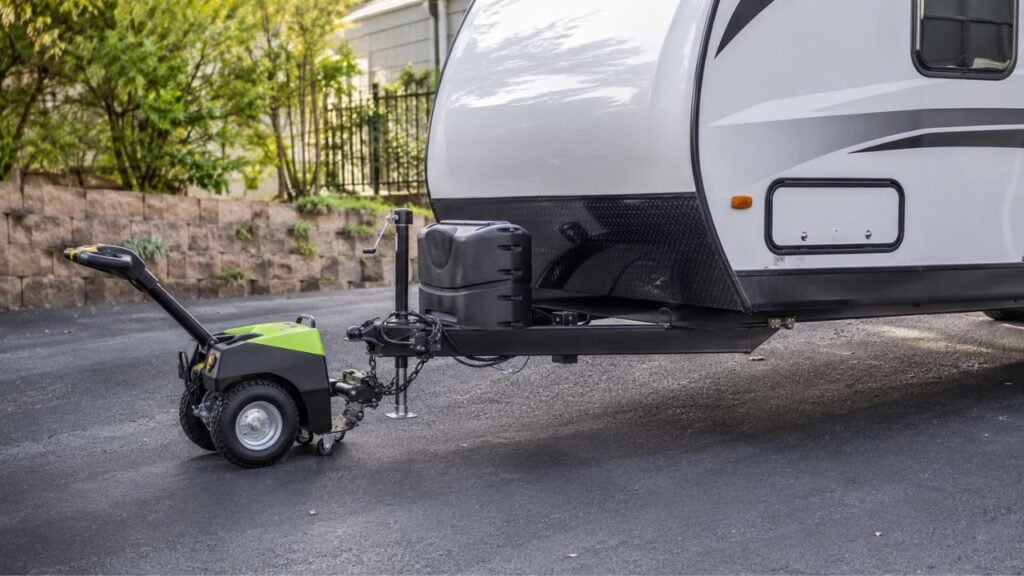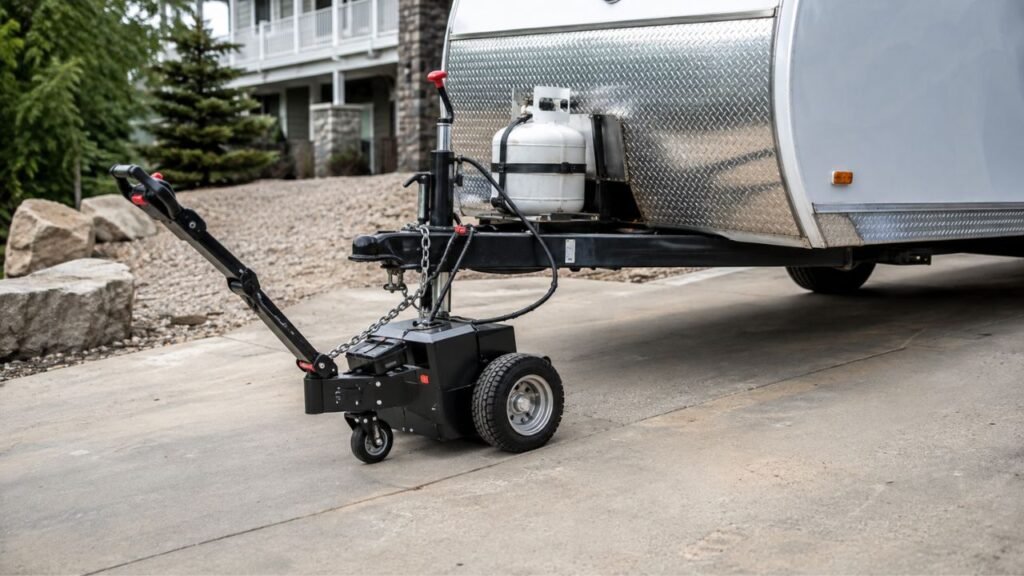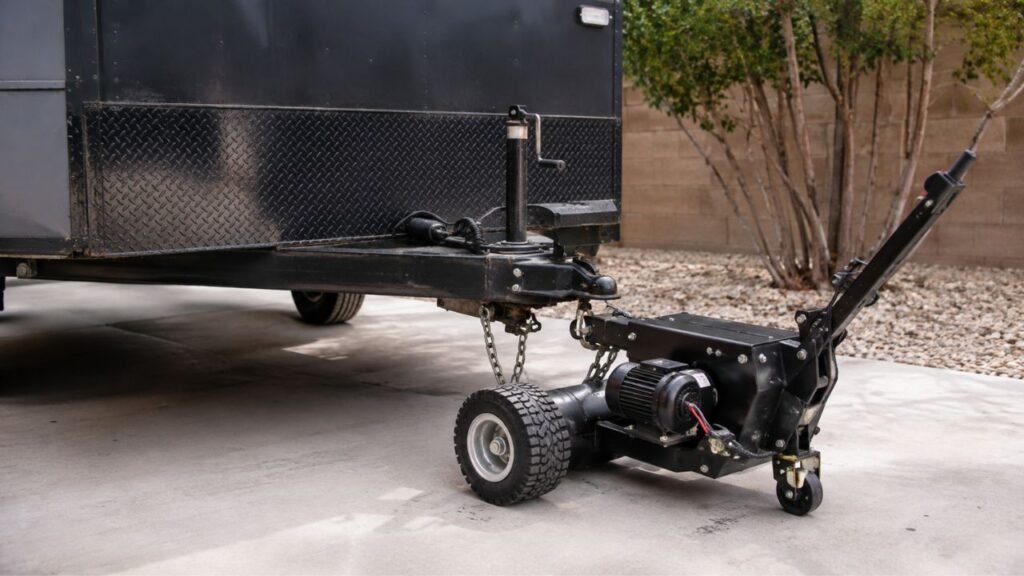
An electric trailer dolly usually overheats because its motor is working harder than intended. Excessive trailer weight, high tongue weight, long operating periods, a weak battery, steep slopes, rough surfaces, dragging trailer parts, or poor cooling can all push the motor beyond its normal thermal range.
In this guide, I’ll help you figure out what is causing the heat, what to check first, and how to prevent the problem from happening again.
Key Takeaways
- Excess trailer weight or tongue weight can quickly overwork the motor.
- Long, continuous operation gives the motor little time to cool.
- A weak battery can reduce performance and increase electrical stress.
- Slopes, gravel, grass, and tight turns increase rolling resistance.
- Dragging trailer brakes or tight wheel bearings can overload the dolly.
- Repeated thermal shutdowns usually mean an underlying problem remains.
- Always follow your dolly’s model-specific limits and cooldown instructions.
Is It Normal for an Electric Trailer Dolly Motor to Get Hot?
Yes, some heat is completely normal during operation. An electric motor naturally produces heat while converting battery power into movement.
The important question is how hot the motor gets and how it behaves. A motor that feels warm after moving a trailer a short distance may be operating normally. A motor that suddenly shuts down, loses power, smells burned, or repeatedly trips its protection system deserves attention.
There is no single safe surface temperature for every trailer dolly. Motor designs, insulation, cooling systems, and duty cycles differ between models.
That is why I would not judge overheating only by touch. Pay closer attention to changes in performance and shutdown behavior.
Signs that the dolly may actually be overheating include sudden power loss, repeated thermal trips, strange smells, smoke, unusually hot wiring, or much higher temperatures than you normally experience during similar maneuvers.
Why Does My Electric Trailer Dolly Overheat?
Several problems can create the same overheating symptom. I recommend checking the simple load and operating conditions first before assuming the motor itself has failed.
The Trailer or Tongue Weight Is Too High
The most common cause is simply asking the dolly to move too much weight.
Every electric trailer dolly has separate limits for overall trailer weight and tongue weight. Staying below one limit does not automatically mean you are below the other.
For example, your trailer may weigh less than the advertised towing capacity. However, heavy cargo toward the front can still put excessive weight on the dolly connection.
That added load forces the motor to produce more torque. More torque generally means more electrical and mechanical stress.
Also remember that listed trailer weight is often empty or dry weight. Propane tanks, batteries, water, camping equipment, tools, and cargo can add hundreds of pounds.
I prefer keeping some margin below the maximum rating whenever possible. Running near the limit on flat pavement may work, while the same load on a slope may cause overheating.
You Are Running the Dolly Too Long Without a Break
Electric trailer dollies are designed for slow, controlled maneuvering. They are not intended to operate continuously like a tow vehicle.
Repeated forward and reverse movements can heat the motor surprisingly quickly. This often happens when you are trying to place a trailer into a tight garage or narrow side yard.
Each movement may seem short. However, ten or fifteen small corrections can become several minutes of nearly continuous motor use.
This is where the motor’s duty cycle matters.
A duty cycle describes how long the motor should operate before resting. Some dollies tolerate longer runs than others.
If you notice the motor becoming progressively hotter, stop before thermal protection activates. Let the unit cool according to the manufacturer’s instructions before continuing.
The Battery Is Weak or Voltage Is Dropping Under Load
A battery can show a reasonable charge level and still perform poorly when the motor demands power.
Older batteries often lose their ability to maintain voltage under heavy load. Dirty terminals, loose connections, undersized cables, or damaged connectors can create similar problems.
You may notice the dolly slowing down before it becomes hot. The motor may sound strained, acceleration may weaken, or movement may become inconsistent.
Start troubleshooting by fully charging the battery.
Then check the battery terminals for corrosion and looseness. Inspect visible power cables for damaged insulation, loose connectors, or unusual heat.
Do not ignore hot battery cables or connectors. Heat in those areas can indicate excessive resistance in the electrical connection.
You Are Moving the Trailer Up an Incline
Slopes increase the amount of force required to move your trailer.
Even a gentle-looking residential driveway can create a much heavier motor load than flat concrete.
The problem becomes worse when starting from a complete stop. The dolly must overcome both the trailer’s rolling resistance and gravity at the same time.
Turning while climbing can increase resistance further.
Always check your specific dolly’s maximum incline rating. Do not assume a high trailer-weight rating means it can safely handle steep grades.
If the dolly regularly becomes hot only when climbing your driveway, the slope may be the real cause.
Grass, Gravel, or Soft Ground Is Increasing Resistance
Surface conditions matter almost as much as trailer weight.
A trailer that moves easily across smooth concrete may require much more effort on gravel, grass, dirt, or uneven pavement.
Trailer tires can sink slightly into softer ground. Dolly tires may also dig into loose material rather than rolling cleanly.
That means the motor has to keep producing extra torque.
Small obstacles create resistance too. Cracks, pavement edges, stones, wheel chocks, hoses, and garage thresholds can increase the load.
If overheating only happens on one particular surface, test the dolly on level, hard pavement.
A major improvement usually tells you that rolling resistance is part of the problem.
The Trailer Wheels or Brakes Are Dragging
Sometimes the dolly is perfectly healthy, while the trailer itself is difficult to move.
A dragging trailer brake can create enough resistance to make the motor overheat.
The same applies to a tight wheel bearing, damaged hub, rubbing tire, or severely underinflated tire.
Check whether the trailer’s parking or braking system is fully released.
Look for one wheel that behaves differently from the others. A wheel that becomes unusually hot after movement may have a brake or bearing problem.
Do not try to manually push a heavy trailer just to test resistance. Instead, inspect wheels individually using safe lifting and support procedures when appropriate.
The key point is simple: the dolly does not know why the trailer is difficult to move. It only feels the extra resistance.
The Dolly Tires or Drive Wheels Are Creating Extra Resistance
Your electric dolly can also create resistance within its own wheel system.
Inspect the drive tires for damage, deformation, debris, and incorrect inflation if your model uses pneumatic tires.
Check caster wheels for free movement.
Grass, string, wire, and other debris can wrap around axles and increase friction.
A wheel that does not rotate smoothly forces the motor and gearbox to work harder.
Correcting a small wheel problem can sometimes eliminate overheating entirely.
Dirt or Debris Is Preventing Proper Cooling
Motor housings need to release heat during operation.
Mud, dried grass, dust, grease, and debris can cover openings and reduce airflow.
This is particularly common on dollies stored inside sheds or garages where dust accumulates over time.
Inspect the outside of the motor housing regularly.
Clean loose debris using the method recommended by your manufacturer. Avoid spraying water directly into electrical components unless the product specifically permits it.
Keeping the cooling areas clean gives the motor a better chance to shed heat naturally.
Hot Weather Is Reducing the Motor’s Ability to Cool
Summer heat can make a noticeable difference.
A dolly sitting in direct sun may already be hot before you turn it on.
Add a hot driveway, heavy trailer, and long maneuver, and the motor has much less ability to release heat.
This is especially relevant in southern and southwestern states during summer.
Whenever possible, move the trailer during cooler parts of the day.
Also avoid storing the dolly in extremely hot enclosed spaces immediately before heavy use.
Hot weather alone may not cause the problem, but it can push a heavily loaded motor over its thermal limit.
A Bearing or Gearbox Component Is Binding
Internal mechanical resistance can make the motor work harder even when the trailer is light.
A dry bearing, damaged gear, misaligned shaft, or worn gearbox can create extra friction.
You may hear grinding, clicking, whining, or other unfamiliar noises.
The dolly may also feel weaker than normal.
Do not continue running a noisy drivetrain simply because it still moves. Repeated operation can turn a small mechanical issue into an expensive motor or gearbox repair.
Follow the maintenance schedule for lubrication and inspection where your model requires it.
There Is a Motor, Controller, or Wiring Fault
If the obvious causes are ruled out, the problem may be electrical.
A failing motor winding, controller fault, damaged wire, loose high-current connection, or overheated connector can all produce abnormal heat.
This becomes more likely when the dolly overheats on level pavement with a light trailer and fully charged battery.
Repeated shutdowns under easy operating conditions are not normal.
At that point, I would stop using the dolly and contact the manufacturer or a qualified service technician.
Electric Trailer Dolly Overheating: Symptoms and Causes
The symptoms often provide useful clues. Use this table to narrow down what you should inspect first.
| What You Notice | Likely Cause | What to Check First | What to Do |
| Dolly shuts off while moving | Thermal overload | Trailer weight, slope, surface | Stop and allow cooling |
| Motor gets hot very quickly | Excessive resistance | Trailer brakes and bearings | Find and correct the drag |
| Dolly overheats on a slope | High torque demand | Incline rating | Move to flatter ground |
| Dolly slows before overheating | Battery or load issue | Battery charge and terminals | Charge and inspect connections |
| Cable or connector becomes hot | Electrical resistance | Terminals and wiring | Stop use and repair connection |
| Heat happens only on grass | Rolling resistance | Surface conditions | Use harder, level ground |
| Dolly overheats with light load | Internal mechanical issue | Wheels, gearbox, motor | Inspect before further use |
| Breaker trips repeatedly | Recurring overload | Entire load and drive system | Do not keep resetting it |
What Should I Do If My Electric Trailer Dolly Overheats?
When overheating occurs, the priority is protecting both the dolly and trailer. Follow a calm sequence rather than immediately trying again.
- Stop moving the trailer.
- Secure the trailer so it cannot roll.
- Turn the electric dolly off.
- Disconnect power if your manual recommends doing so.
- Avoid touching visibly overheated electrical parts.
- Allow the motor to cool fully.
- Check trailer and tongue weight.
- Inspect battery charge and connections.
- Look at the slope and surface conditions.
- Confirm trailer brakes are fully released.
- Inspect tires, wheels, bearings, and visible debris.
- Resume only after the likely cause is corrected.
Do not repeatedly restart a dolly that trips its thermal protection.
A reset does not mean the underlying problem disappeared.
How Long Should an Electric Trailer Dolly Cool Down?
There is no universal cooling time that applies to every electric trailer dolly.
Some models may require only a short break. Others can need 15 to 30 minutes after a heavy thermal shutdown.
Motor size, housing design, ambient temperature, load, and protection systems all affect cooling time.
Your owner’s manual should always take priority.
If the dolly has a thermal breaker, allow the breaker and motor to cool before resetting it.
Also remember this important point:
Cooling removes the heat, but it does not remove the cause of the overheating.
If the dolly overheats again during the same type of maneuver, investigate the load or mechanical condition.
Why Does My Trailer Dolly Overheat Even Below Its Weight Limit?
Staying under the advertised trailer capacity does not guarantee the motor is operating comfortably.
Several other conditions can increase the actual load placed on the dolly.
- Tongue weight may still be too high.
- The trailer may be heavier when fully loaded.
- A driveway slope adds extra resistance.
- Grass or gravel increases rolling resistance.
- Underinflated trailer tires create more drag.
- Tight turns can scrub the trailer tires.
- A brake may be partially engaged.
- A wheel bearing may be binding.
- Battery voltage may drop under load.
- Repeated reversing can exceed the duty cycle.
- Hot weather can reduce the cooling margin.
Think of the weight rating as only one part of the equation.
Real-world resistance can make a lighter trailer harder to move than a heavier one on perfect pavement.
How Do I Diagnose an Electric Trailer Dolly That Keeps Overheating?
A good troubleshooting approach starts with the easiest conditions first. Work toward internal mechanical or electrical faults only after ruling out common operating problems.
Check the Trailer and Tongue Weight
Verify both limits using the specifications for your exact dolly model.
Do not rely on the trailer’s empty factory weight.
Account for batteries, propane, cargo, water, tools, and equipment stored inside.
Fully Charge and Inspect the Battery
Charge the battery completely before testing again.
If the battery is old, consider whether it still holds voltage properly under load.
A battery can appear charged but still have poor usable capacity.
Check Battery Cables and Terminals
Inspect terminals for corrosion, looseness, heat damage, or discoloration.
Connections should be secure.
Any melted plastic or burned wiring smell deserves immediate attention.
Move the Trailer Onto Flat, Hard Ground
Test the dolly somewhere with as little rolling resistance as possible.
Flat concrete or firm asphalt is ideal for troubleshooting.
If the overheating disappears, terrain was probably contributing significantly.
Confirm the Trailer Rolls Properly
Inspect the trailer brakes, tires, hubs, and wheel bearings.
Look for one wheel that feels unusually hot after movement.
Any obvious drag should be corrected before using the dolly again.
Inspect the Dolly Wheels and Casters
Remove wrapped grass, string, plastic, or other debris.
Check pneumatic tire pressure where applicable.
Make sure caster wheels rotate and swivel normally.
Clean the Motor Housing
Remove loose dirt from the outside of the motor and cooling areas.
Avoid forcing debris deeper into the housing.
Do not disassemble sealed electrical sections unless the manual specifically instructs you to do so.
Test the Dolly With Minimal Load
If your manufacturer’s instructions allow it, briefly operate the dolly without moving the trailer.
A dolly that becomes excessively hot with almost no load may have an internal problem.
Stop the test immediately if you notice burning smells, smoke, unusual noises, or electrical heat.
Stop Troubleshooting if Electrical Parts Look Damaged
Damaged controllers, melted connectors, burned insulation, and swollen batteries are not normal maintenance issues.
Do not keep experimenting with the unit.
Disconnect power safely and arrange proper service.
Can a Weak Battery Make an Electric Trailer Dolly Overheat?
Yes, a weak battery can contribute to overheating and poor performance.
The motor needs a stable supply of electrical power when moving a heavy trailer.
An aging or partially discharged battery may experience significant voltage drop under load.
You may notice reduced speed, weak starts, hesitation, or early shutdown.
Loose or corroded battery terminals can create additional electrical resistance.
That resistance can also produce heat in cables and connectors.
If the dolly slows down before overheating, check the battery system early in your troubleshooting.
Can Trailer Brakes or Wheel Bearings Cause the Dolly Motor to Overheat?
Yes. Dragging trailer components can overload an otherwise healthy dolly.
A brake that remains partly engaged creates constant resistance.
A tight or failing wheel bearing does the same thing.
The motor responds by producing more torque to keep the trailer moving.
That extra work creates additional heat.
Watch for one trailer wheel that becomes hotter than the others.
Grinding sounds, rough rotation, or noticeable resistance can also point toward a bearing or brake problem.
Correct trailer problems before blaming the dolly motor.
Can Slopes or Gravel Overheat an Electric Trailer Dolly?
Yes, both conditions can increase motor load significantly.
A slope forces the dolly to work against gravity.
Gravel and soft surfaces increase rolling resistance and reduce traction.
These effects can happen even when the trailer is well below the maximum weight rating.
Do not confuse towing capacity with terrain capability.
Some dollies are designed mainly for flat, paved surfaces.
Others can handle limited grades and rougher terrain.
Check your exact model’s incline and surface recommendations before using it.
Can Repeatedly Resetting the Overload Protector Damage the Dolly?
Repeatedly resetting the overload protector without fixing the cause is a bad idea.
The protector is usually responding to excessive heat or electrical load.
It is doing its job.
Resetting it immediately and forcing the motor to continue exposes the same components to repeated thermal stress.
Over time, that can damage the motor, controller, wiring, connectors, or gearbox.
If the protector trips once during an unusually demanding maneuver, let the unit cool and inspect the cause.
If it keeps tripping during normal use, stop operating the dolly until the problem is diagnosed.
How Can I Keep My Electric Trailer Dolly From Overheating?
Prevention is usually easier than troubleshooting a repeated shutdown. A few habits can dramatically reduce the load on your dolly.
- Stay below both towing and tongue-weight ratings.
- Start every demanding maneuver with a charged battery.
- Keep battery terminals clean and secure.
- Follow the manufacturer’s incline limits.
- Use firm, level surfaces whenever possible.
- Avoid unnecessary continuous motor operation.
- Give the motor cooling breaks during difficult parking jobs.
- Maintain proper dolly tire pressure.
- Keep trailer tires properly inflated.
- Make sure trailer brakes fully release.
- Maintain trailer wheel bearings.
- Remove debris from wheels and axles.
- Keep motor cooling areas clean.
- Store the dolly somewhere dry and protected.
- Investigate new grinding, vibration, or unusual motor sounds early.
I would also pay attention to changes over time.
If the same trailer suddenly becomes harder to move than last month, something has probably changed.
That change could be the battery, trailer brakes, bearings, tires, gearbox, or another component.
When Should I Stop Using an Overheating Trailer Dolly?
Some symptoms mean you should stop troubleshooting and arrange service. Continuing operation can cause more expensive damage.
- Smoke comes from the motor or controller.
- You smell burning electrical insulation.
- Cables or connectors begin melting.
- The battery becomes swollen or unusually hot.
- The overload protector repeatedly trips under normal load.
- The dolly overheats with almost no trailer load.
- Grinding or knocking sounds develop.
- Power suddenly drops compared with normal operation.
- The controller becomes extremely hot.
- The unit overheats again immediately after cooling.
- The problem continues on flat pavement with a healthy battery.
Do not keep using a dolly simply because it restarts.
Repeated overheating is usually the motor telling you that something is wrong.
Final Verdict
Most electric trailer dolly overheating problems come from excessive load, extended operation, poor battery performance, difficult terrain, or extra rolling resistance.
I recommend checking the problem in this order: load, battery, surface, slope, trailer resistance, dolly wheels, cooling, and then internal electrical components.
A single thermal shutdown during an unusually difficult maneuver does not always mean the dolly is damaged. Repeated overheating under normal conditions, however, should never be treated as normal.
Related FAQs
Why Does My Electric Trailer Dolly Shut Off After a Few Minutes?
The dolly may be reaching its thermal limit because of excessive load, long operating periods, difficult terrain, a weak battery, or mechanical resistance. Let it cool and inspect the underlying cause before trying again.
Is It Normal for an Electric Trailer Dolly Motor to Feel Hot?
Some heat is normal because electric motors naturally warm under load. It becomes concerning when heat is accompanied by shutdowns, power loss, burning smells, smoke, or repeated overload trips.
Can a Low Battery Cause an Electric Trailer Dolly to Overheat?
Yes. A weak or partially discharged battery can reduce motor performance and contribute to abnormal electrical loading. Fully charge the battery and inspect terminals before assuming the motor is faulty.
Why Does My Trailer Dolly Overheat Going Uphill?
Uphill movement requires much more torque because the motor must work against gravity. If the slope approaches or exceeds the dolly’s rated incline limit, overheating can happen quickly.
Can I Use an Electric Trailer Dolly on Gravel or Grass?
That depends on your specific model. Gravel and grass increase rolling resistance, and some dollies are designed mainly for hard, level surfaces. Always follow the manufacturer’s terrain recommendations.
How Long Should I Let an Electric Trailer Dolly Cool?
Cooling time varies by model and operating conditions. Some dollies need only a short break, while others may require 15 to 30 minutes. Follow your owner’s manual for the correct procedure.
Why Does the Overload Breaker Keep Tripping on My Trailer Dolly?
Repeated trips usually indicate excessive load, low battery performance, difficult terrain, mechanical drag, or an internal electrical problem. Do not keep resetting the breaker without identifying the cause.
Can Too Much Tongue Weight Overheat an Electric Trailer Dolly?
Yes. Excessive tongue weight puts more direct load on the dolly and increases motor demand. Always check both total trailer capacity and maximum tongue-weight capacity.
Can Dragging Trailer Brakes Make a Dolly Overheat?
Yes. A dragging brake increases rolling resistance, forcing the motor to work much harder. Inspect the trailer braking system if overheating happens even on flat pavement.
Should I Keep Using My Dolly After the Motor Overheats?
Only after it has cooled and you have identified the likely cause. If overheating repeats during normal operation, stop using the dolly and have it inspected.

Jack Collins specializes in RV routes, trail access, and travel logistics. His how-to articles help RV and trailer owners plan smoother trips and avoid common mistakes. Every review focuses on performance, safety, and value.