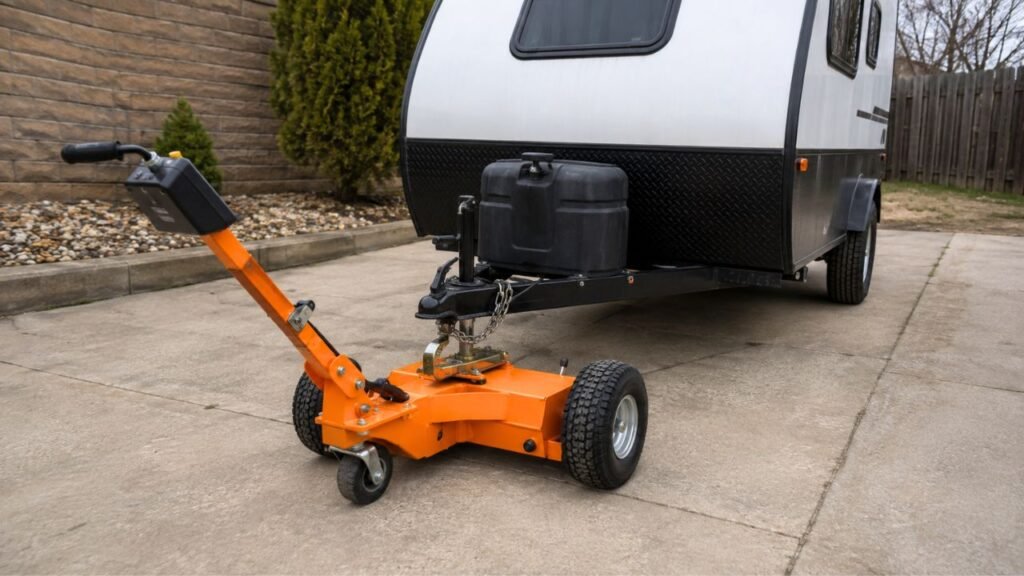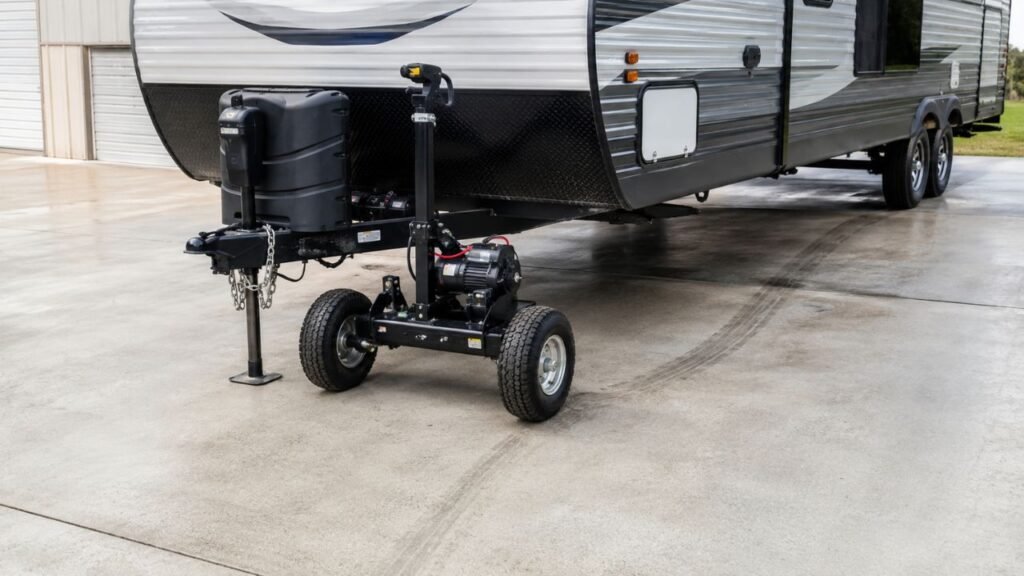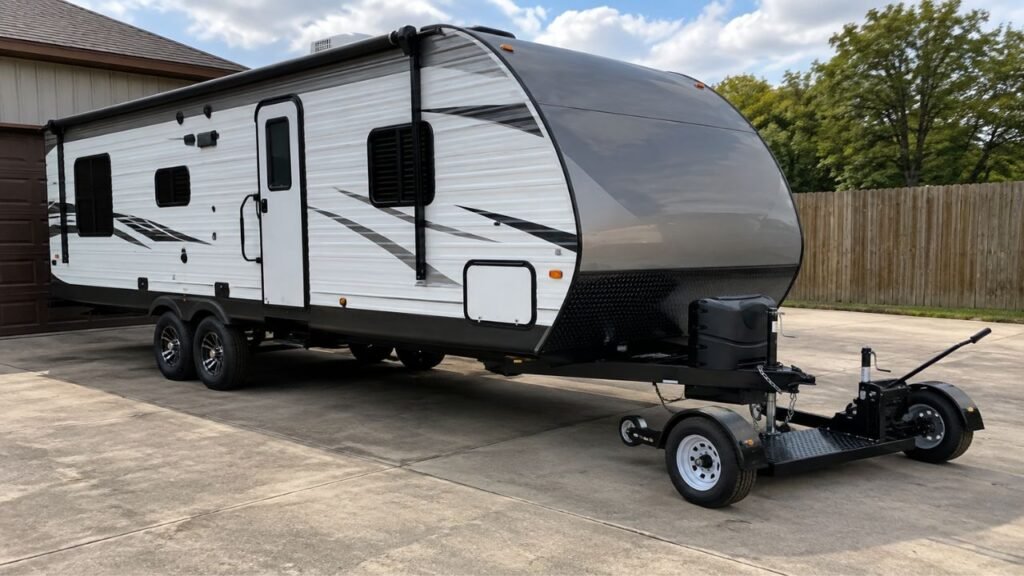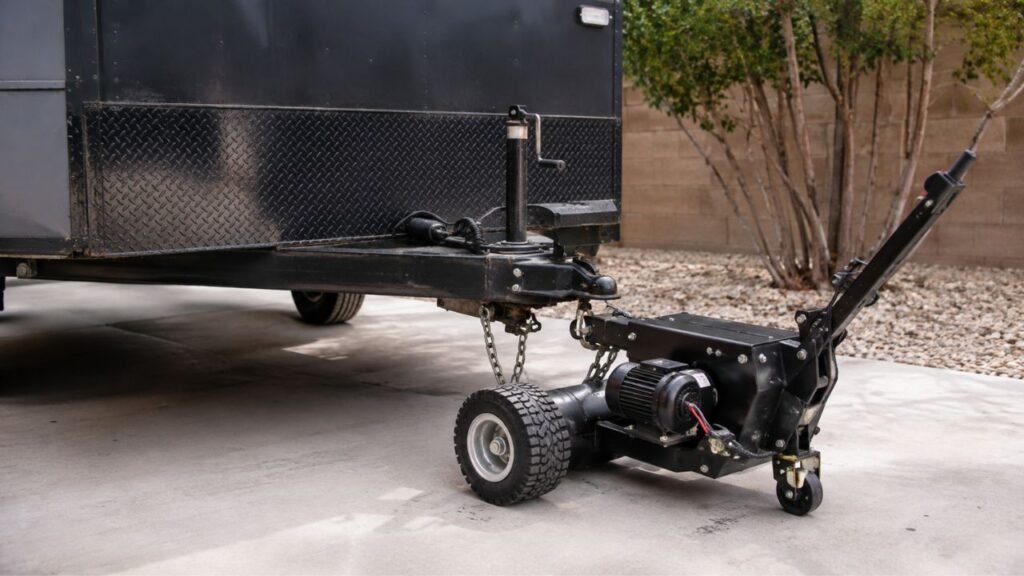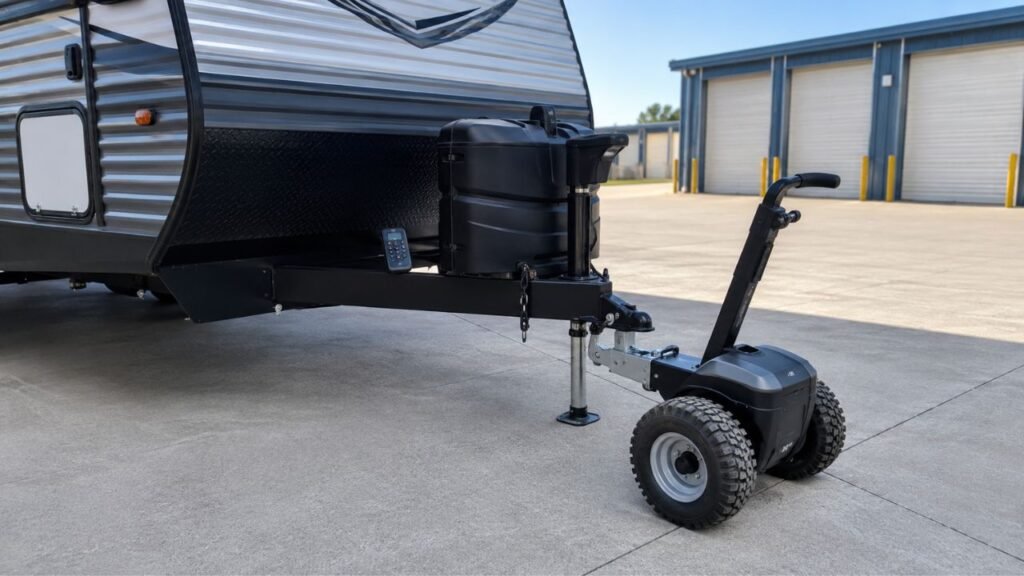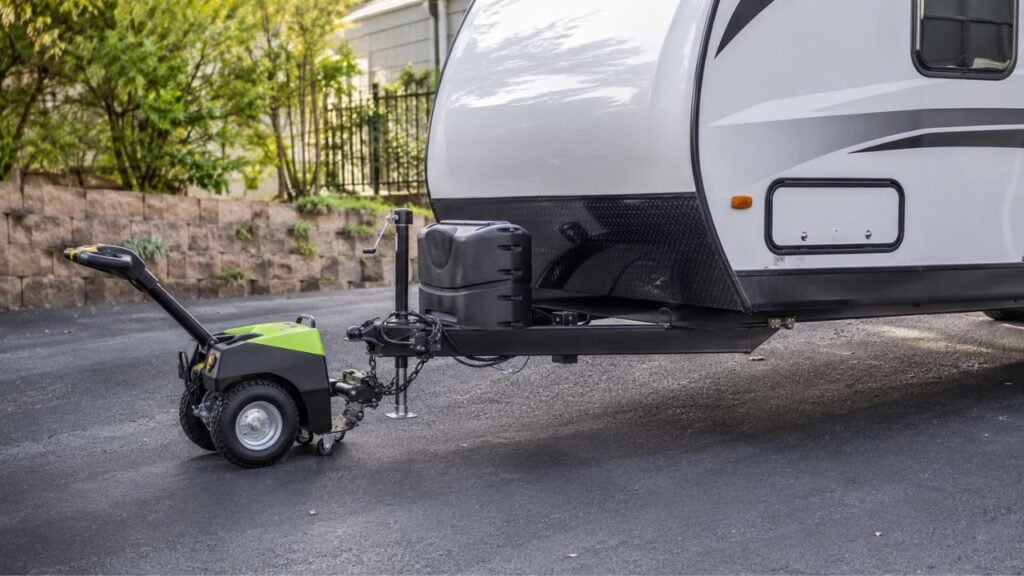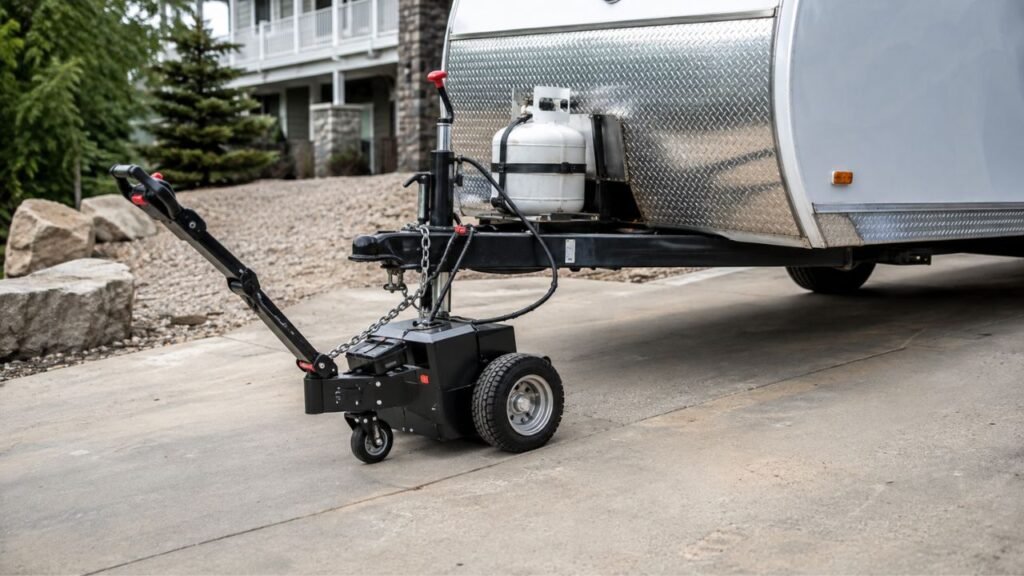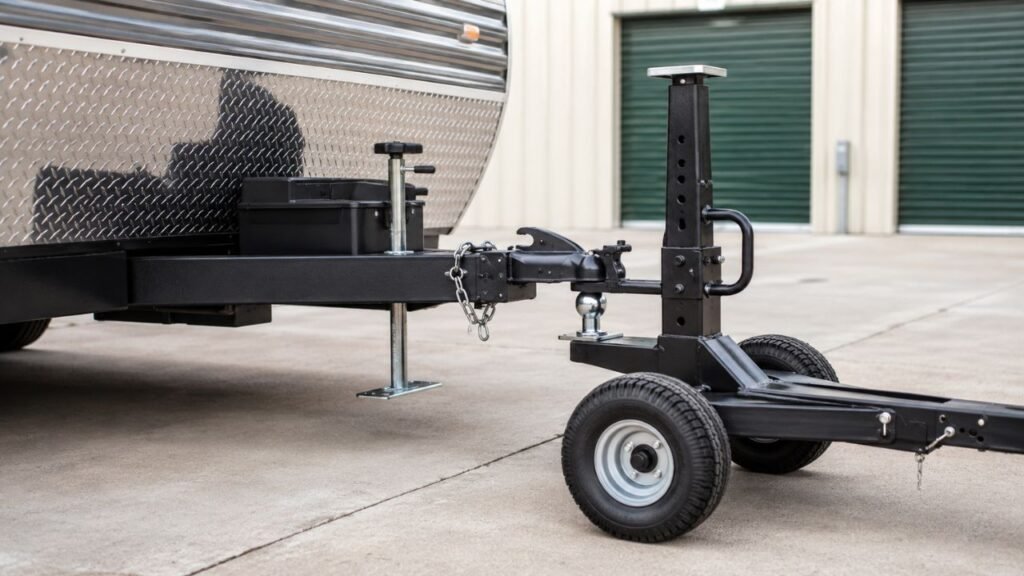
To match a trailer dolly to different coupler heights, level each trailer, measure its coupler height, and adjust the dolly’s ball or attachment point to the correct position. The dolly’s adjustment range must cover that height, while its ball size, coupler style, tongue-weight rating, and connection method must also match the trailer.
The process is fairly simple once you know what to measure. I’ll walk you through measuring the coupler correctly, adjusting the dolly, switching between trailers, and handling situations where the coupler sits outside the dolly’s normal height range.
Key Takeaways
- Level the trailer before measuring its coupler height.
- Measure from the exact reference point specified by the dolly manufacturer.
- Make sure the trailer height falls within the dolly’s adjustment range.
- Match the hitch ball size to the size stamped on the coupler.
- Check tongue-weight capacity separately from trailer weight capacity.
- Different coupler designs may require approved adapters.
- Never use homemade spacers to compensate for excessive height differences.
- Record the correct setting if you regularly move several trailers.
Why Trailer Dolly Coupler Height Matters
The height of the connection affects how securely and comfortably your trailer dolly handles the trailer. A dolly may technically reach the coupler while still sitting at an awkward angle that makes steering, traction, or maneuvering more difficult.
You generally want the coupler and dolly attachment point to come together naturally. You should not need to force the trailer tongue far upward or downward just to make the connection.
An incorrect height can also make coupling frustrating. The coupler may bind against the ball, the tongue jack may struggle to provide enough clearance, or the dolly frame may sit at an angle it was never designed to handle.
This becomes even more important with powered trailer dollies. Their tires depend on proper weight transfer for traction. Changing the connection geometry too much can affect how the dolly turns and grips the ground.
One thing I want to make clear is that trailer dolly height is not exactly the same subject as tow-vehicle hitch height.
When setting up a tow vehicle, you normally calculate hitch rise or drop so the trailer tows level on the road. With a trailer dolly, you are mainly trying to create a secure, stable connection for low-speed maneuvering.
How Do You Measure Trailer Coupler Height for a Dolly?
Before adjusting anything on the dolly, get an accurate measurement from the trailer. A small measuring mistake can send you to the wrong adjustment hole or make a compatible dolly appear incompatible.
Park the Trailer on Flat, Firm Ground
Start with the trailer on level concrete, asphalt, or another firm surface.
Avoid taking measurements on soft dirt, deep gravel, or sloped pavement. The trailer tires or tongue jack can settle differently, which changes the coupler height.
If possible, use the same type of surface where you normally operate the dolly.
Level the Trailer With the Tongue Jack
Use the tongue jack to bring the trailer frame into a level position.
Do not judge the trailer by looking at the roof, fenders, or body panels. Those parts are not always parallel with the chassis.
A small carpenter’s level placed on a straight section of the trailer frame works better.
Adjust the tongue jack until the trailer sits reasonably level from front to rear.
Find the Dolly Manufacturer’s Measurement Reference
This is where people often make the wrong comparison.
One trailer dolly manufacturer may list height as the distance from the ground to the top of the hitch ball.
Another may measure to:
- the ball mounting plate,
- the receiver opening,
- an adapter connection,
- or another point on the dolly.
Trailer coupler measurements are also sometimes taken to the bottom of the coupler rather than the point where the top of the ball will sit.
That means two measurements labeled “20 inches” are not automatically equivalent.
Always check what point the manufacturer uses before comparing your trailer measurement with the dolly specification.
Measure the Coupler Height
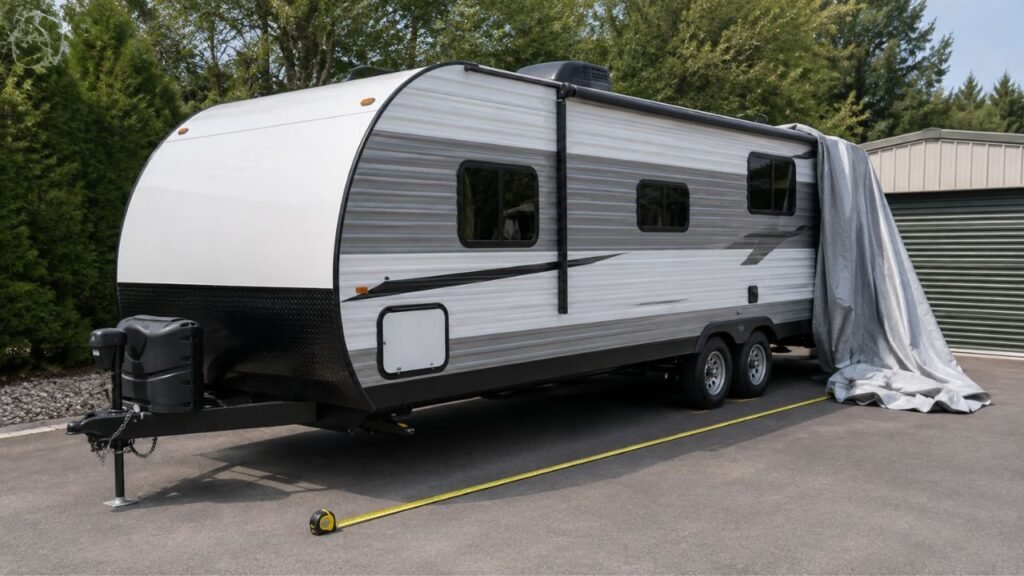
Place a tape measure vertically from the ground to the appropriate point on the coupler.
For a standard ball coupler, the bottom edge of the coupler is a common measurement point. However, use the dolly manufacturer’s instructions if they specify something different.
Keep the tape straight rather than measuring at an angle.
Write the measurement down instead of relying on memory.
Record the Measurement for Each Trailer
If you own several trailers, make a simple list.
For example:
- Utility trailer: 18.5 inches
- Boat trailer: 21 inches
- Cargo trailer: 19.5 inches
These are only examples. Your trailers may be completely different.
Recording each measurement can save plenty of time when you regularly switch the same dolly between trailers.
Coupler Height vs. Dolly Ball Height: What Exactly Should Match?
The safest approach is to compare measurements taken from compatible reference points. Do not simply assume that the measured coupler height should equal the dolly’s advertised ball-height number.
For example, your trailer measurement might be taken from the ground to the bottom edge of the coupler.
Meanwhile, the dolly specification could measure from the ground to the very top of the hitch ball.
Those two points are naturally different.
Ball diameter also changes the vertical dimensions slightly. A 2-5/16-inch ball is physically larger than a 2-inch ball.
The goal is not to make two arbitrary numbers identical. The goal is to position the dolly so the coupler seats properly while the trailer and dolly remain in their intended operating positions.
My rule is simple: compare like with like.
If you are unsure what the dolly manufacturer means by “ball height,” check the owner’s manual before adjusting the unit.
How to Check Whether a Trailer Dolly Fits Your Coupler Height
Height is important, but it is only one part of trailer dolly compatibility. I recommend checking the entire connection before deciding a particular dolly will work with your trailer.
| What to Check | What You Need to Know | What a Good Match Looks Like |
| Coupler height | Height with the trailer level | Falls within the dolly’s usable adjustment range |
| Dolly adjustment range | Minimum and maximum hitch height | Covers the trailer’s required connection height |
| Measurement reference | Top of ball, plate, receiver, or coupler base | Measurements use compatible reference points |
| Hitch ball size | Size stamped on the coupler | Ball diameter matches the coupler exactly |
| Coupler design | Standard ball, drop-down, pintle, specialty, or other style | Dolly or approved adapter supports the design |
| Tongue weight | Downward weight carried at the coupler | Falls below the dolly’s tongue-weight limit |
| Trailer weight | Actual or rated trailer weight | Falls within the dolly’s moving capacity |
| Operating surface | Concrete, pavement, gravel, or slope | Surface meets manufacturer requirements |
A dolly can match the coupler height perfectly and still be wrong for the trailer. Always check all these items together.
How Do You Adjust a Trailer Dolly to the Correct Coupler Height?
The exact adjustment system varies by dolly, but most adjustable models use a sliding post, pin-and-hole tower, threaded mount, or proprietary receiver. Make the adjustment while the trailer is securely supported.
Adjust a Pin-and-Hole Ball Tower
Many trailer dollies use several holes in a vertical mounting post.
A typical setup looks like this:
- Chock the trailer wheels.
- Leave the trailer tongue supported by the tongue jack.
- Position the dolly near the coupler.
- Remove the ball-height retaining pin.
- Raise or lower the ball platform.
- Align the correct adjustment hole.
- Reinstall the pin completely.
- Secure the retaining clip.
- Position the ball beneath the coupler.
- Lower the trailer carefully onto the dolly.
Do not leave the pin partially inserted. It should pass through the intended holes completely.
Adjust a Threaded or Sliding Ball Base
Some dollies use threaded adjustment hardware rather than a simple pin system.
Others have a sliding receiver or telescoping connection.
With these designs, follow the manufacturer’s tightening instructions carefully. Do not assume “hand tight” is enough if the system specifies a particular fastening procedure.
If bolts must be torqued, use the specified torque rather than guessing.
Use the Tongue Jack for Final Alignment
Your tongue jack makes the final hookup much easier.
Raise the coupler slightly above the ball, roll the dolly into position, and then lower the coupler onto the ball.
The jack is useful for fine alignment.
It should not be used to overcome a major height mismatch.
If you need to raise the trailer tongue excessively before the ball can reach the coupler, the dolly may need another adjustment position or a different approved attachment.
Check the Dolly’s Operating Position After Coupling
Once the coupler is connected, look at the entire setup.
The dolly should sit in the position intended by its manufacturer.
Check that:
- the ball is fully seated,
- the coupler latch closes normally,
- no part of the coupler is binding,
- the dolly frame is not leaning excessively,
- the tongue jack can retract safely,
- and the trailer tongue clears the dolly during turns.
If the setup looks strained before you even start moving, something needs to be corrected.
What If the Trailer Coupler Is Too High or Too Low for the Dolly?
If the trailer’s required connection height falls outside the dolly’s approved adjustment range, do not improvise. There are safer ways to handle the problem.
- Choose a dolly with a wider height-adjustment range.
- Use a manufacturer-approved taller ball mount.
- Use an approved shorter ball mount when necessary.
- Consider a telescoping frame adapter designed for the dolly.
- Use a compatible jack-post connection if supported.
- Contact the manufacturer about specialty trailer connections.
- Consider a different dolly for unusually tall trailers.
- Do not stack washers beneath the hitch ball.
- Do not use blocks of wood as ball-mount spacers.
- Do not weld your own extension onto the dolly.
- Do not drill new adjustment holes unless specifically approved.
Improvised height modifications may weaken the attachment or increase leverage on parts that were not designed for it.
How Do You Use One Trailer Dolly With Several Trailers?
Using one dolly with several trailers is completely practical when the dolly has enough adjustment range. The easiest approach is to treat each trailer as its own setup rather than guessing every time.
Make a Coupler-Height Chart
Create a small chart for the trailers you commonly move.
For example:
| Trailer | Coupler Height | Ball Size | Dolly Setting |
| Utility trailer | ___ in. | ___ in. | Hole ___ |
| Boat trailer | ___ in. | ___ in. | Hole ___ |
| Travel trailer | ___ in. | ___ in. | Hole ___ |
| Cargo trailer | ___ in. | ___ in. | Hole ___ |
Once you have this information recorded, switching between trailers becomes much faster.
Mark the Correct Dolly Adjustment Position
If your dolly uses several adjustment holes, note which one belongs to each trailer.
You might record:
- Utility trailer: hole 2
- Boat trailer: hole 4
- Camper: hole 3
You can also use small removable labels if they do not interfere with the mechanism.
Do not permanently alter or engrave structural parts of the dolly.
Swap the Hitch Ball When Necessary
Two trailers can have identical coupler heights but require different ball sizes.
For example, one trailer may use a 2-inch ball while another needs a 2-5/16-inch ball.
Adjusting the dolly height does not make the wrong hitch ball compatible.
Change the ball or approved ball assembly when required.
Recheck Capacity for Every Trailer
Never assume that a dolly suitable for one trailer is automatically suitable for another.
A small utility trailer may place very little weight on the dolly.
A travel trailer could place several times more weight on the hitch.
Check both:
- maximum trailer-moving capacity,
- and maximum tongue-weight capacity.
These are separate numbers.
Perform a Short Test Move After Changing Setups
Whenever you change the dolly height, hitch ball, or adapter, make a short test movement first.
Move only a few feet.
Check the connection again before maneuvering into a tight driveway or storage space.
This quick check can reveal:
- binding,
- poor steering,
- tire slipping,
- insufficient clearance,
- or a coupler that was not fully latched.
Does Hitch Ball Size Affect Trailer Dolly Compatibility?
Yes. Hitch ball size is just as important as coupler height.
The hitch ball must match the size marked on the trailer coupler.
Common U.S. trailer ball sizes include:
- 1-7/8-inch
- 2-inch
- 2-5/16-inch
Some specialized trailers may use other connection sizes.
Never assume that a slightly smaller ball is “close enough.”
A 2-inch coupler needs a compatible 2-inch ball. A 2-5/16-inch coupler needs the proper 2-5/16-inch ball.
Using the wrong ball can prevent the coupler from locking securely.
Also remember that ball size and ball height are two different settings. You may need to change both when switching between trailers.
How Different Coupler Designs Change the Dolly Setup
Not every trailer has a simple ball coupler. The physical shape of the coupler can affect whether the dolly connects correctly, even when the measured height appears perfect.
Standard Ball Couplers
These are the easiest couplers to match.
The trailer socket lowers over a compatible hitch ball and locks in place with a latch.
For these trailers, your main concerns are:
- coupler height,
- ball diameter,
- adjustment range,
- tongue weight,
- and clearance.
Drop-Down or Stepped Couplers
Some couplers sit below the main trailer tongue.
Others have wide flanges or stepped housings.
The ball may technically reach the correct height, but part of the coupler body could contact the dolly frame or ball platform.
Always check physical clearance around the coupling area.
A-Frame and Straight-Tongue Couplers
A-frame trailers have two tongue rails that meet near the coupler.
Straight-tongue trailers use a single central tongue.
Both can work with trailer dollies, but nearby frame members, jack mounts, battery boxes, or propane equipment may affect clearance.
Turn the dolly carefully during your initial test.
Pintle and Lunette-Ring Connections
A lunette ring does not connect to a standard trailer ball.
These trailers require a compatible pintle-style attachment or another adapter specifically approved for the dolly.
Do not try to force the ring onto a conventional hitch ball.
Gooseneck and Fifth-Wheel Connections
Gooseneck and fifth-wheel trailers have much higher and completely different connection points.
Standard compact trailer dollies are usually not intended for them.
Specialized commercial dollies may use:
- gooseneck ball attachments,
- stabilizer bars,
- kingpin adapters,
- or other heavy-duty systems.
Check compatibility carefully before attempting this type of connection.
Articulating and Specialty Couplers
Some off-road or anti-sway coupling systems allow movement across several axes.
That flexibility can work well while towing but may be unsuitable for a trailer dolly that relies on a rigid connection for steering.
In these cases, an approved frame or jack-post adapter may be better than connecting directly to the coupler.
Does Tongue Weight Change the Coupler Height or Dolly Choice?
Tongue weight can affect how the trailer and dolly settle after connection, but its bigger importance is capacity and traction.
The trailer’s tongue weight is the downward force placed on the hitch connection.
A trailer dolly must support that weight safely.
Do not confuse maximum trailer weight with maximum tongue weight.
For example, a dolly may be rated to move a certain trailer weight while having a much lower maximum load permitted directly on the ball.
Both limits matter.
Trailer loading can also change tongue weight.
Moving cargo, water, equipment, batteries, or other items forward or backward inside the trailer can shift more or less load onto the coupler.
Powered dollies also depend on traction.
Too little downward pressure can allow the drive tires to spin.
Too much tongue weight can overload the tires, frame, motor, or connection.
This is another reason I would never select a trailer dolly based on coupler height alone.
Does Tire Pressure or Ground Surface Affect Dolly Height?
The surface under your dolly can slightly change its effective height and strongly affect how safely it moves the trailer.
- Low pneumatic tire pressure can lower the ball slightly.
- Underinflated tires can increase rolling resistance.
- Soft soil can let dolly wheels sink.
- Loose gravel may reduce traction.
- Uneven concrete can change the trailer angle.
- Sloped pavement changes the load placed on the dolly.
- Wet smooth concrete can reduce tire grip.
- Some dollies are approved only for relatively level surfaces.
Before measuring or adjusting the setup, check the dolly tires if they are pneumatic.
Always respect the manufacturer’s surface and slope restrictions.
Common Trailer Dolly Height-Matching Mistakes
Most height problems come from a handful of setup errors rather than the dolly itself.
- Measuring while the trailer is nose-high.
- Measuring while the trailer is nose-low.
- Measuring on sloped ground.
- Measuring while a tire is sitting in a depression.
- Comparing different measurement reference points.
- Assuming every dolly measures ball height the same way.
- Using the wrong hitch ball diameter.
- Ignoring tongue-weight capacity.
- Assuming every coupler works with a ball-mount dolly.
- Using homemade hitch-ball extensions.
- Stacking washers beneath the ball.
- Forgetting to reinstall the adjustment pin.
- Leaving the retaining clip unsecured.
- Measuring with underinflated dolly tires.
- Forgetting to raise the tongue jack before moving.
- Using the previous trailer’s setting without checking it.
- Moving immediately without testing the connection.
Avoiding these mistakes will solve many of the problems people blame on incorrect dolly height.
How to Check the Dolly Connection Before Moving the Trailer
Once the height looks correct, spend another minute checking the entire connection. This matters even more when you have just changed settings for a different trailer.
- Chock the trailer wheels before hookup.
- Verify the correct dolly height setting.
- Check the hitch-ball diameter.
- Confirm the ball is fully seated inside the coupler.
- Close the coupler latch completely.
- Install any coupler safety pin required.
- Secure all dolly adjustment pins.
- Tighten approved mounting hardware.
- Raise the tongue jack clear of the ground.
- Check clearance around the trailer tongue.
- Check pneumatic tire pressure if applicable.
- Confirm trailer weight is within capacity.
- Confirm tongue weight is within capacity.
- Check the operating surface.
- Start with a slow, straight test movement.
- Stop immediately if anything binds or shifts.
That small inspection is much easier than fixing a dropped trailer or damaged coupler.
When Should You Use an Adapter Instead of Adjusting Dolly Height?
Height adjustment fixes vertical alignment. An adapter solves a different type of problem.
You may need an adapter when the dolly can reach the proper height, but the trailer coupler still cannot connect correctly.
Examples include a coupler housing that interferes with the dolly, a nonstandard hitch design, or a trailer frame better suited to a frame-mounted connection.
Some dollies support adapters that attach to:
- the A-frame,
- the tongue jack location,
- a telescoping frame bracket,
- a pintle connection,
- or another manufacturer-approved point.
An adapter should never be viewed as a way to ignore the dolly’s capacity limits.
If the trailer exceeds the dolly’s maximum height, tongue weight, trailer weight, or approved operating conditions, using a different dolly is usually the better solution.
A Simple Example of Matching One Dolly to Two Coupler Heights
Suppose you have two trailers and one height-adjustable dolly.
Trailer A requires a compatible connection height of 20 inches.
Trailer B requires 23 inches.
Your dolly provides an approved adjustment range from 20 to 24 inches.
Trailer A can use the lower adjustment position. Trailer B can use a higher position within the same approved range.
That sounds simple, but there are still other checks.
If Trailer A uses a 2-inch coupler and Trailer B uses a 2-5/16-inch coupler, you also need the appropriate ball for each trailer.
You must also check the tongue weight and trailer weight of both.
Now imagine Trailer C requires a connection above the dolly’s approved 24-inch maximum.
That trailer should not be made to fit by stacking spacers or creating a homemade ball extension.
Instead, use an approved adapter, another compatible mount, or a dolly designed for that height.
Can You Leave the Dolly Set at One Height for Different Trailers?
Sometimes, but only when the same setting creates a proper connection with both trailers.
Two trailers may have couplers close enough in height that one approved dolly position works for each.
However, I would not leave the setting unchanged just for convenience if one trailer clearly sits too high or low.
It only takes a moment to move a pin on many adjustable dollies.
Getting the geometry right is worth the extra effort.
Also recheck the hitch-ball size. Even trailers with similar coupler heights may require different balls.
Final Words
Matching a trailer dolly to different coupler heights is mostly about getting four things right: height, hitch-ball size, coupler design, and capacity.
Start by leveling the trailer and measuring carefully. Then check the dolly’s adjustment range using the manufacturer’s measurement reference.
Once the heights line up, verify the ball size, coupler connection, tongue weight, and trailer weight before moving.
If you regularly handle several trailers, record the settings for each one. That simple habit can make every future hookup much faster.
Most importantly, never force a trailer to fit a dolly that falls outside its approved range. The correct adapter or a better-matched dolly is much safer than an improvised extension.
Related FAQs
Should a Trailer Dolly Ball Be the Same Height as the Coupler?
The dolly ball should position the trailer coupler correctly, but the two published measurements may not be numerically identical if they use different reference points. Always compare the measurement method specified by the dolly manufacturer.
How Do I Measure the Height of a Trailer Coupler?
Park the trailer on level ground, level its frame with the tongue jack, and measure vertically from the ground to the coupler reference point. For many standard couplers, that reference is near the bottom edge of the coupler.
Can One Trailer Dolly Work With Different Coupler Heights?
Yes. An adjustable trailer dolly can often move trailers with different coupler heights as long as each trailer falls within the dolly’s approved adjustment range and meets its coupler, weight, and ball-size requirements.
What If My Trailer Coupler Is Higher Than My Dolly?
If the coupler sits above the dolly’s maximum approved height, use a manufacturer-approved taller attachment or adapter if available. Otherwise, choose a trailer dolly with a suitable height range rather than using homemade extensions.
Can I Raise a Trailer Dolly Ball With Spacers?
You should not use loose washers, blocks, tubing, or other improvised spacers to raise a trailer dolly ball. Only use adjustment components or adapters approved for that specific dolly.
Does Changing Hitch Ball Size Change the Dolly Height?
Changing the ball size can slightly change the top-of-ball dimension because larger balls have different physical dimensions. However, ball size should always be selected according to the trailer coupler rather than used as a height adjustment method.
Can I Use a 2-Inch Ball With a 2-5/16-Inch Coupler?
No. A 2-5/16-inch coupler should be connected to the properly sized 2-5/16-inch hitch ball. A smaller 2-inch ball may not lock securely inside the larger coupler.
Do Boat Trailers and Travel Trailers Have the Same Coupler Height?
Not necessarily. Coupler height varies by trailer frame, axle setup, tire size, suspension, and manufacturer. Measure each trailer individually instead of relying on an average height for a particular trailer type.
Does Trailer Tongue Weight Affect Dolly Height?
Tongue weight can cause the dolly tires and suspension components to settle slightly under load, especially with pneumatic tires. More importantly, tongue weight determines whether the dolly can safely support and maneuver the trailer.
Can I Adjust Trailer Dolly Height While the Trailer Is Attached?
It is generally safer to support the trailer tongue with the tongue jack and remove most or all load from the adjustable mount before changing its position. Follow the adjustment procedure specified by your dolly manufacturer.
Should the Trailer Be Level When Measuring Coupler Height?
Yes. Level the trailer from front to rear before measuring the coupler. Measuring while the tongue is raised or lowered can give you a height that does not represent the trailer’s normal level position.
Do I Need an Adapter for a Nonstandard Trailer Coupler?
Possibly. Pintle connections, articulating couplers, drop-down designs, goosenecks, and other specialty systems may require an approved adapter or a different type of trailer dolly connection.

Jack Collins specializes in RV routes, trail access, and travel logistics. His how-to articles help RV and trailer owners plan smoother trips and avoid common mistakes. Every review focuses on performance, safety, and value.