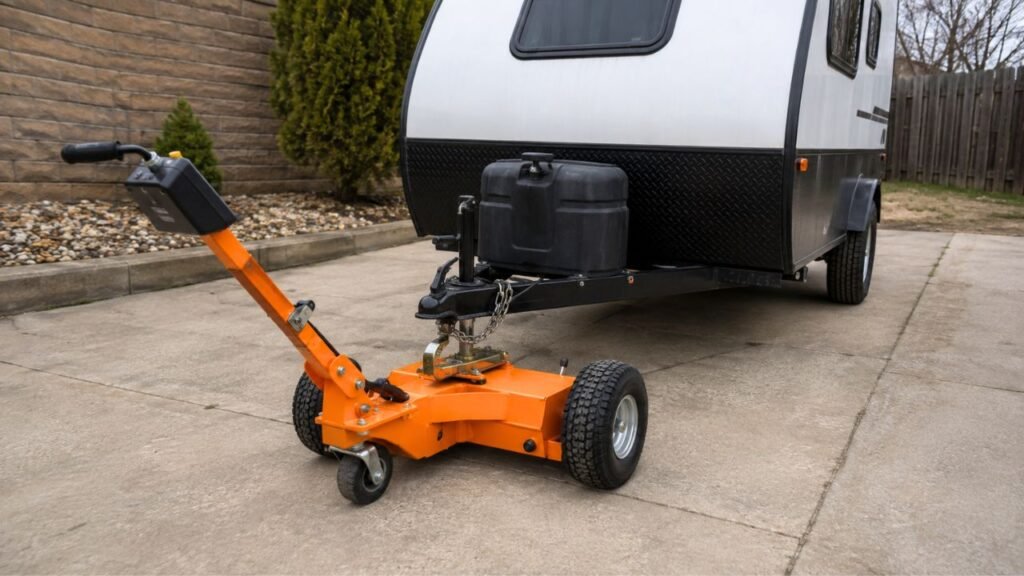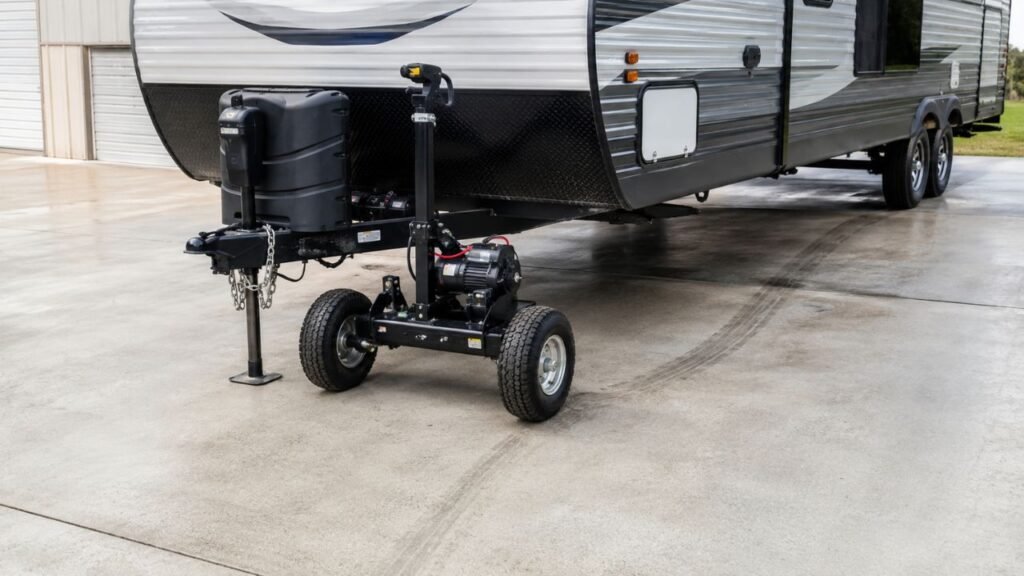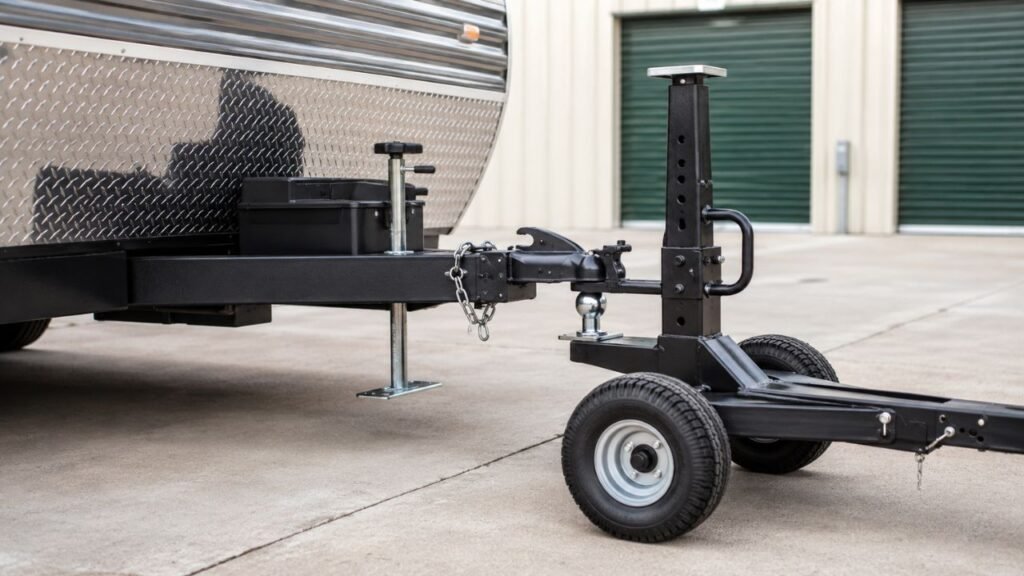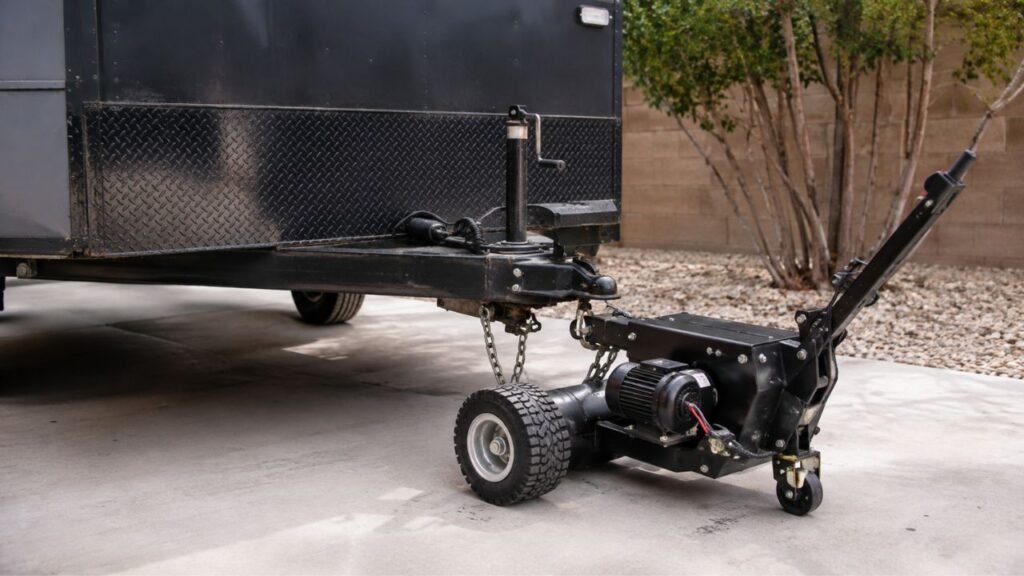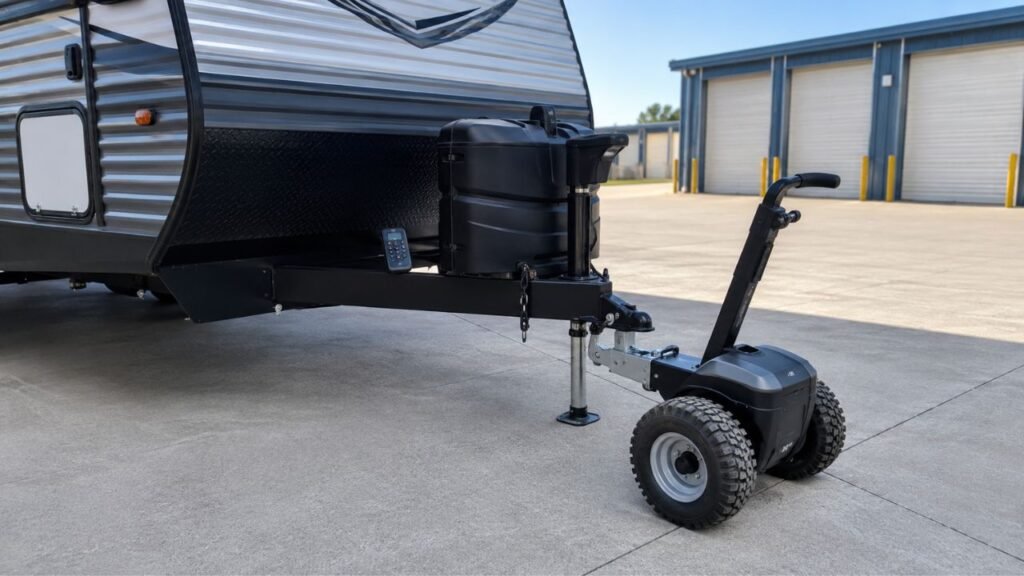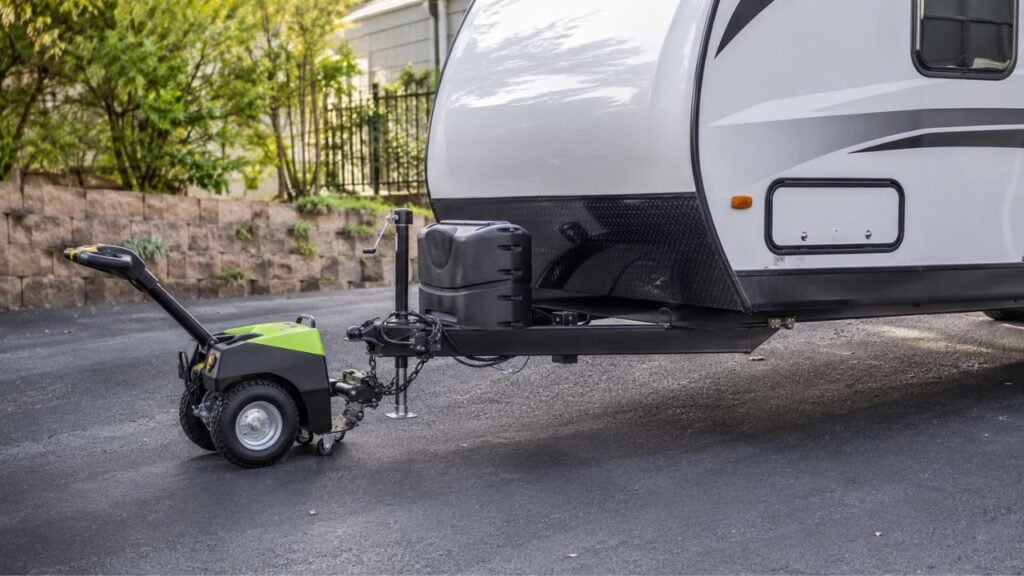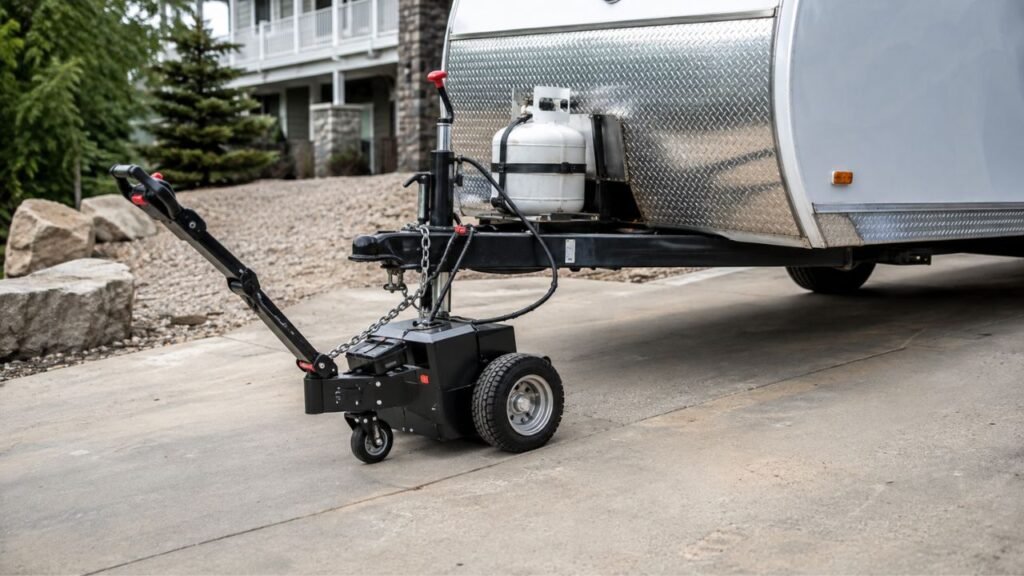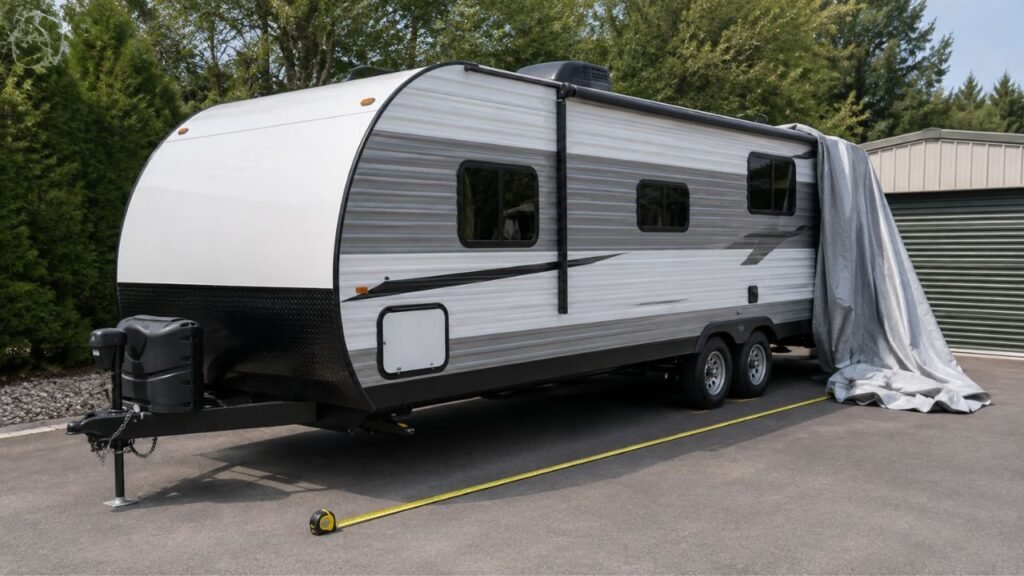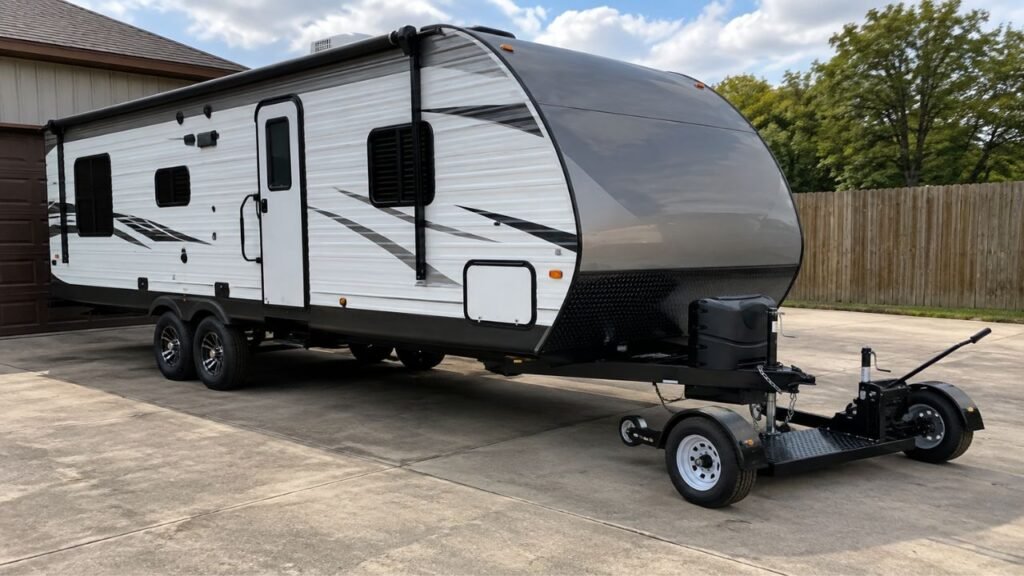
Yes, you can use a trailer dolly with a dual-axle trailer if the dolly is properly rated for the trailer’s loaded weight and tongue weight. The main challenge is turning. Tandem axles create more tire scrub and rolling resistance than single-axle trailers, especially during sharp turns.
If you are trying to park a travel trailer, boat trailer, or utility trailer in a tight space, I’ll help you figure out what works. We’ll cover capacity, tire scrub, turning technique, powered dollies, wheel dollies, surfaces, and the situations where using a dolly is not a good idea.
Key Takeaways
- A properly rated trailer dolly can move many dual-axle trailers.
- Tandem axles create more turning resistance than single axles.
- Tight turns make the trailer tires scrub sideways against the ground.
- Check both loaded trailer weight and tongue weight before choosing a dolly.
- Powered dollies are usually more practical for heavier tandem trailers.
- Wide, gradual turns reduce tire scrub and strain on the dolly.
- Tandem wheel dollies can help when extremely tight turns are necessary.
- Surface and slope limits vary between trailer dolly models.
- Never assume advertised trailer capacity also means unlimited tongue capacity.
- Stop if the dolly loses traction or the trailer becomes difficult to control.
Can You Use a Trailer Dolly With a Dual-Axle Trailer?
You can move a dual-axle trailer with a trailer dolly. However, the dolly must match the trailer and the conditions.
The trailer’s loaded weight must stay within the dolly’s trailer rating. Its actual tongue weight must also remain below the dolly’s tongue-weight limit.
The hitch connection needs to fit correctly as well. The ball size, coupler height, frame clearance, and attachment method all matter.
The biggest difference appears when you start turning.
A tandem trailer can roll surprisingly easily in a straight line. Start making a sharp turn, though, and resistance increases quickly.
That happens because the trailer has two fixed axles. Four tires are now trying to follow different paths around the corner.
They cannot all point into the turn like steering tires. Some of them must slide sideways slightly.
That is why a dual-axle trailer may feel manageable at first. Then the dolly suddenly feels much harder to steer.
The good news is that this resistance can usually be managed. Proper sizing, gradual turns, good traction, and the right equipment make a major difference.
Why Is a Dual-Axle Trailer Harder to Move With a Dolly?
A dual-axle trailer behaves differently during low-speed maneuvering. The extra axle improves stability on the road, but it also adds resistance during tight parking turns.
Tandem Axles Create Tire Scrub
Imagine looking directly down at your trailer during a turn.
The front axle wants to follow one curved path. The rear axle needs to follow a slightly tighter path.
However, neither axle actually steers.
The tires remain pointed mostly straight ahead while the trailer changes direction. This forces some tires to slide sideways across the pavement.
That sideways movement is called tire scrub.
You may notice:
- Black tire marks on concrete.
- Tire squealing during tight turns.
- Visible sidewall flex.
- Trailer tires appearing to twist slightly.
- Increased steering resistance at the dolly.
Some tire scrub is normal on tandem trailers during tight turns.
It becomes more noticeable when the pavement has strong grip. Smooth concrete can actually produce substantial scrub because the tires cannot slide easily.
Sharp Turns Require Much More Force
Moving the trailer straight mainly requires overcoming rolling resistance.
A sharp turn adds lateral resistance from four trailer tires. That resistance can be much greater.
This explains a common experience.
You may move your trailer forward without much difficulty. Then you turn the dolly sharply and everything suddenly feels stuck.
The dolly’s tires may even start spinning.
That does not necessarily mean the dolly lacks towing capacity. The tandem tires may simply be resisting the turn.
The tighter your steering angle becomes, the stronger that resistance usually gets.
Trailer Design Changes How Difficult Turning Feels
Not every tandem trailer behaves exactly the same.
Several factors affect maneuverability:
- Distance between the two axles.
- Trailer length.
- Tongue length.
- Tire width.
- Tire pressure.
- Suspension design.
- Loaded trailer weight.
- Weight distribution.
- Pavement grip.
- Dolly tire traction.
A lighter utility trailer may turn reasonably well manually. A heavier travel trailer can require significantly more effort.
That is why axle count alone cannot determine which dolly you need.
Does a Dual-Axle Trailer Need a Powered Dolly?
You do not automatically need an electric dolly because your trailer has two axles. Trailer weight, tongue weight, turning space, and surface conditions matter more.
| Dolly Type | Best For | Tandem-Axle Turning | Main Limitation |
| Basic manual dolly | Light trailers | Difficult as weight rises | Your body supplies all movement |
| Geared or crank dolly | Light-to-medium trailers | Better than basic manual models | Slow during repeated adjustments |
| Drill-powered dolly | Medium trailers | Good under suitable conditions | Traction and drill power can limit movement |
| Electric trailer dolly | Medium and heavy trailers | Very good | Tire scrub still affects tight turns |
| Remote-controlled mover | Heavy trailers and tight storage | Excellent control | Higher purchase cost |
A light tandem utility trailer on level concrete may be manageable manually.
However, heavier boat trailers, enclosed trailers, and travel trailers usually benefit more from powered movement.
An electric trailer dolly does not eliminate tire scrub. It simply gives you more controlled force to overcome it.
That distinction matters.
A powerful dolly can still lose traction if you force a heavy tandem trailer through an extremely sharp turn.
How Much Trailer Dolly Capacity Do You Need?
Trailer dolly ratings can become confusing because manufacturers often publish several numbers. You need to pay attention to both the trailer weight and the vertical load carried by the dolly.
Check the Fully Loaded Trailer Weight
Do not size your trailer dolly using only dry weight.
Dry weight usually excludes some or all cargo, water, accessories, batteries, propane, equipment, and personal belongings.
For a boat trailer, the load should include the boat.
For an equipment trailer, include the machine being carried.
For a utility trailer, include the cargo you normally move.
For a travel trailer, consider how it will actually be loaded while repositioning it.
Suppose your trailer weighs 5,000 pounds empty. After loading gear and supplies, it weighs 6,200 pounds.
A dolly rated for only 6,000 pounds would already be undersized.
Using actual loaded weight gives you a much more useful number.
Check Tongue Weight Separately
Tongue weight is the vertical force placed on the trailer hitch.
This matters because your dolly physically supports that load.
A mover may advertise a large trailer capacity while having a much lower tongue-weight rating.
Consider this example:
Loaded trailer weight: 6,000 pounds
Approximate conventional tongue weight: 600 to 900 pounds
If your measured tongue weight is 750 pounds, your dolly must safely support at least that amount.
A dolly rated for a 6,000-pound trailer but only 500 pounds of tongue weight would not be suitable.
Always use actual measured tongue weight when possible.
Leave Some Capacity Margin
I would avoid choosing a trailer dolly that operates exactly at its maximum rating.
Real-world conditions can increase resistance.
A sharp tandem turn, rough pavement, small incline, or uneven weight distribution may make the mover work harder.
Having capacity in reserve can make operation smoother.
However, there is no universal percentage that applies to every dolly. Follow the manufacturer’s ratings rather than inventing your own safety margin.
What Else Must Match Besides Weight Capacity?
Weight ratings are only part of the compatibility check. Your dolly also needs to physically connect to the trailer and operate without interference.
Hitch Ball and Coupler Size
Your trailer coupler must match the dolly’s hitch connection.
Common trailer ball sizes include:
- 1-7/8 inches.
- 2 inches.
- 2-5/16 inches.
Many heavier tandem trailers use 2-inch or 2-5/16-inch couplers.
Never assume the ball supplied with the dolly matches your trailer.
Check both components before putting the tongue weight onto the mover.
Coupler Height
The dolly must also reach your trailer’s coupler.
Some dollies have adjustable ball mounts. Others provide a smaller adjustment range.
The connection should remain stable while allowing the dolly to maintain good traction.
A badly mismatched height can cause problems.
The trailer may sit at an awkward angle. The mover can lose traction or become difficult to steer.
Measure your normal coupler height before buying the dolly.
Tongue Jack and Frame Clearance
The front of a travel trailer can become crowded.
You may have:
- An A-frame tongue jack.
- Propane cylinders.
- Battery boxes.
- Breakaway components.
- Weight-distribution brackets.
- Wiring.
- Safety-chain mounts.
The trailer dolly needs enough room to connect and steer.
Check whether the handle, ball mount, or drive assembly will hit nearby equipment during a turn.
This issue is especially important when the dolly must rotate sharply beneath the trailer tongue.
Trailer Brakes
Some powered trailer movers can work with trailer braking systems. Others cannot.
This matters most when using a heavy trailer or operating where the manufacturer permits a grade.
Do not assume the mover’s motor can safely stop a trailer downhill.
Propelling weight and controlling descending weight are two different jobs.
Follow the specific mover’s braking and grade instructions.
How Do You Move a Dual-Axle Trailer With a Dolly?
Moving a tandem trailer becomes much easier when you prepare the route first. Avoid connecting the dolly and simply hoping it can push through every obstacle.
- Confirm the trailer’s loaded weight: Use its realistic moving weight, not just dry weight.
- Check the tongue weight: Make sure it stays within the dolly’s vertical load rating.
- Inspect the route: Look for slopes, holes, loose gravel, curbs, drains, and narrow corners.
- Chock the trailer wheels: Keep the trailer secure while connecting the mover.
- Match the hitch connection: Verify ball size, coupler lock, and attachment security.
- Set the correct dolly height: Keep the connection stable without excessive trailer tilt.
- Check tongue clearance: Make sure the mover can steer without hitting equipment.
- Connect required safety equipment: Follow your dolly manufacturer’s instructions.
- Remove the wheel chocks only when ready: Maintain control before allowing movement.
- Begin with the trailer nearly straight: Avoid starting with an extreme steering angle.
- Move slowly: Small movements give you more time to correct direction.
- Make gradual steering changes: Give the tandem tires time to roll through the turn.
- Watch the trailer wheels: Tire behavior tells you how much resistance is building.
- Stop if traction disappears: Do not keep spinning the dolly’s drive wheels.
- Use another approach if needed: Several small corrections are better than one forced pivot.
- Chock the trailer before disconnecting: Never depend on the dolly alone after parking.
The key is patience.
Trailer dollies are great for precision. They are not designed to turn every parking maneuver into a zero-radius pivot.
How Should You Turn a Tandem-Axle Trailer With a Dolly?
Turning technique often matters more than raw motor power. A wider, controlled path reduces tire scrub and makes the mover’s job significantly easier.
Start With a Wider Turning Arc
Try to give the trailer more room than you think it needs.
Instead of immediately turning the dolly close to 90 degrees, begin with a moderate angle.
Allow the trailer to roll forward or backward while changing direction.
This helps the tires follow the turn rather than simply dragging sideways.
A larger turning radius also reduces stress on the dolly’s drive system.
Use Several Small Corrections Instead of One Hard Pivot
Suppose you need to place your trailer beside a garage.
You do not need one perfect turn.
Try this instead:
Move forward slightly.
Turn toward the space.
Straighten the trailer.
Reverse a short distance if needed.
Turn again.
Repeat until the trailer reaches the desired angle.
It takes a few more movements, but each movement requires less force.
This approach is much easier on tandem tires.
Watch the Trailer Tires, Not Just the Dolly
It is tempting to stare only at the trailer tongue.
Look back at the tandem tires as well.
Stop and reassess if you notice:
- Severe sidewall distortion.
- The dolly’s drive wheels spinning.
- The dolly sliding sideways.
- The trailer barely moving despite high effort.
- Unusual suspension movement.
- Sudden uncontrolled rolling.
- The hitch connection twisting excessively.
More throttle is not always the correct solution.
Sometimes the trailer is simply asking for a wider path.
Is Tire Scrub Bad for a Dual-Axle Trailer?
Some tire scrub is normal when a tandem-axle trailer makes a tight low-speed turn.
You may hear squeaking or see slight scuff marks. That does not automatically mean the tires or suspension are damaged.
The problem comes from repeatedly forcing extreme turns.
Heavy sideways scrubbing increases stress on the tires. It can also increase loads throughout the wheel and suspension system.
You may experience faster tread scuffing if the trailer regularly pivots sharply on high-grip concrete.
This does not mean you should be afraid to maneuver your trailer.
Just avoid making the tandem axles fight harder than necessary.
Use wider arcs whenever space allows.
If your storage layout requires extremely sharp turns every time, wheel dollies may be worth considering.
Can You Reduce Tire Scrub While Using a Trailer Dolly?
You cannot completely remove tandem tire scrub during every turn. You can, however, reduce it considerably by changing how the trailer moves.
Increase the Turning Radius
This is the simplest fix.
A broader turn lets the tandem tires roll farther before being forced sideways.
Whenever space is available, use it.
Trying to save two feet of driveway width may create much more resistance.
Straighten the Trailer Between Corrections
Do not keep the trailer at a severe angle throughout the entire maneuver.
Let it straighten periodically.
A short forward or backward movement can reset the tire position before the next correction.
This is especially helpful when parking inside a narrow garage.
Avoid Turning While Completely Stationary
Whenever possible, start rolling before applying a large steering input.
A tire that is moving can gradually follow the new direction.
A stationary tandem tire must twist or slide immediately.
Even a few inches of movement can reduce resistance.
Use Tandem-Axle Wheel Dollies for Very Tight Spaces
If your trailer must rotate through an unusually tight angle, wheel dollies can help.
These are different from the tongue-mounted trailer mover.
They go beneath trailer tires and allow supported wheels to move sideways more freely.
That can dramatically change how a tandem trailer behaves.
Do Wheel Dollies Help With a Dual-Axle Trailer?
Wheel dollies can be extremely useful when tandem tire scrub becomes the main obstacle. They are especially valuable when parking space is too tight for normal sweeping turns.
How Tandem Wheel Dollies Work
A normal tandem trailer has four tires resisting sideways movement.
A properly rated wheel-dolly system can support tires from one axle. Those supported wheels can then swivel or caster more freely.
That reduces the conflict between the two axles.
In practical terms, the trailer becomes easier to rotate.
The remaining axle can act more like the primary rolling axle while the supported tires follow the movement.
This can greatly reduce the force required from your tongue-mounted trailer dolly.
When Wheel Dollies Are Most Useful
Consider using them for situations such as:
- A 90-degree garage entrance.
- A narrow RV storage bay.
- Parking beside a house.
- Maneuvering behind a gate.
- Turning inside a small workshop.
- Repeated tandem tire squealing.
- Heavy tire scrub on smooth concrete.
- Dolly drive wheels repeatedly losing traction.
- Situations requiring the trailer to rotate almost in place.
They are less necessary when you have enough room for wide turns.
Do You Need One Wheel Dolly or a Pair?
This depends on the wheel-dolly design.
If the goal is supporting an entire axle, a matched pair is commonly used. One goes beneath the tire on each side.
However, different products use different configurations.
Do not assume two, four, or any other number works universally.
Check the wheel-dolly manufacturer’s instructions.
Each unit also has its own load rating.
Remember that a heavy travel trailer can place substantial weight onto each individual tire.
Which Axle Should You Put Wheel Dollies Under?
There is no single axle choice that applies to every tandem trailer.
Some tandem wheel-dolly systems are commonly positioned to unload one axle, often the front axle, during maneuvering.
The goal is reducing the fighting action between the two fixed axles.
However, your trailer suspension, load distribution, tire loading, and wheel-dolly design can affect proper placement.
I would not choose an axle simply because someone in a forum used that setup.
Follow the wheel-dolly manufacturer’s instructions for your trailer configuration.
The units must also support the actual load placed on them.
Can Adjusting Tongue Height Make a Tandem Trailer Easier to Turn?
Changing tongue height can sometimes change how weight is shared between tandem axles.
That may affect turning resistance.
However, I would not use large tongue-height changes as your main tire-scrub solution.
Raising or lowering the tongue can also change:
- Tongue weight.
- Dolly traction.
- Coupler geometry.
- Suspension loading.
- Trailer stability.
- Clearance beneath the trailer.
You do not want to solve tire scrub by creating another problem.
If extremely tight turning is a regular requirement, properly rated wheel dollies are usually a more controlled solution.
If your trailer or dolly manufacturer specifically recommends a certain tongue position, follow that guidance.
What Surface Works Best for a Dual-Axle Trailer Dolly?
The best surface depends partly on the trailer mover itself. Hard, firm ground usually provides predictable rolling, but high-grip pavement can also increase tandem tire scrub during very tight turns.
| Surface | General Suitability | Tandem-Axle Concern |
| Smooth concrete | Excellent | Strong grip can increase scrub in sharp turns |
| Asphalt | Excellent | Avoid forcing near-zero-radius pivots |
| Pavers | Usually good | Joints can catch small dolly wheels |
| Packed gravel | Model-dependent | Drive tires may spin during tight turns |
| Firm dry grass | Model-dependent | Traction can drop quickly when wet |
| Loose gravel | Poor for many dollies | Wheels may sink or spin |
| Mud or soft soil | Usually unsuitable | High rolling resistance and poor control |
| Inclines | Strictly model-dependent | Trailer may overpower the mover |
Never judge terrain capability by tire appearance alone.
A dolly can have aggressive tread while still being intended mainly for hard, level surfaces.
Some powered models are designed for firmer grass or packed gravel. Others specifically restrict those conditions.
Check the operating instructions for the actual mover you own.
Can You Use a Trailer Dolly on a Sloped Driveway?
Sometimes, but not every trailer dolly is designed for slopes.
This is one area where you should avoid general rules.
One manufacturer may prohibit incline use. Another may publish a specific maximum grade for a powered model.
Never assume a large towing-capacity number means the dolly can safely control that trailer downhill.
Moving the trailer uphill requires power.
Holding or stopping the same trailer downhill requires controlled braking.
Those are different demands.
If the manufacturer does not provide a slope rating, do not invent one yourself.
A tandem trailer can develop considerable momentum even at very low speeds.
Loose gravel, wet pavement, and grass make the situation more difficult.
For sloped storage areas, braking capability deserves as much attention as motor strength.
Manual vs Electric Trailer Dolly for a Dual-Axle Trailer
Both types can work with tandem trailers in the right conditions. The better option depends on weight, surface, turning difficulty, and how frequently you reposition the trailer.
When a Manual Dolly Can Work
A manual dolly can make sense for a lighter tandem trailer.
Ideal conditions include:
- Hard level pavement.
- Short travel distance.
- Generous turning room.
- Moderate tongue weight.
- Occasional repositioning.
You still provide the force needed to move the trailer.
That means tandem tire scrub can become tiring quickly.
A manual unit that feels comfortable in a straight line may become much harder during a tight garage turn.
When an Electric Dolly Makes More Sense
Powered dollies become more useful as trailer weight and maneuvering difficulty increase.
I would consider one when:
- You have a larger travel trailer.
- You own a heavy boat trailer.
- You frequently move the trailer alone.
- Your storage spot requires repeated corrections.
- Manual pushing causes excessive strain.
- Tandem resistance makes turning difficult.
- You need slow, controlled positioning.
The motor supplies movement while you concentrate on steering.
That can make precise parking much easier.
When You Need a Heavy-Duty Remote Mover
Remote-controlled movers can be especially helpful around large trailers.
You can stand where trailer clearance is easiest to see.
That can help when backing toward a garage wall, fence, storage bay, or parked vehicle.
These systems can be expensive, though.
Choose one because its capacity and control solve your parking problem, not simply because it has more features.
Dual-Axle Trailer Dolly vs Single-Axle Trailer Dolly Use
The same trailer dolly can sometimes work with either axle configuration. What changes is the effort required during turning.
| Factor | Single-Axle Trailer | Dual-Axle Trailer |
| Straight-line movement | Usually easy | Usually manageable |
| Tight turning | Easier | More resistant |
| Tire scrub | Lower | Higher |
| Turning radius | Can be tighter | Wider is usually better |
| Manual dolly effort | Lower | Higher |
| Benefit from powered dolly | Helpful | Often much greater |
| Need for wheel dollies | Rare | Helpful for extreme turns |
The important difference is not simply having two extra tires.
Those extra tires create a second fixed axle that resists rotation.
That is why a tandem trailer may require more thoughtful maneuvering despite using the same coupler and dolly.
Which Dual-Axle Trailers Work Well With Trailer Dollies?
Many tandem trailer types can be moved successfully with dollies. Their specific loading and storage conditions determine how practical the setup becomes.
Tandem-Axle Boat Trailers
Boat trailers are common candidates for powered dollies.
They often need precise positioning inside garages, storage buildings, and narrow driveways.
Always calculate weight with the boat loaded.
Include fuel, batteries, fishing equipment, water, and other gear when relevant.
A trailer that looks relatively light can become much heavier once fully prepared.
Marina surfaces can also vary considerably.
Smooth pavement is very different from wet ramps or loose gravel.
Never assume a dolly designed for driveway storage is suitable for boat-ramp use.
Dual-Axle Travel Trailers
A powered mover can be extremely useful for tandem travel trailers.
These trailers are often too heavy for comfortable manual movement.
They also have substantial tongue loads.
Check batteries, propane cylinders, cargo, water, and front storage compartments when estimating tongue weight.
Tight RV storage sites may also create significant tire scrub.
If your travel trailer must make a sharp turn before entering storage, wheel dollies may reduce resistance.
Tandem Utility and Enclosed Trailers
Utility trailers can vary dramatically in weight.
An empty tandem utility trailer may be relatively easy to move.
Load it with landscaping equipment and the situation changes.
Enclosed trailers can become especially heavy when carrying tools, motorcycles, commercial equipment, or inventory.
Always size the dolly for the loaded condition.
Car and Equipment Trailers
These trailers deserve extra attention because load placement affects tongue weight.
Moving a vehicle several inches forward can increase tongue weight substantially.
Moving it backward can reduce tongue weight.
That means the same trailer can place very different loads on your dolly depending on where the cargo sits.
Do not assume yesterday’s tongue weight remains correct after changing the load.
When Should You Not Use a Trailer Dolly on a Dual-Axle Trailer?
A trailer dolly is useful, but it is not appropriate for every situation.
Avoid using one when:
- The trailer exceeds the mover’s rated trailer capacity.
- Tongue weight exceeds the dolly’s vertical load limit.
- The coupler cannot connect securely.
- The trailer tongue interferes with steering.
- The driveway exceeds the manufacturer’s grade limit.
- The surface is too soft for safe operation.
- Loose gravel prevents dependable traction.
- Wet grass makes the mover slide.
- The drive tires continuously spin.
- The dolly begins moving sideways instead of steering.
- The trailer starts pushing the dolly uncontrollably.
- You cannot safely stop the trailer on the surface.
- The required maneuver exceeds the manufacturer’s intended use.
- You are trying to use the parking mover for road towing.
The moment you lose controlled movement, stop.
Do not try to overpower the trailer just because the dolly’s motor still runs.
Quick Dual-Axle Trailer Dolly Compatibility Checklist
Before buying or using a trailer dolly, check:
- Loaded trailer weight.
- Actual tongue weight.
- Dolly trailer-weight rating.
- Dolly tongue-weight rating.
- Number of trailer axles.
- Coupler type.
- Hitch-ball size.
- Coupler height.
- Tongue-jack clearance.
- Propane and battery clearance.
- Required turning radius.
- Available storage space.
- Surface material.
- Surface condition.
- Driveway grade.
- Dolly grade rating.
- Trailer braking needs.
- Dolly traction.
- Wheel-dolly compatibility.
- Wheel-dolly load capacity.
If those items match, you have a much better chance of getting predictable results.
Final Verdict
Yes, you can use a trailer dolly with a dual-axle trailer, and the right setup can make tight parking much easier.
The biggest challenge is not usually pulling the trailer straight. It is overcoming the tire scrub created when two fixed axles make a sharp turn.
Choose your dolly using both loaded trailer weight and tongue weight. Make sure the hitch connection and coupler height also match.
Once connected, move slowly and favor wide turning arcs.
If you need a 90-degree turn, use several smaller corrections instead of forcing one hard pivot.
For heavier travel trailers, boat trailers, and enclosed trailers, an electric mover usually provides better control than a basic manual dolly.
If tandem tire scrub still prevents the turn you need, properly rated wheel dollies can make a major difference.
Most importantly, respect the mover’s surface, slope, braking, and capacity limits.
A trailer dolly should make parking more controlled. If the trailer starts controlling the dolly instead, stop and change your approach.
Related FAQs
Can a Manual Trailer Dolly Move a Dual-Axle Trailer?
Yes, a manual trailer dolly can move some lighter dual-axle trailers on firm, level surfaces. However, tandem tire scrub makes sharp turns considerably harder as trailer weight increases.
Can an Electric Trailer Dolly Move a Tandem-Axle Travel Trailer?
Yes, if the travel trailer’s loaded weight and tongue weight stay within the electric dolly’s ratings. You must also follow its surface, grade, hitch, and braking requirements.
Why Does My Dual-Axle Trailer Fight the Dolly When Turning?
The two fixed axles want to follow different paths around a turn. Because the wheels cannot steer independently, several tires must scrub sideways, creating noticeable resistance.
Can You Make a 90-Degree Turn With a Dual-Axle Trailer Dolly?
Often you can, but several smaller forward and reverse corrections are usually easier than one hard pivot. Wheel dollies can help when extremely tight rotation is necessary.
Will Turning a Dual-Axle Trailer Damage the Tires?
Normal low-speed tandem turning creates some tire scrub and usually is not a problem. Repeated extreme pivoting can increase tread scuffing and stress on the tires and running gear.
Do Trailer Wheel Dollies Stop Tandem-Axle Tire Scrub?
They can greatly reduce tire scrub by allowing supported wheels to swivel instead of dragging sideways. Their effectiveness depends on proper placement, capacity, and trailer configuration.
Can You Use a Dual-Axle Trailer Dolly on Gravel?
Some powered dollies can work on firm packed gravel, while others require hard pavement. Loose gravel greatly reduces traction, so always follow the manufacturer’s surface recommendations.
Can You Use a Trailer Dolly on a Sloped Driveway?
Only when the specific trailer dolly is approved for that grade. Do not assume towing capacity also means the mover can safely stop a heavy trailer downhill.
Is Tongue Weight More Important Than Trailer Weight for a Dolly?
Both are important. Trailer weight determines how much mass the dolly must move, while tongue weight determines how much vertical load the dolly physically supports.
Should I Lift One Axle When Moving a Tandem Trailer?
Do not improvise by lifting an axle just to make turning easier. If axle unloading is needed, use properly rated wheel-dolly equipment according to its manufacturer’s instructions.

Jack Collins specializes in RV routes, trail access, and travel logistics. His how-to articles help RV and trailer owners plan smoother trips and avoid common mistakes. Every review focuses on performance, safety, and value.