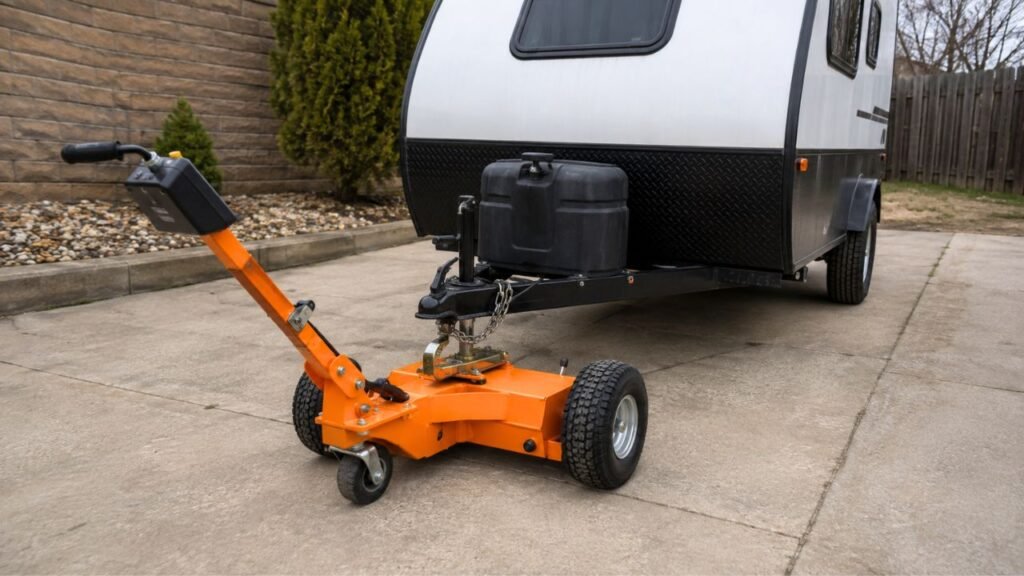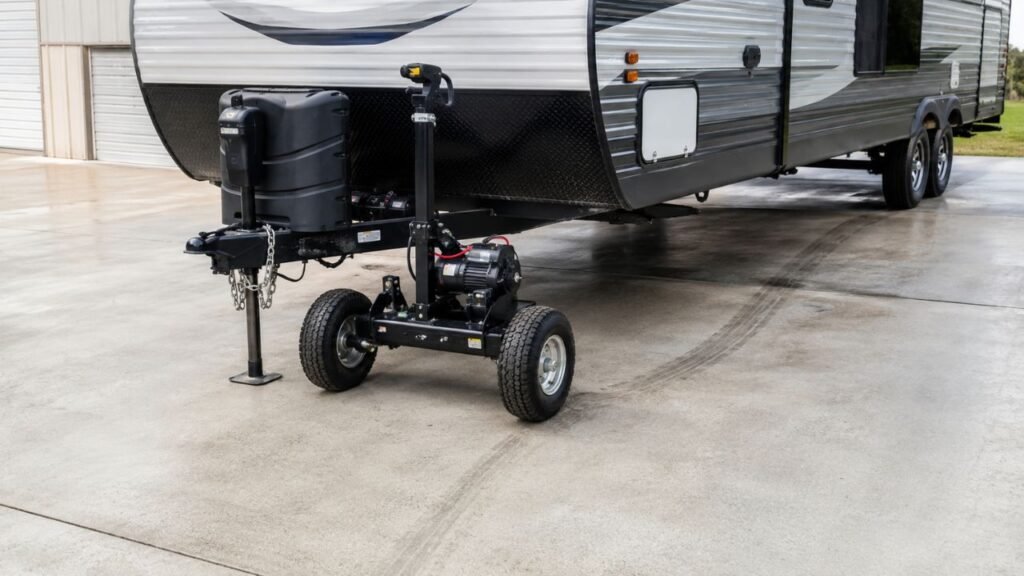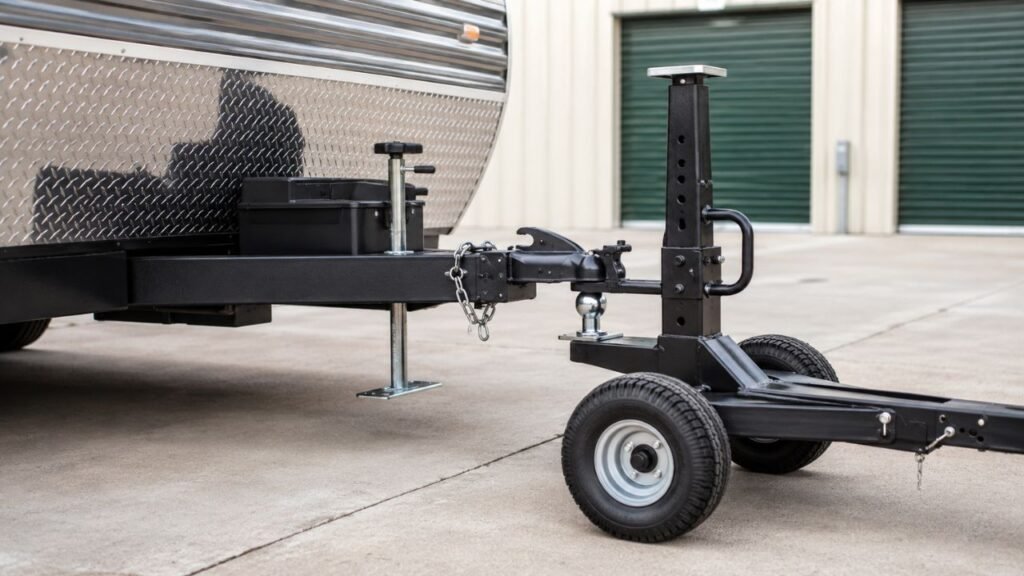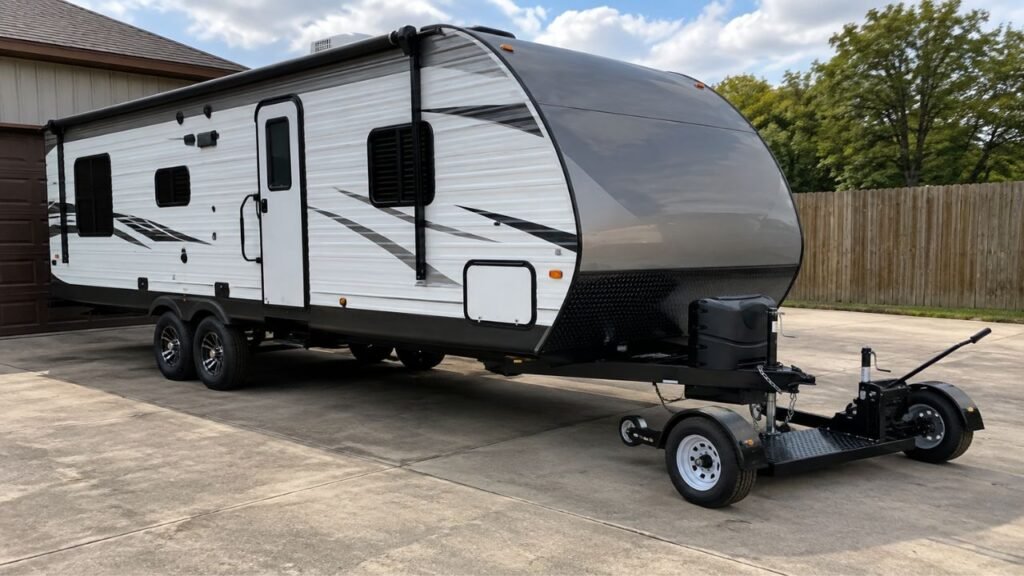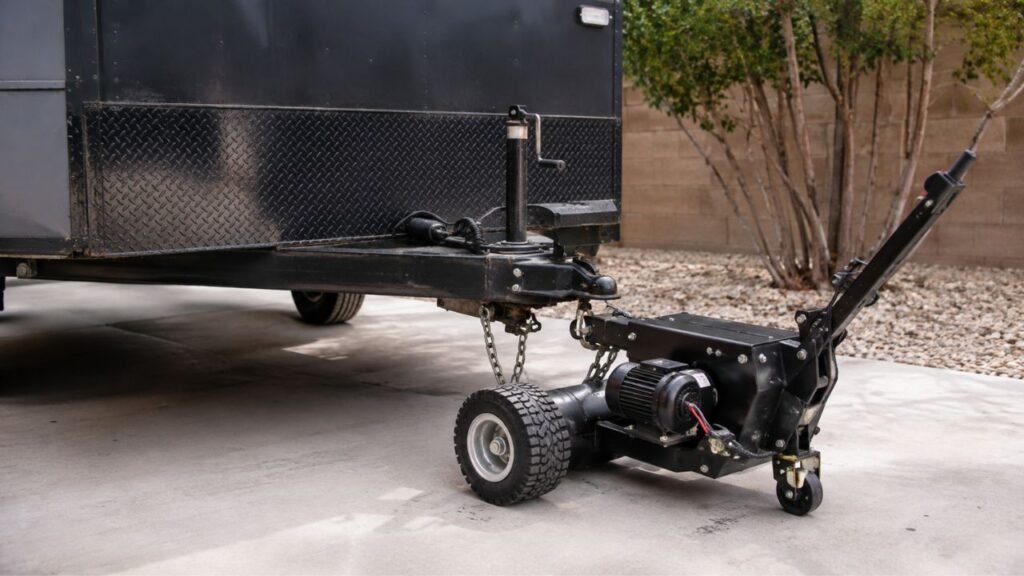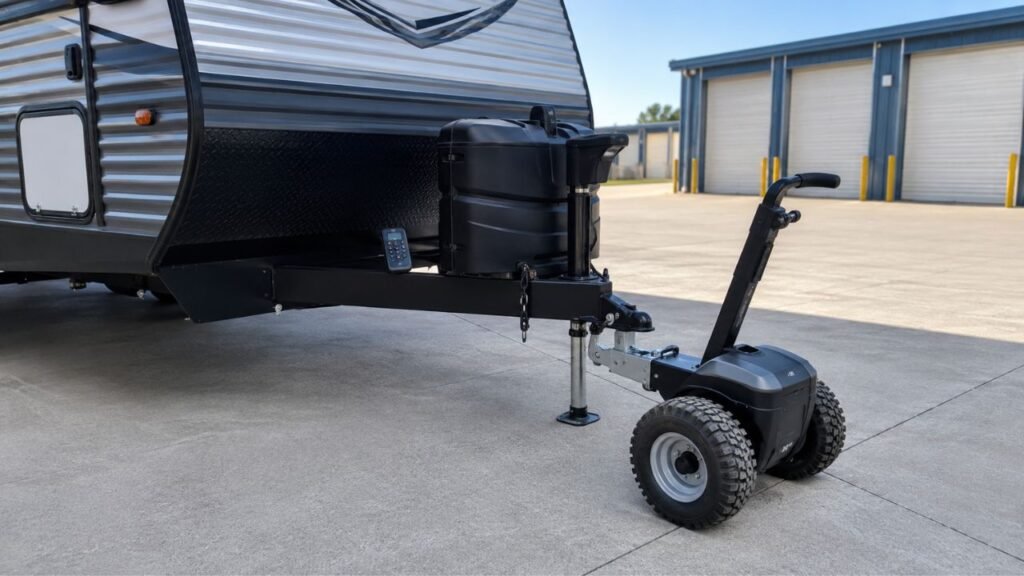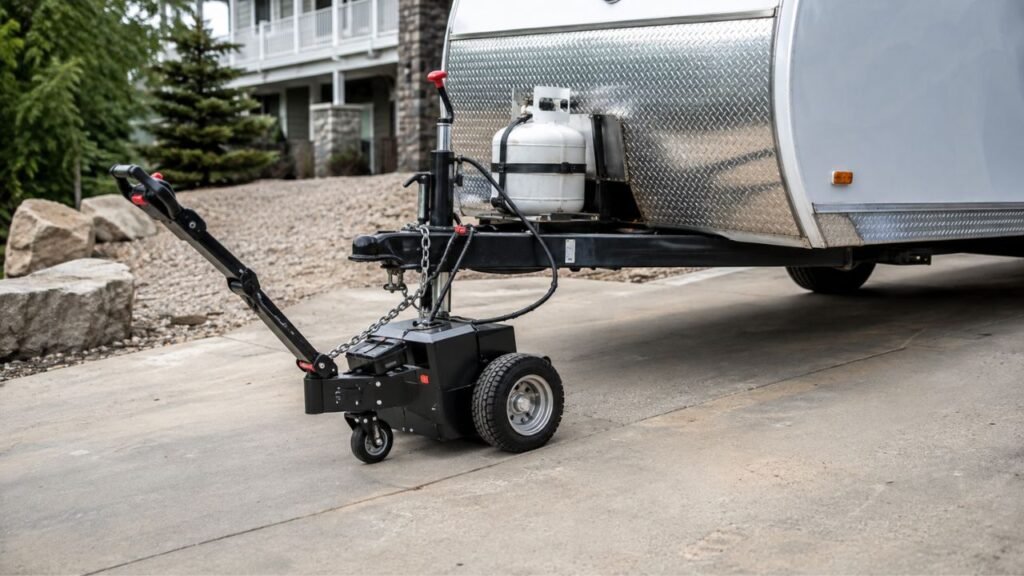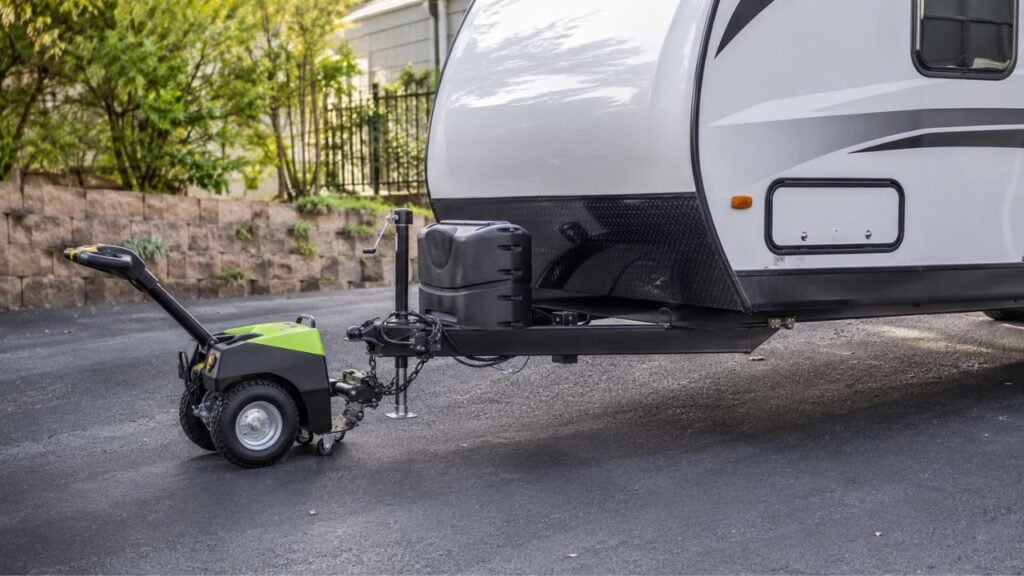
An electric trailer dolly usually trips its circuit breaker because the motor is drawing too much current or creating excessive heat. Heavy trailer load, steep grades, dragging brakes, rough surfaces, low battery voltage, mechanical binding, or an electrical fault can all trigger the protection.
The good news is that the trip pattern usually gives you clues. I’ll walk you through what to check, how to narrow down the cause, and when you should stop using the dolly rather than keep resetting the breaker.
Key Takeaways
- A tripping breaker usually means the dolly is protecting its motor or electrical system.
- Excessive trailer weight or tongue weight can overload the motor.
- Hills, gravel, grass, curbs, and tight turns increase resistance significantly.
- Dragging trailer brakes can make a properly sized dolly overload.
- Low battery voltage or loose connections can cause poor motor performance.
- Immediate trips and delayed trips often point toward different problems.
- Never install a larger breaker simply to prevent repeated trips.
Why Does an Electric Trailer Dolly Circuit Breaker Trip?
A circuit breaker is there to protect the dolly when electrical current becomes unsafe. When the motor must work harder than expected, current demand rises. The breaker opens the circuit before excessive current or heat can damage wiring, the motor, or other components.
This often happens during difficult trailer movement rather than during normal unloaded operation. Starting uphill, forcing the trailer across loose gravel, or trying to push against dragging brakes can dramatically increase the load.
You should also know which breaker is actually tripping.
Many electric trailer dollies run from a 12V, 24V, or similar battery system. They may have an onboard breaker protecting the motor. Some models also use separate protection for braking or electronic components.
That is different from your garage breaker or GFCI outlet tripping while the dolly battery is charging. I’ll cover that situation separately below.
What the Timing of the Breaker Trip Can Tell You
When the breaker trips can be just as useful as knowing that it trips. Before taking anything apart, notice exactly what the dolly was doing when power cut out.
| When the Breaker Trips | Possible Cause | What I Would Check First |
| Immediately after switching the dolly on | Wiring short, controller issue, motor fault | Wiring, connectors, damaged components |
| When forward or reverse is pressed | Jammed drivetrain, locked brakes, heavy starting load | Dolly wheels, trailer brakes, obstacles |
| Only after attaching the trailer | Excessive load or rolling resistance | Trailer weight and tongue weight |
| When climbing a driveway | Excessive grade or overloaded motor | Manufacturer’s slope rating |
| On gravel, grass, or uneven ground | High rolling resistance | Move to firm, level pavement |
| After several minutes of operation | Motor or breaker overheating | Let the dolly cool and reduce load |
| When the battery is weak | Voltage drop or poor battery condition | Battery charge and connections |
| Only while charging | Charger or household circuit problem | Charger, outlet, GFCI, extension cord |
| Even without a trailer | Internal electrical or mechanical issue | Motor, gearbox, controller, breaker |
The table is not a definite diagnosis. However, it gives you a much better starting point than repeatedly resetting the breaker and hoping the problem disappears.
Common Reasons Your Electric Trailer Dolly Keeps Tripping the Breaker
Most repeated trips come down to excessive resistance, insufficient electrical supply, heat, or a genuine electrical fault. I recommend checking the simple load-related problems first before assuming the motor or breaker has failed.
The Trailer Is Too Heavy for the Dolly
Every electric trailer dolly has limits.
You normally need to consider at least two ratings:
- Maximum trailer weight
- Maximum tongue weight
Owners sometimes check only total trailer weight. However, excessive tongue weight can place additional load directly on the dolly.
Also remember that the advertised maximum capacity is not a promise that the dolly can move that weight under every condition.
A dolly that handles a trailer comfortably on smooth concrete may struggle with the same trailer on a slope or loose gravel.
If your trailer is close to the dolly’s maximum rating, environmental resistance becomes much more important.
You Are Moving the Trailer on Too Steep a Grade
A slope can make an enormous difference to motor load.
The motor must not only overcome rolling resistance. It must also move a portion of the trailer’s weight against gravity.
That requires more torque and usually more current.
This is why your dolly may work perfectly across a flat garage floor but trip halfway up your driveway.
Check the maximum grade specified for your exact model. Do not assume every electric trailer dolly can handle the same incline.
If the driveway exceeds that rating, forcing the dolly uphill can repeatedly activate overload protection.
The Surface Creates Too Much Rolling Resistance
I would pay close attention to the surface if the dolly trips inconsistently.
Electric trailer dollies generally operate most easily on firm, level surfaces.
Resistance increases when you encounter:
- Loose gravel
- Grass
- Soft soil
- Deep cracks
- Driveway lips
- Large expansion joints
- Small curbs
- Depressions
- Uneven pavement
- Wheel chocks left in place
A small obstacle can become a surprisingly large load when thousands of pounds of trailer weight must roll across it.
Instead of holding the switch and forcing the dolly through the obstacle, stop and improve the path first.
The Trailer Brakes Are Dragging or Locked
This is one of the most important trailer-specific checks.
Your dolly can be correctly sized and still overload if the trailer wheels are resisting movement.
Dragging brakes may result from brake adjustment problems, electrical brake issues, a breakaway system problem, or mechanical binding.
The trailer may still move, but the dolly motor has to fight that resistance continuously.
That additional load can cause the breaker to trip after several seconds or minutes.
If possible, safely verify that the trailer wheels rotate freely before blaming the dolly.
The Dolly Wheel, Gearbox, Chain, or Drive System Is Binding
Resistance can also come from the dolly itself.
Inspect accessible moving components for:
- Stones or debris
- Damaged bearings
- Bent components
- Jammed gears
- Chain problems
- Improper drive engagement
- Rust or corrosion
- Lack of required lubrication
Listen while the dolly runs unloaded.
Grinding, clicking, squealing, or unusually slow wheel movement deserves investigation.
If the motor is fighting a partially seized drivetrain, replacing the breaker will not solve the real problem.
The Battery Is Weak or Voltage Drops Under Load
A battery-powered dolly needs more than a battery that simply shows voltage.
What matters is whether the battery can maintain adequate voltage when the motor is working.
An older or partially discharged battery may look normal while the dolly is sitting still. Once the motor begins pulling heavy current, however, voltage can drop sharply.
You may notice:
- Slower movement
- Weak starting torque
- Motor struggling under load
- Breaker trips during difficult moves
- Dolly works better immediately after charging
Charge the battery fully before troubleshooting further.
If the problem keeps returning, the battery itself may need testing.
A Battery Cable or Electrical Connection Is Loose or Corroded
Poor connections create resistance.
Resistance creates voltage loss and heat.
Inspect the battery terminals and other accessible connections with the dolly powered off.
Look for:
- Loose terminals
- Corrosion
- Darkened connectors
- Melted plastic
- Damaged insulation
- Frayed cables
- Crushed wiring
A connection can look attached while still being loose enough to create problems under heavy current.
If you find a connector that becomes unusually warm during operation, stop using the dolly until the issue is corrected.
The Motor Is Starting Under Too Much Load
Electric motors can draw considerably more current while starting than while already moving.
Normally, the system is designed to handle that temporary demand.
Problems happen when you ask the motor to start while the trailer is already heavily resisted.
For example:
- A trailer wheel is against a curb.
- You start directly uphill.
- A wheel is sitting in a depression.
- The trailer brakes are partially engaged.
- The dolly is attempting an extremely tight pivot.
- A tandem-axle trailer is scrubbing its tires heavily.
Instead of repeatedly pressing the control, remove the resistance first.
The Motor or Controller Is Overheating
Sometimes the dolly works normally at first and trips later.
That pattern often points toward heat accumulation.
A motor working near its limit produces more heat. Repeated stop-and-start movements can add even more.
Some dollies also use thermal protection inside the motor or controller. What feels like a circuit-breaker problem may actually be another protection system shutting the unit down.
Allow the dolly to cool according to the manufacturer’s instructions.
If it immediately begins overheating again under an ordinary load, there is probably another problem causing excessive demand.
There Is a Short Circuit or Internal Electrical Fault
A short circuit is more serious than an ordinary overload.
Possible causes include:
- Damaged insulation
- Pinched wiring
- Water intrusion
- Failed motor windings
- Damaged switches
- Controller failure
- Loose wires touching grounded metal
One warning sign is a breaker that trips almost immediately, even when the dolly is not moving a heavy trailer.
Do not repeatedly reset the breaker in that situation.
If you smell burning insulation, see sparks, or notice melted wiring, disconnect the power source and have the dolly inspected.
The Circuit Breaker Itself Is Weak or Damaged
Breakers can eventually fail.
A worn breaker may trip at lower current than intended.
However, I would not make the breaker your first suspect.
Most of the time, the breaker is responding to something else.
Replacing it without finding the cause could leave the same underlying overload, poor connection, or motor problem untouched.
Use only the breaker type and rating specified for your exact dolly.
High Ambient Temperature Is Making the Breaker Trip Earlier
Hot weather can make thermal protection more sensitive.
Imagine that your dolly has been sitting in direct summer sunlight before you begin moving a heavy trailer. Its motor, wiring, housing, and breaker may already be hot.
The system then has less thermal margin before protection activates.
This can explain why the same move works on a cool morning but causes trouble during a hot afternoon.
Let the dolly cool in a shaded area and reduce unnecessary repeated movements.
How to Troubleshoot an Electric Trailer Dolly That Keeps Tripping
I recommend troubleshooting in a specific order. Start with the simplest external causes before assuming an expensive motor, controller, or breaker has failed.
Step 1: Stop Repeatedly Resetting the Breaker
One reset after an obvious temporary overload may be reasonable according to your manual.
Repeated resetting is different.
If the breaker immediately trips again, stop operating the dolly.
The protection is responding to something that needs attention.
Step 2: Let the Dolly Cool Down
If the dolly has been working hard, give the motor and electrical components time to cool.
Follow the cooldown and reset procedure specified by your manufacturer.
Do not assume every dolly requires the same waiting period.
Some overload devices reset quickly, while thermal protection may require considerably longer.
Step 3: Confirm Trailer and Tongue Weight
Check your actual trailer weight against the dolly’s capacity.
Then confirm tongue weight separately.
Remember to account for cargo, water, propane, batteries, and equipment that may have been added since the trailer was originally weighed.
If you are very close to the maximum rating, reducing load can make a noticeable difference.
Step 4: Move to a Hard, Level Surface
If possible, test the dolly on smooth pavement or concrete.
Remove wheel chocks and clear the route.
Avoid using your first troubleshooting test on grass, deep gravel, or a steep driveway.
You want to know whether the dolly works under an easy, controlled condition.
Step 5: Make Sure the Trailer Wheels and Brakes Move Freely
Verify that the trailer itself is not fighting the dolly.
Check that the brakes are fully released.
If something feels unusually resistant, investigate the trailer before continuing to stress the dolly.
Step 6: Inspect the Dolly Wheels and Drive System
With power safely disconnected, check the accessible drivetrain.
Look for debris, damaged tires, binding components, or anything preventing free movement.
Do not place your hands around moving gears, chains, or powered wheels.
Step 7: Check Battery Condition
Fully charge the battery.
Inspect its age and physical condition.
If you have the appropriate equipment and knowledge, checking voltage under load can reveal a weak battery that appears normal while resting.
A dramatic voltage drop when the motor starts is a strong clue.
Step 8: Inspect Cables and Connections
Check battery cables, terminals, plugs, and connectors.
Tighten connections according to the manufacturer’s instructions.
Clean corrosion properly and replace visibly damaged wiring rather than trying to keep operating through it.
Step 9: Test the Dolly Without the Trailer
This is one of my favorite troubleshooting checks because it quickly separates load problems from internal problems.
Run the dolly unloaded on a safe, flat surface.
If it operates normally unloaded but trips with the trailer attached, focus on:
- Trailer weight
- Tongue weight
- Brakes
- Surface resistance
- Slope
- Tight turning resistance
If it still trips without the trailer, an internal mechanical or electrical issue becomes more likely.
Step 10: Test Under a Light, Controlled Load
Only continue if you found no damage, burning smell, excessive heat, or other unsafe condition.
A lighter load can help confirm whether the dolly is tripping specifically as motor demand rises.
Never keep increasing the load simply to find the exact point where the breaker trips.
What If the House Breaker Trips While Charging the Dolly?
A household breaker tripping while the battery charger is connected is a different problem from the dolly’s motor breaker tripping during movement.
Possible causes include an overloaded household circuit, faulty charger, damaged charging cord, moisture, ground fault, loose receptacle, or household wiring problem.
If you are charging in a garage or outdoors, you may also be using a GFCI-protected circuit. A GFCI can trip when it detects current leaking along an unintended path.
Unplug the charger if the breaker or GFCI repeatedly trips.
Do not keep resetting the house breaker while leaving a potentially faulty charger connected.
If the charger causes the same problem on an otherwise suitable circuit, have the charger inspected or replaced according to manufacturer guidance.
Can an Extension Cord Make an Electric Trailer Dolly Trip?
It depends on how your dolly receives power.
Many electric trailer dollies operate from onboard batteries. In that case, an AC extension cord is normally involved only during battery charging, not while the motor is moving the trailer.
If your particular dolly is directly cord-powered, follow its manual for extension-cord gauge and maximum length.
Long, undersized cords can create voltage drop.
For battery-powered dollies, similar problems can occur with undersized, excessively long, loose, or corroded DC cables.
The safest approach is simple: use only the cable arrangement and wire sizes approved for your model.
Can Tight Turns Cause a Trailer Dolly Breaker to Trip?
Yes, especially with heavier tandem-axle trailers.
During a tight turn, the trailer tires cannot always follow perfectly around the pivot.
Some tires scrub sideways against the pavement.
That resistance can become substantial on dry concrete or asphalt.
The dolly motor then needs considerably more torque than it does while moving straight.
If the breaker trips mainly during very tight turns, try making wider, gradual corrections rather than forcing the trailer around a sharp pivot.
Also verify that your specific dolly is suitable for your trailer configuration.
Why Does the Breaker Trip Uphill but Not on Flat Ground?
The motor has to work much harder uphill.
On level ground, it mainly overcomes rolling resistance.
On a slope, it also has to move part of the trailer’s weight against gravity.
That additional torque increases current demand.
This is why a trailer can be technically below the dolly’s maximum weight yet still overload the system on a steep driveway.
Check your manufacturer’s grade limit rather than relying only on the trailer-weight rating.
If your driveway exceeds that specification, another maneuvering method may be safer.
Why Does the Breaker Trip After a Few Minutes Instead of Immediately?
A delayed trip often suggests heat or sustained overload.
The dolly may begin operating normally, but the motor gradually heats as it continues pulling a difficult load.
Eventually, the breaker or thermal protection reaches its trip point.
Look for conditions that keep the motor working hard:
- Long uphill movement
- Heavy tongue weight
- Rough terrain
- Dragging brakes
- Repeated tight turns
- Weak battery
- Mechanical binding
An immediate trip can point toward a more severe overload, stalled motor, short circuit, or internal electrical problem.
The timing alone cannot prove the cause, but it helps narrow your search.
Should You Replace the Dolly’s Circuit Breaker?
Do not replace a tripping breaker simply because you are frustrated with resets. First determine why the protection is activating.
- Replace the breaker only if it is confirmed faulty.
- Use the exact breaker type specified by the manufacturer.
- Match the required amperage rating.
- Never install a higher-amperage breaker to prevent tripping.
- Never bypass or permanently bridge the breaker.
- Correct overload, wiring, battery, or mechanical problems first.
- Contact the manufacturer if you cannot identify the required replacement.
A larger breaker may allow wiring or the motor to overheat before protection activates.
That turns a nuisance problem into a potential equipment or fire hazard.
When Should You Stop Using the Trailer Dolly?
Some symptoms are not worth troubleshooting while the dolly remains powered. Stop operation when the signs suggest a serious electrical or mechanical problem.
- The breaker trips immediately after every reset.
- The dolly trips while running without a trailer.
- Wiring or connectors become very hot.
- You see melted plastic or darkened terminals.
- You smell burning insulation.
- Smoke or sparks appear.
- The motor makes grinding or harsh mechanical noises.
- Wiring insulation is cut or crushed.
- Battery terminals become excessively hot.
- The dolly trips repeatedly on flat pavement with a light load.
- The breaker will not reset normally.
Disconnect the battery or other power source according to the manufacturer’s procedure before inspecting damaged electrical components.
How to Prevent Your Electric Trailer Dolly From Tripping Again
Once you correct the immediate problem, a few operating habits can greatly reduce future overloads. Most of these also make trailer positioning smoother and easier.
- Stay comfortably within the dolly’s trailer-weight limit.
- Confirm the maximum permitted tongue weight.
- Follow the manufacturer’s maximum slope specification.
- Use hard, level surfaces whenever possible.
- Clear curbs, rocks, chocks, and obstacles before moving.
- Make sure trailer brakes are fully released.
- Keep trailer tires properly inflated.
- Maintain trailer wheel bearings correctly.
- Fully charge the dolly battery before demanding maneuvers.
- Keep battery terminals clean and tight.
- Inspect cables periodically for heat or damage.
- Avoid starting while a trailer wheel is against an obstacle.
- Use wider turns when tire scrub becomes excessive.
- Give the motor time to cool between difficult movements.
- Lubricate and maintain the drivetrain only as your manual directs.
- Use manufacturer-approved replacement electrical components.
Final Verdict
When your electric trailer dolly trips its circuit breaker, start by looking for excessive resistance rather than assuming the breaker is defective. Trailer weight, tongue weight, steep grades, rough surfaces, dragging brakes, and tight turns can all make the motor pull much more current than expected.
Next, check the battery and electrical connections. A weak battery, corroded terminal, damaged cable, or internal motor problem can produce similar symptoms.
The biggest clue is often whether the dolly trips only under load or also trips while unloaded. If it works normally without the trailer, focus on the trailer and operating conditions. If it still trips on flat ground without a meaningful load, stop using it until the electrical and mechanical systems can be properly inspected.
Most importantly, do not defeat the breaker. It is there to protect the dolly and, in some cases, protect you from a much more expensive or dangerous failure.
Related FAQs
Why Does My Electric Trailer Dolly Trip the Breaker Under Load?
The motor usually trips under load because the trailer requires more torque than the system can safely provide. Excessive weight, tongue weight, slope, rough ground, dragging brakes, or a weak battery can all increase motor current enough to activate the breaker.
Can a Low Battery Cause a Trailer Dolly to Shut Off?
Yes. A weak or partially discharged battery can experience substantial voltage drop when the motor starts pulling heavy current. The dolly may become slow, lose torque, shut down, or trigger its protection system when the voltage falls too far under load.
Can Too Much Tongue Weight Trip a Trailer Dolly Breaker?
Yes. Excessive tongue weight places additional load directly on the dolly and increases the torque required for movement and steering. Always check both the trailer-weight capacity and the tongue-weight limit for your particular dolly.
Will a Steep Driveway Overload an Electric Trailer Dolly?
It can. Moving uphill requires significantly more motor torque than moving the same trailer across level pavement. If your driveway exceeds the manufacturer’s rated grade, the motor may overload and trip the breaker even when the trailer itself is within the weight limit.
Can Dragging Trailer Brakes Cause the Breaker to Trip?
Yes. Dragging or partially locked trailer brakes increase rolling resistance and force the dolly motor to work continuously harder. If breaker trips begin unexpectedly, verifying that the trailer wheels and brakes move freely is one of the first checks I recommend.
Why Does My Trailer Dolly Work Unloaded but Trip With the Trailer Attached?
That usually points toward an overload or resistance problem rather than an immediate electrical short. Check trailer weight, tongue weight, brakes, tire condition, surface type, slope, and any obstacles preventing the trailer from rolling freely.
How Long Should I Wait Before Resetting a Trailer Dolly Breaker?
Use the cooldown and reset instructions provided for your exact dolly. Breaker and thermal-protection designs vary, so there is no universal waiting period. If the breaker trips immediately again after the required cooldown, stop using the dolly and investigate the cause.
Can a Bad Motor Cause a Trailer Dolly Breaker to Trip?
Yes. Damaged motor windings, worn internal parts, failed bearings, or other motor problems can increase current draw. A dolly that repeatedly trips even while unloaded or under very light demand should be inspected before further use.
Can Hot Weather Make a Trailer Dolly Circuit Breaker Trip?
It can contribute. A hot motor, breaker, and surrounding enclosure start with less ability to absorb additional heat. Heavy operation in high ambient temperatures can therefore cause thermal protection to activate sooner than it would under cooler conditions.
Is It Safe to Install a Larger Circuit Breaker in My Trailer Dolly?
No, unless the manufacturer specifically calls for that breaker rating as part of an approved repair. Installing a larger breaker simply to stop tripping can allow excessive current to overheat the motor or wiring before protection activates.An electric trailer dolly usually trips its circuit breaker because the motor is drawing too much current or creating excessive heat. Heavy trailer load, steep grades, dragging brakes, rough surfaces, low battery voltage, mechanical binding, or an electrical fault can all trigger the protection.
The good news is that the trip pattern usually gives you clues. I’ll walk you through what to check, how to narrow down the cause, and when you should stop using the dolly rather than keep resetting the breaker.
Key Takeaways
- A tripping breaker usually means the dolly is protecting its motor or electrical system.
- Excessive trailer weight or tongue weight can overload the motor.
- Hills, gravel, grass, curbs, and tight turns increase resistance significantly.
- Dragging trailer brakes can make a properly sized dolly overload.
- Low battery voltage or loose connections can cause poor motor performance.
- Immediate trips and delayed trips often point toward different problems.
- Never install a larger breaker simply to prevent repeated trips.
Why Does an Electric Trailer Dolly Circuit Breaker Trip?
A circuit breaker is there to protect the dolly when electrical current becomes unsafe. When the motor must work harder than expected, current demand rises. The breaker opens the circuit before excessive current or heat can damage wiring, the motor, or other components.
This often happens during difficult trailer movement rather than during normal unloaded operation. Starting uphill, forcing the trailer across loose gravel, or trying to push against dragging brakes can dramatically increase the load.
You should also know which breaker is actually tripping.
Many electric trailer dollies run from a 12V, 24V, or similar battery system. They may have an onboard breaker protecting the motor. Some models also use separate protection for braking or electronic components.
That is different from your garage breaker or GFCI outlet tripping while the dolly battery is charging. I’ll cover that situation separately below.
What the Timing of the Breaker Trip Can Tell You
When the breaker trips can be just as useful as knowing that it trips. Before taking anything apart, notice exactly what the dolly was doing when power cut out.
| When the Breaker Trips | Possible Cause | What I Would Check First |
| Immediately after switching the dolly on | Wiring short, controller issue, motor fault | Wiring, connectors, damaged components |
| When forward or reverse is pressed | Jammed drivetrain, locked brakes, heavy starting load | Dolly wheels, trailer brakes, obstacles |
| Only after attaching the trailer | Excessive load or rolling resistance | Trailer weight and tongue weight |
| When climbing a driveway | Excessive grade or overloaded motor | Manufacturer’s slope rating |
| On gravel, grass, or uneven ground | High rolling resistance | Move to firm, level pavement |
| After several minutes of operation | Motor or breaker overheating | Let the dolly cool and reduce load |
| When the battery is weak | Voltage drop or poor battery condition | Battery charge and connections |
| Only while charging | Charger or household circuit problem | Charger, outlet, GFCI, extension cord |
| Even without a trailer | Internal electrical or mechanical issue | Motor, gearbox, controller, breaker |
The table is not a definite diagnosis. However, it gives you a much better starting point than repeatedly resetting the breaker and hoping the problem disappears.
Common Reasons Your Electric Trailer Dolly Keeps Tripping the Breaker
Most repeated trips come down to excessive resistance, insufficient electrical supply, heat, or a genuine electrical fault. I recommend checking the simple load-related problems first before assuming the motor or breaker has failed.
The Trailer Is Too Heavy for the Dolly
Every electric trailer dolly has limits.
You normally need to consider at least two ratings:
- Maximum trailer weight
- Maximum tongue weight
Owners sometimes check only total trailer weight. However, excessive tongue weight can place additional load directly on the dolly.
Also remember that the advertised maximum capacity is not a promise that the dolly can move that weight under every condition.
A dolly that handles a trailer comfortably on smooth concrete may struggle with the same trailer on a slope or loose gravel.
If your trailer is close to the dolly’s maximum rating, environmental resistance becomes much more important.
You Are Moving the Trailer on Too Steep a Grade
A slope can make an enormous difference to motor load.
The motor must not only overcome rolling resistance. It must also move a portion of the trailer’s weight against gravity.
That requires more torque and usually more current.
This is why your dolly may work perfectly across a flat garage floor but trip halfway up your driveway.
Check the maximum grade specified for your exact model. Do not assume every electric trailer dolly can handle the same incline.
If the driveway exceeds that rating, forcing the dolly uphill can repeatedly activate overload protection.
The Surface Creates Too Much Rolling Resistance
I would pay close attention to the surface if the dolly trips inconsistently.
Electric trailer dollies generally operate most easily on firm, level surfaces.
Resistance increases when you encounter:
- Loose gravel
- Grass
- Soft soil
- Deep cracks
- Driveway lips
- Large expansion joints
- Small curbs
- Depressions
- Uneven pavement
- Wheel chocks left in place
A small obstacle can become a surprisingly large load when thousands of pounds of trailer weight must roll across it.
Instead of holding the switch and forcing the dolly through the obstacle, stop and improve the path first.
The Trailer Brakes Are Dragging or Locked
This is one of the most important trailer-specific checks.
Your dolly can be correctly sized and still overload if the trailer wheels are resisting movement.
Dragging brakes may result from brake adjustment problems, electrical brake issues, a breakaway system problem, or mechanical binding.
The trailer may still move, but the dolly motor has to fight that resistance continuously.
That additional load can cause the breaker to trip after several seconds or minutes.
If possible, safely verify that the trailer wheels rotate freely before blaming the dolly.
The Dolly Wheel, Gearbox, Chain, or Drive System Is Binding
Resistance can also come from the dolly itself.
Inspect accessible moving components for:
- Stones or debris
- Damaged bearings
- Bent components
- Jammed gears
- Chain problems
- Improper drive engagement
- Rust or corrosion
- Lack of required lubrication
Listen while the dolly runs unloaded.
Grinding, clicking, squealing, or unusually slow wheel movement deserves investigation.
If the motor is fighting a partially seized drivetrain, replacing the breaker will not solve the real problem.
The Battery Is Weak or Voltage Drops Under Load
A battery-powered dolly needs more than a battery that simply shows voltage.
What matters is whether the battery can maintain adequate voltage when the motor is working.
An older or partially discharged battery may look normal while the dolly is sitting still. Once the motor begins pulling heavy current, however, voltage can drop sharply.
You may notice:
- Slower movement
- Weak starting torque
- Motor struggling under load
- Breaker trips during difficult moves
- Dolly works better immediately after charging
Charge the battery fully before troubleshooting further.
If the problem keeps returning, the battery itself may need testing.
A Battery Cable or Electrical Connection Is Loose or Corroded
Poor connections create resistance.
Resistance creates voltage loss and heat.
Inspect the battery terminals and other accessible connections with the dolly powered off.
Look for:
- Loose terminals
- Corrosion
- Darkened connectors
- Melted plastic
- Damaged insulation
- Frayed cables
- Crushed wiring
A connection can look attached while still being loose enough to create problems under heavy current.
If you find a connector that becomes unusually warm during operation, stop using the dolly until the issue is corrected.
The Motor Is Starting Under Too Much Load
Electric motors can draw considerably more current while starting than while already moving.
Normally, the system is designed to handle that temporary demand.
Problems happen when you ask the motor to start while the trailer is already heavily resisted.
For example:
- A trailer wheel is against a curb.
- You start directly uphill.
- A wheel is sitting in a depression.
- The trailer brakes are partially engaged.
- The dolly is attempting an extremely tight pivot.
- A tandem-axle trailer is scrubbing its tires heavily.
Instead of repeatedly pressing the control, remove the resistance first.
The Motor or Controller Is Overheating
Sometimes the dolly works normally at first and trips later.
That pattern often points toward heat accumulation.
A motor working near its limit produces more heat. Repeated stop-and-start movements can add even more.
Some dollies also use thermal protection inside the motor or controller. What feels like a circuit-breaker problem may actually be another protection system shutting the unit down.
Allow the dolly to cool according to the manufacturer’s instructions.
If it immediately begins overheating again under an ordinary load, there is probably another problem causing excessive demand.
There Is a Short Circuit or Internal Electrical Fault
A short circuit is more serious than an ordinary overload.
Possible causes include:
- Damaged insulation
- Pinched wiring
- Water intrusion
- Failed motor windings
- Damaged switches
- Controller failure
- Loose wires touching grounded metal
One warning sign is a breaker that trips almost immediately, even when the dolly is not moving a heavy trailer.
Do not repeatedly reset the breaker in that situation.
If you smell burning insulation, see sparks, or notice melted wiring, disconnect the power source and have the dolly inspected.
The Circuit Breaker Itself Is Weak or Damaged
Breakers can eventually fail.
A worn breaker may trip at lower current than intended.
However, I would not make the breaker your first suspect.
Most of the time, the breaker is responding to something else.
Replacing it without finding the cause could leave the same underlying overload, poor connection, or motor problem untouched.
Use only the breaker type and rating specified for your exact dolly.
High Ambient Temperature Is Making the Breaker Trip Earlier
Hot weather can make thermal protection more sensitive.
Imagine that your dolly has been sitting in direct summer sunlight before you begin moving a heavy trailer. Its motor, wiring, housing, and breaker may already be hot.
The system then has less thermal margin before protection activates.
This can explain why the same move works on a cool morning but causes trouble during a hot afternoon.
Let the dolly cool in a shaded area and reduce unnecessary repeated movements.
How to Troubleshoot an Electric Trailer Dolly That Keeps Tripping
I recommend troubleshooting in a specific order. Start with the simplest external causes before assuming an expensive motor, controller, or breaker has failed.
Step 1: Stop Repeatedly Resetting the Breaker
One reset after an obvious temporary overload may be reasonable according to your manual.
Repeated resetting is different.
If the breaker immediately trips again, stop operating the dolly.
The protection is responding to something that needs attention.
Step 2: Let the Dolly Cool Down
If the dolly has been working hard, give the motor and electrical components time to cool.
Follow the cooldown and reset procedure specified by your manufacturer.
Do not assume every dolly requires the same waiting period.
Some overload devices reset quickly, while thermal protection may require considerably longer.
Step 3: Confirm Trailer and Tongue Weight
Check your actual trailer weight against the dolly’s capacity.
Then confirm tongue weight separately.
Remember to account for cargo, water, propane, batteries, and equipment that may have been added since the trailer was originally weighed.
If you are very close to the maximum rating, reducing load can make a noticeable difference.
Step 4: Move to a Hard, Level Surface
If possible, test the dolly on smooth pavement or concrete.
Remove wheel chocks and clear the route.
Avoid using your first troubleshooting test on grass, deep gravel, or a steep driveway.
You want to know whether the dolly works under an easy, controlled condition.
Step 5: Make Sure the Trailer Wheels and Brakes Move Freely
Verify that the trailer itself is not fighting the dolly.
Check that the brakes are fully released.
If something feels unusually resistant, investigate the trailer before continuing to stress the dolly.
Step 6: Inspect the Dolly Wheels and Drive System
With power safely disconnected, check the accessible drivetrain.
Look for debris, damaged tires, binding components, or anything preventing free movement.
Do not place your hands around moving gears, chains, or powered wheels.
Step 7: Check Battery Condition
Fully charge the battery.
Inspect its age and physical condition.
If you have the appropriate equipment and knowledge, checking voltage under load can reveal a weak battery that appears normal while resting.
A dramatic voltage drop when the motor starts is a strong clue.
Step 8: Inspect Cables and Connections
Check battery cables, terminals, plugs, and connectors.
Tighten connections according to the manufacturer’s instructions.
Clean corrosion properly and replace visibly damaged wiring rather than trying to keep operating through it.
Step 9: Test the Dolly Without the Trailer
This is one of my favorite troubleshooting checks because it quickly separates load problems from internal problems.
Run the dolly unloaded on a safe, flat surface.
If it operates normally unloaded but trips with the trailer attached, focus on:
- Trailer weight
- Tongue weight
- Brakes
- Surface resistance
- Slope
- Tight turning resistance
If it still trips without the trailer, an internal mechanical or electrical issue becomes more likely.
Step 10: Test Under a Light, Controlled Load
Only continue if you found no damage, burning smell, excessive heat, or other unsafe condition.
A lighter load can help confirm whether the dolly is tripping specifically as motor demand rises.
Never keep increasing the load simply to find the exact point where the breaker trips.
What If the House Breaker Trips While Charging the Dolly?
A household breaker tripping while the battery charger is connected is a different problem from the dolly’s motor breaker tripping during movement.
Possible causes include an overloaded household circuit, faulty charger, damaged charging cord, moisture, ground fault, loose receptacle, or household wiring problem.
If you are charging in a garage or outdoors, you may also be using a GFCI-protected circuit. A GFCI can trip when it detects current leaking along an unintended path.
Unplug the charger if the breaker or GFCI repeatedly trips.
Do not keep resetting the house breaker while leaving a potentially faulty charger connected.
If the charger causes the same problem on an otherwise suitable circuit, have the charger inspected or replaced according to manufacturer guidance.
Can an Extension Cord Make an Electric Trailer Dolly Trip?
It depends on how your dolly receives power.
Many electric trailer dollies operate from onboard batteries. In that case, an AC extension cord is normally involved only during battery charging, not while the motor is moving the trailer.
If your particular dolly is directly cord-powered, follow its manual for extension-cord gauge and maximum length.
Long, undersized cords can create voltage drop.
For battery-powered dollies, similar problems can occur with undersized, excessively long, loose, or corroded DC cables.
The safest approach is simple: use only the cable arrangement and wire sizes approved for your model.
Can Tight Turns Cause a Trailer Dolly Breaker to Trip?
Yes, especially with heavier tandem-axle trailers.
During a tight turn, the trailer tires cannot always follow perfectly around the pivot.
Some tires scrub sideways against the pavement.
That resistance can become substantial on dry concrete or asphalt.
The dolly motor then needs considerably more torque than it does while moving straight.
If the breaker trips mainly during very tight turns, try making wider, gradual corrections rather than forcing the trailer around a sharp pivot.
Also verify that your specific dolly is suitable for your trailer configuration.
Why Does the Breaker Trip Uphill but Not on Flat Ground?
The motor has to work much harder uphill.
On level ground, it mainly overcomes rolling resistance.
On a slope, it also has to move part of the trailer’s weight against gravity.
That additional torque increases current demand.
This is why a trailer can be technically below the dolly’s maximum weight yet still overload the system on a steep driveway.
Check your manufacturer’s grade limit rather than relying only on the trailer-weight rating.
If your driveway exceeds that specification, another maneuvering method may be safer.
Why Does the Breaker Trip After a Few Minutes Instead of Immediately?
A delayed trip often suggests heat or sustained overload.
The dolly may begin operating normally, but the motor gradually heats as it continues pulling a difficult load.
Eventually, the breaker or thermal protection reaches its trip point.
Look for conditions that keep the motor working hard:
- Long uphill movement
- Heavy tongue weight
- Rough terrain
- Dragging brakes
- Repeated tight turns
- Weak battery
- Mechanical binding
An immediate trip can point toward a more severe overload, stalled motor, short circuit, or internal electrical problem.
The timing alone cannot prove the cause, but it helps narrow your search.
Should You Replace the Dolly’s Circuit Breaker?
Do not replace a tripping breaker simply because you are frustrated with resets. First determine why the protection is activating.
- Replace the breaker only if it is confirmed faulty.
- Use the exact breaker type specified by the manufacturer.
- Match the required amperage rating.
- Never install a higher-amperage breaker to prevent tripping.
- Never bypass or permanently bridge the breaker.
- Correct overload, wiring, battery, or mechanical problems first.
- Contact the manufacturer if you cannot identify the required replacement.
A larger breaker may allow wiring or the motor to overheat before protection activates.
That turns a nuisance problem into a potential equipment or fire hazard.
When Should You Stop Using the Trailer Dolly?
Some symptoms are not worth troubleshooting while the dolly remains powered. Stop operation when the signs suggest a serious electrical or mechanical problem.
- The breaker trips immediately after every reset.
- The dolly trips while running without a trailer.
- Wiring or connectors become very hot.
- You see melted plastic or darkened terminals.
- You smell burning insulation.
- Smoke or sparks appear.
- The motor makes grinding or harsh mechanical noises.
- Wiring insulation is cut or crushed.
- Battery terminals become excessively hot.
- The dolly trips repeatedly on flat pavement with a light load.
- The breaker will not reset normally.
Disconnect the battery or other power source according to the manufacturer’s procedure before inspecting damaged electrical components.
How to Prevent Your Electric Trailer Dolly From Tripping Again
Once you correct the immediate problem, a few operating habits can greatly reduce future overloads. Most of these also make trailer positioning smoother and easier.
- Stay comfortably within the dolly’s trailer-weight limit.
- Confirm the maximum permitted tongue weight.
- Follow the manufacturer’s maximum slope specification.
- Use hard, level surfaces whenever possible.
- Clear curbs, rocks, chocks, and obstacles before moving.
- Make sure trailer brakes are fully released.
- Keep trailer tires properly inflated.
- Maintain trailer wheel bearings correctly.
- Fully charge the dolly battery before demanding maneuvers.
- Keep battery terminals clean and tight.
- Inspect cables periodically for heat or damage.
- Avoid starting while a trailer wheel is against an obstacle.
- Use wider turns when tire scrub becomes excessive.
- Give the motor time to cool between difficult movements.
- Lubricate and maintain the drivetrain only as your manual directs.
- Use manufacturer-approved replacement electrical components.
Final Verdict
When your electric trailer dolly trips its circuit breaker, start by looking for excessive resistance rather than assuming the breaker is defective. Trailer weight, tongue weight, steep grades, rough surfaces, dragging brakes, and tight turns can all make the motor pull much more current than expected.
Next, check the battery and electrical connections. A weak battery, corroded terminal, damaged cable, or internal motor problem can produce similar symptoms.
The biggest clue is often whether the dolly trips only under load or also trips while unloaded. If it works normally without the trailer, focus on the trailer and operating conditions. If it still trips on flat ground without a meaningful load, stop using it until the electrical and mechanical systems can be properly inspected.
Most importantly, do not defeat the breaker. It is there to protect the dolly and, in some cases, protect you from a much more expensive or dangerous failure.
Related FAQs
Why Does My Electric Trailer Dolly Trip the Breaker Under Load?
The motor usually trips under load because the trailer requires more torque than the system can safely provide. Excessive weight, tongue weight, slope, rough ground, dragging brakes, or a weak battery can all increase motor current enough to activate the breaker.
Can a Low Battery Cause a Trailer Dolly to Shut Off?
Yes. A weak or partially discharged battery can experience substantial voltage drop when the motor starts pulling heavy current. The dolly may become slow, lose torque, shut down, or trigger its protection system when the voltage falls too far under load.
Can Too Much Tongue Weight Trip a Trailer Dolly Breaker?
Yes. Excessive tongue weight places additional load directly on the dolly and increases the torque required for movement and steering. Always check both the trailer-weight capacity and the tongue-weight limit for your particular dolly.
Will a Steep Driveway Overload an Electric Trailer Dolly?
It can. Moving uphill requires significantly more motor torque than moving the same trailer across level pavement. If your driveway exceeds the manufacturer’s rated grade, the motor may overload and trip the breaker even when the trailer itself is within the weight limit.
Can Dragging Trailer Brakes Cause the Breaker to Trip?
Yes. Dragging or partially locked trailer brakes increase rolling resistance and force the dolly motor to work continuously harder. If breaker trips begin unexpectedly, verifying that the trailer wheels and brakes move freely is one of the first checks I recommend.
Why Does My Trailer Dolly Work Unloaded but Trip With the Trailer Attached?
That usually points toward an overload or resistance problem rather than an immediate electrical short. Check trailer weight, tongue weight, brakes, tire condition, surface type, slope, and any obstacles preventing the trailer from rolling freely.
How Long Should I Wait Before Resetting a Trailer Dolly Breaker?
Use the cooldown and reset instructions provided for your exact dolly. Breaker and thermal-protection designs vary, so there is no universal waiting period. If the breaker trips immediately again after the required cooldown, stop using the dolly and investigate the cause.
Can a Bad Motor Cause a Trailer Dolly Breaker to Trip?
Yes. Damaged motor windings, worn internal parts, failed bearings, or other motor problems can increase current draw. A dolly that repeatedly trips even while unloaded or under very light demand should be inspected before further use.
Can Hot Weather Make a Trailer Dolly Circuit Breaker Trip?
It can contribute. A hot motor, breaker, and surrounding enclosure start with less ability to absorb additional heat. Heavy operation in high ambient temperatures can therefore cause thermal protection to activate sooner than it would under cooler conditions.
Is It Safe to Install a Larger Circuit Breaker in My Trailer Dolly?
No, unless the manufacturer specifically calls for that breaker rating as part of an approved repair. Installing a larger breaker simply to stop tripping can allow excessive current to overheat the motor or wiring before protection activates.

Jack Collins specializes in RV routes, trail access, and travel logistics. His how-to articles help RV and trailer owners plan smoother trips and avoid common mistakes. Every review focuses on performance, safety, and value.