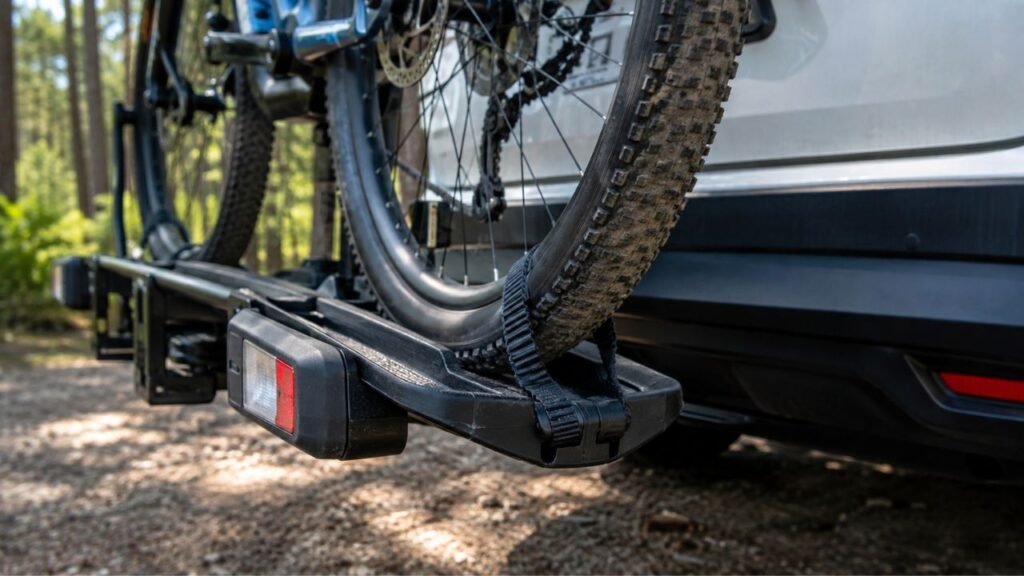
RV bike-rack wheel straps usually come loose because road vibration, rear-of-RV bouncing, and bike movement reduce their original tension. Worn buckles, incorrect strap routing, loose wheel placement, oversized tires, and excessive rack movement can make the problem much worse.
In this guide, I’ll help you figure out what is actually moving. You’ll also learn how to tighten, inspect, replace, and secure your setup properly.
Key Takeaways
- RV rear overhang creates stronger bouncing than most passenger vehicles.
- A loose strap does not always mean the buckle slipped.
- The wheel may shift inside its tray and reduce tension.
- Worn ratchet teeth or damaged straps should be replaced promptly.
- Fat tires may need wider trays or approved strap extensions.
- Excessive rack movement can loosen otherwise good wheel straps.
- Use an RV-approved rack whenever your rack manufacturer requires one.
- Backup straps should add security, not hide a damaged main system.
Why Do Bike-Rack Wheel Straps Loosen More Behind an RV?
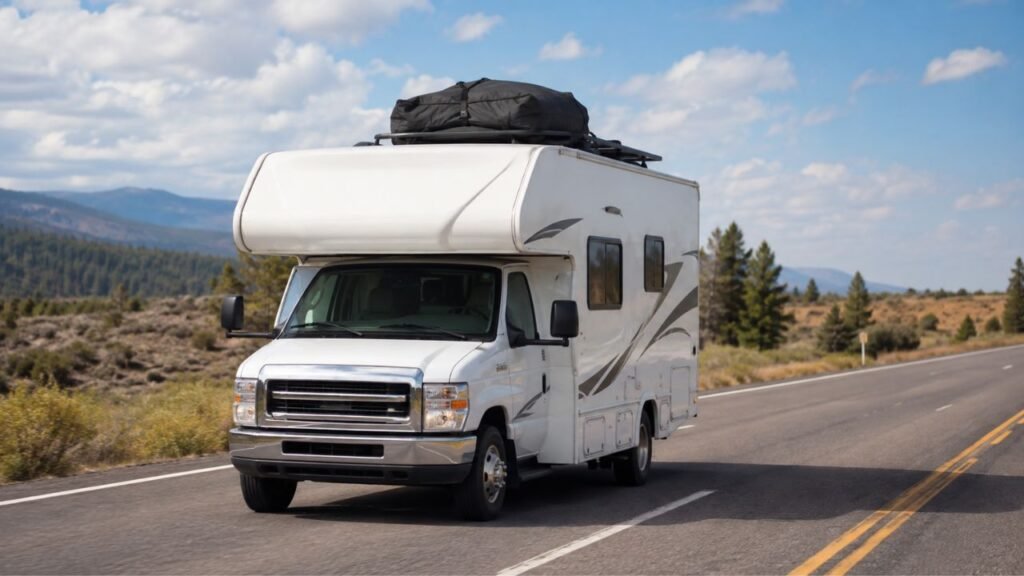
The back of an RV can be a rough place for bicycles. Small road impacts can create surprisingly large movements at the rack. Understanding that motion makes the strap problem easier to diagnose.
Rear-Of-RV Bounce Amplifies Road Shock
The farther your bike rack sits behind the rear axle, the more movement it can experience.
Think about a long diving board. A small movement near its base becomes much larger near the end.
Your RV behaves in a similar way.
The hitch-mounted rack may rise and fall more aggressively than the RV body. Potholes, bridge joints, rough pavement, and uneven campsites can create repeated vertical movement.
That repeated motion loads and unloads the wheel straps thousands of times.
Even when a strap starts tight, the wheel can slowly settle. Once that happens, the strap may feel noticeably looser.
Travel trailers can make this effect even stronger. Their suspension and long rear overhang can expose the rack to significant bouncing.
Repeated Bike Movement Can Remove Strap Tension
Sometimes the buckle never slips at all.
Instead, the bicycle moves slightly inside the rack.
For example, imagine tightening a strap while the rear tire sits slightly high in the tray. After several miles, road vibration pushes the tire deeper into the cradle.
The strap has not changed length.
However, the distance around the wheel and tray has changed slightly. That creates slack.
This is why repeatedly tightening the strap may not fix anything. You need to find out why the wheel keeps moving.
Hitch And Rack Play Increase The Problem
A small amount of movement at the receiver can become noticeable movement at the bikes.
Check every connection between:
- The RV receiver and rack shank
- The rack’s folding or pivot mechanism
- The vertical mast
- The wheel trays
- The bike-retention arms
- Any adjustable wheel cradles
One loose connection can let the rack rock from side to side.
That motion transfers directly into the bicycles.
Always use the hitch pin, threaded fastener, anti-rattle device, or tightening system specified by your rack manufacturer.
Avoid improvising with hardware that changes how the rack attaches.
Wind Buffeting Can Add Movement
Wind does affect bicycles mounted behind an RV.
Crosswinds, passing trucks, and highway airflow can push bikes sideways. Large frames and wide handlebars create even more surface area.
However, wind usually is not the only reason straps loosen.
If a strap repeatedly becomes slack, inspect the entire system. Look at the wheel position, buckle, tray, hitch, and rack movement.
Seven Reasons Your RV Bike-Rack Wheel Strap Keeps Coming Loose
Several problems can create the same symptom. The key is finding whether the strap, wheel, or rack is actually moving.
1. The Wheel Is Not Fully Seated In The Tray
This is one of the easiest problems to miss.
The tire should sit where the rack manufacturer intended. It should not balance on the edge of the wheel cradle.
If the tire starts slightly out of position, towing vibration may move it deeper.
The strap then loses tension.
Before tightening anything, center the bicycle properly. Check both wheels and confirm that the bike sits naturally in the rack.
If the wheel tray adjusts for wheelbase, set it correctly first.
2. The Strap Is Entering The Buckle At The Wrong Angle
Wheel straps normally work best when they pull straight into their buckle.
A twisted strap or sideways pull can create poor engagement.
The strap may also rub against:
- Spokes
- Tire edges
- Wheel trays
- Brake rotors
- Valve stems
- Nearby rack hardware
Check the strap path before every trip.
It should follow the routing shown in your rack instructions. Avoid forcing the strap into an angle simply because the bike fits tightly.
3. Too Little Of The Strap Is Engaged
A buckle needs enough strap engagement to hold securely.
Problems often appear when a larger tire leaves very little strap inside the buckle.
You may get the strap closed, but only barely.
That can happen after switching from a standard bike to:
- A fat-tire bike
- A plus-size tire
- A deeper wheel
- A different wheel diameter
Do not assume that reaching the buckle means the strap fits properly.
Check your rack’s tire-width limits. Use an approved extension if the manufacturer offers one.
4. The Strap Or Buckle Is Worn
Wheel straps live outside.
They deal with sunlight, rain, dirt, road grime, heat, and cold.
Over time, the material can deteriorate.
Inspect for:
- Cracked rubber or plastic
- Rounded ratchet teeth
- Torn strap holes
- Deep cuts
- Bent buckle parts
- Stiff or brittle material
- Deformed strap ends
- Loose buckle mounting hardware
A strap that looks questionable is not worth trusting.
Replacing a worn strap is much cheaper than losing a bicycle.
5. Your Tire Is Too Wide For The Standard Strap Or Tray
Fat tires create two separate problems.
First, the tire may not sit deeply enough inside a narrow tray.
Second, the original strap may barely reach around it.
This creates poor wheel support and weak strap engagement.
Do not squeeze a very wide tire into a tray designed for narrow road or mountain-bike tires.
Instead, check whether your rack supports:
- Wider wheel cradles
- Fat-tire adapters
- Longer wheel straps
- Manufacturer-approved extensions
The entire wheel should sit securely before you tighten it.
6. The Bike’s Main Retention System Is Not Tight Enough
Many platform racks use more than one retention point.
The wheel strap may only stabilize one end of the bicycle.
Another component handles much of the main holding force.
Depending on your rack, that may include:
- A front-wheel hook
- A frame hook
- A vertical arm
- A wheel clamp
- A mast-mounted cradle
If that main restraint is loose, the entire bike can rock.
The rear wheel strap then gets pulled repeatedly during towing.
Tighten every retention point according to the rack instructions. Do not expect one wheel strap to control the entire bicycle.
7. The Rack Is Not Designed For RV Use
A rack fitting your receiver does not automatically make it RV-safe.
Rear-mounted racks on RVs can experience much stronger dynamic loads. Some manufacturers therefore approve only certain models for motorhomes, fifth wheels, or travel trailers.
This matters because a rack designed for a passenger car may move excessively behind an RV.
Before towing, check:
- RV compatibility
- Trailer compatibility
- Receiver size
- Per-bike weight rating
- Total rack capacity
- E-bike restrictions
- Tire-width compatibility
Your wheel straps are only one part of the system.
If the rack itself is unsuitable, stronger straps will not solve the underlying problem.
Quick Diagnosis: What Is Actually Making Your Strap Loose?
You can narrow down the problem by watching what changes. The pattern often tells you whether the strap, wheel, or rack needs attention.
| What You Notice | Most Likely Cause | What To Inspect | Likely Fix |
| Strap physically moves through buckle | Worn or poorly engaged buckle | Ratchet teeth and strap | Re-route or replace correct part |
| Buckle stays locked but strap becomes slack | Wheel shifted in tray | Tire position and wheel cradle | Reposition wheel properly |
| Both bikes loosen together | Excessive rack movement | Hitch and rack joints | Correct rack installation |
| Only fat-tire bike loosens | Tire or strap incompatibility | Tire width and strap length | Use approved adapter or extension |
| Strap loosens after rough roads | Dynamic movement | Rack rating and bike retention | Correct setup or use RV-rated rack |
| Strap looks cracked or stiff | Age and weather damage | Entire strap | Replace strap |
| One tray always loosens | Damaged buckle or tray | Compare both trays | Repair or replace component |
A useful test is comparing both bike positions.
If one side stays secure while another loosens, inspect that specific tray and buckle first.
If every bike moves together, look closely at the rack and hitch connection.
How Do You Stop RV Bike-Rack Wheel Straps From Coming Loose?
Fixing the problem means removing movement wherever possible. Start with the rack itself, then work toward the wheel straps.
Confirm The Rack Is Approved For Your RV Setup
Check the manufacturer’s current instructions before loading bikes.
Look specifically for compatibility with:
- Motorhomes
- Travel trailers
- Fifth wheels
- Flat-towed vehicles
- Your receiver size
Do not rely only on the hitch size.
A 2-inch receiver may accept the rack physically. That does not guarantee the rack was designed for RV-level movement.
Also confirm the weight rating for your exact setup.
Some racks may have different limits depending on where they are installed.
Seat Each Wheel Completely Before Tightening Anything
Load the bicycle and check its position before using the straps.
Both wheels should sit naturally inside their trays.
If the rack uses adjustable trays, move them until the bicycle sits without being forced sideways.
Then secure the primary bike-retention system.
Finish with the wheel straps.
This order helps prevent the strap from holding a poorly positioned bicycle.
Route And Tighten The Strap Correctly
Run the strap exactly as the rack manufacturer intended.
Before tightening, confirm that it is:
- Flat rather than twisted
- Clear of sharp edges
- Away from the valve stem
- Not pressing against delicate spokes
- Properly aligned with the buckle
- Long enough for the tire
Pull the strap snug.
It should prevent wheel movement without crushing the tire or damaging the rim.
More force is not always better.
Tighten The Rack’s Primary Bike Retention
Next, check the main retention mechanism.
If your rack uses a wheel hook, make sure it contacts the tire where required.
If it uses a frame clamp, position it on an approved frame location.
And, if it uses a vertical mast, confirm every cradle and strap is secure.
Give the bicycle a firm shake afterward.
It should not rock freely inside the rack.
Eliminate Excessive Rack Movement
Stand behind the RV and move the rack by hand.
Some small flex may be normal.
However, large movement at the receiver or folding joint deserves attention.
Check:
- Hitch pin
- Threaded hitch bolt
- Anti-rattle mechanism
- Pivot bolt
- Folding latch
- Wheel-tray hardware
- Rack mounting bolts
Use the manufacturer’s recommended tightening method.
If something continues moving after proper adjustment, inspect for wear.
Add Secondary Retention When Appropriate
An extra strap can provide useful backup security.
Heavy-duty hook-and-loop straps are commonly used around a wheel and tray. Some rack makers also offer additional retention accessories.
However, treat secondary straps as backup protection.
Do not use them to compensate for:
- Broken buckles
- Damaged wheel trays
- Overloaded racks
- Incorrect tire fit
- Non-compatible rack installations
Fix the actual problem first.
Check The Bikes Early In Your Trip
Inspect everything after the rack has experienced some road vibration.
A good routine is checking the rack at your first safe stop.
Look for:
- Strap tension
- Wheel position
- Hitch movement
- Bike-to-bike contact
- Loose accessories
- Shifted wheel trays
Continue checking during fuel, food, or rest stops.
Regular inspection can catch a small problem before it becomes serious.
Should You Replace A Loose Wheel Strap With A Heavier Ratchet Strap?
Usually, replacing the original wheel strap with a generic cargo ratchet strap is not the best fix.
Cargo straps can apply far more force than bicycle wheel restraints require. Excessive force may damage rims, tires, spokes, or rack components.
The strap may also be too wide for the wheel tray.
A generic ratchet can create another problem if its hooks attach somewhere not designed for load retention.
Use replacement parts intended for your rack whenever possible.
If your manufacturer offers a longer strap, stronger buckle, or fat-tire extension, that is normally the better solution.
Remember that a slipping strap often indicates another issue.
The wheel may be moving, the buckle may be worn, or the rack may be rocking.
A stronger strap does not automatically correct those problems.
When Should You Replace The Wheel Strap Or Buckle?
You do not need to wait until a strap completely fails. Replace damaged components before another towing day whenever reliability becomes questionable.
Consider replacement when:
- The ratchet teeth look rounded.
- The buckle no longer holds steady tension.
- The strap has deep cuts or abrasions.
- Rubber or plastic has become hard and brittle.
- Molded strap holes are stretched or torn.
- The buckle is bent.
- The strap mounting point is damaged.
- UV exposure has caused cracking.
- The strap no longer fits your tire properly.
- The strap releases with very little force.
- You cannot confidently secure the wheel anymore.
Carrying a correct spare strap is also useful.
It takes little storage space and can save an RV trip.
Can Low Tire Pressure Make A Wheel Strap Feel Loose?
Yes, tire pressure can sometimes affect strap tension, especially on large-volume mountain-bike or fat-bike tires.
A softer tire can compress more underneath the strap.
If the tire changes shape during transport, the strap may feel slightly looser later.
However, major or repeated loosening should not be blamed on tire pressure alone.
Check the buckle, wheel position, tray fit, and rack movement.
Also maintain the tire pressure recommended for your bicycle and transport setup.
Do not intentionally overinflate a tire simply to make the strap tighter.
Do Bike Covers Make Wheel-Strap Loosening Worse?
A bike cover can increase movement because it catches more air.
At highway speed, a large cover can behave almost like a sail. Passing trucks and crosswinds may push covered bikes sideways.
That extra movement can place more stress on:
- Wheel straps
- Frame restraints
- Rack pivots
- Hitch connections
Before using a bike cover while towing, check your rack manufacturer’s guidance.
Also confirm that the cover is designed for highway transport.
Some covers are intended only for storage at campsites.
If you notice dramatically more movement with the cover installed, reconsider using it during travel.
Are E-Bikes More Likely To Make RV Rack Straps Loosen?
Heavier bicycles can create greater forces during bouncing. That makes correct rack setup especially important when carrying e-bikes.
Higher Bike Weight Increases Dynamic Loading
An e-bike can weigh much more than a standard bicycle.
Every time the RV hits a bump, that additional mass puts more force into the rack.
The wheel strap also experiences repeated loading as the bicycle moves.
That does not mean e-bikes automatically loosen straps.
It means your rack must be designed for their weight.
Stay Within The RV-Specific Weight Rating
Check both the total rack capacity and per-bike limit.
Do not assume the regular vehicle rating applies behind every RV.
Confirm that your rack supports:
- Your type of RV
- Your e-bike weight
- Your tire width
- Your wheelbase
- Your total number of bikes
Remove unnecessary accessories if recommended by the bike or rack manufacturer.
Items such as panniers and baskets can add weight and wind resistance.
Wheel Strap Problem Or Bike-Rack Problem? How To Tell
Before replacing parts, figure out whether the problem stays at one wheel or affects the entire rack. This simple comparison can save you time and money.
| Test | Strap Problem More Likely | Rack Problem More Likely |
| Strap loosens while rack remains stable | Yes | Less likely |
| Both bikes move together | Less likely | Yes |
| Rack rocks inside receiver | No | Yes |
| One buckle repeatedly releases | Yes | No |
| One wheel shifts in its tray | Yes or setup issue | Possibly |
| Strap stays tight but whole bike rocks | No | Yes |
| Problem only happens behind the RV | Possibly | Strong compatibility concern |
You can also test the rack while parked.
Load the bicycles exactly as you normally would.
Then hold each bike and move it firmly in several directions.
Watch every connection.
You may immediately see movement at a wheel tray, buckle, rack hinge, or receiver.
Mistakes That Make RV Bike-Rack Straps Loosen Faster
Several common habits make the problem worse. Avoid these mistakes before adding more straps or buying new hardware.
- Using a rack not approved for your RV application
- Exceeding the rack’s weight capacity
- Forcing fat tires into narrow wheel trays
- Using a strap that barely reaches the buckle
- Leaving the wheel partly outside its cradle
- Failing to tighten the main retention arm
- Continuing to use cracked straps
- Using damaged buckles
- Ignoring movement in the receiver
- Using a security cable as a load-retention strap
- Routing straps across sharp edges
- Tightening straps against delicate spokes
- Using random replacement straps
- Depending on backup straps instead of repairs
- Leaving heavy accessories attached unnecessarily
- Ignoring rack movement after rough roads
The safest setup is usually the simplest one.
Every component should perform the job it was designed to do.
RV Bike-Rack Safety Check Before Every Towing Day
A quick inspection before departure can prevent most strap problems. Make it part of your normal RV walk-around.
- Confirm the rack is fully inserted into the receiver.
- Check the hitch pin or threaded attachment.
- Test the anti-rattle system.
- Inspect rack folding and pivot mechanisms.
- Check all wheel trays for movement.
- Look for cracks or damage in each strap.
- Inspect buckle teeth and locking surfaces.
- Center both wheels in their trays.
- Tighten the main bike-retention mechanism.
- Tighten each wheel strap correctly.
- Confirm fat tires have suitable straps.
- Remove loose accessories from bicycles.
- Check total bicycle weight.
- Check bike-to-RV clearance.
- Confirm bikes do not contact each other.
- Shake each bicycle firmly before leaving.
- Recheck the rack at your first safe stop.
This routine only takes a few minutes.
That small effort can prevent hours of trouble later.
Why An RV-Approved Bike Rack Matters More Than A Stronger Strap
The wheel strap cannot fix a rack that moves excessively.
Your entire bike-carrying setup works as one system.
That system includes:
- RV receiver
- Hitch connection
- Rack frame
- Rack pivots
- Wheel trays
- Bike-retention arms
- Wheel straps
- Buckles
- Bicycle weight
If any one of those parts moves too much, another component must absorb the force.
Often, the wheel strap becomes the visible problem.
That is why replacing only the strap sometimes changes nothing.
An RV-approved rack is designed with rear-mounted forces in mind.
It should also give you clear limits for bike weight, wheel size, and vehicle application.
Before spending money on stronger straps, verify the rack itself.
Fixing the whole setup usually produces a much more reliable result.
Final Words
RV bike-rack wheel straps rarely loosen for one mysterious reason.
Most problems come from movement somewhere in the system. The wheel may shift, the buckle may wear, or the rack may rock inside the hitch.
Start by checking wheel position and strap routing. Then inspect the buckle, main bike restraint, rack joints, and receiver connection.
Do not simply pull the strap tighter every few miles.
Find the component creating the movement and correct that first. Once the rack, bike, and wheel all stay properly positioned, the straps should hold much more consistently.
Related FAQs
Why Does My RV Bike Rack Bounce So Much?
RV bike racks can bounce because they sit far behind the rear axle, where road movement becomes amplified. Loose hitch connections, worn rack pivots, and long rear overhangs can make that bouncing even stronger.
Can I Use Velcro Straps As Backup Wheel Straps?
Yes, heavy-duty hook-and-loop straps can provide secondary wheel retention when used appropriately. However, they should never replace a damaged original strap, broken buckle, or proper rack repair.
How Tight Should A Bike-Rack Wheel Strap Be?
The strap should hold the wheel firmly enough that it cannot shift in its tray. It should not be tightened so aggressively that it damages the tire, rim, spokes, or rack.
Should Bike Wheels Move At All On A Hitch Rack?
A properly secured bicycle may have a small amount of normal flex, but the wheels should not slide or lift freely inside their trays. Noticeable wheel movement usually means something needs adjustment.
Can I Use A Regular Hitch Bike Rack Behind A Travel Trailer?
Not automatically. Many passenger-vehicle racks are not approved for travel trailers because trailer-mounted racks experience stronger movement. Always check the manufacturer’s specific RV or trailer compatibility before towing.
Do Fat-Tire Bikes Need Longer Wheel Straps?
Often, yes. Fat tires may require longer straps, wider wheel trays, or manufacturer-approved adapters. Do not force a standard strap to work when it barely reaches the buckle.
How Often Should I Check My Bike Rack While Towing?
Check the rack before departure, again at your first safe stop, and periodically during normal fuel or rest stops. Inspect it sooner after rough pavement, strong winds, or unusually large bumps.
Can A Loose Hitch Receiver Make Bike Straps Come Loose?
Yes. Movement between the hitch receiver and bike rack can make the entire rack rock repeatedly. That motion can shift the bicycles and gradually reduce wheel-strap tension even when the buckles remain locked.

Jack Collins specializes in RV routes, trail access, and travel logistics. His how-to articles help RV and trailer owners plan smoother trips and avoid common mistakes. Every review focuses on performance, safety, and value.