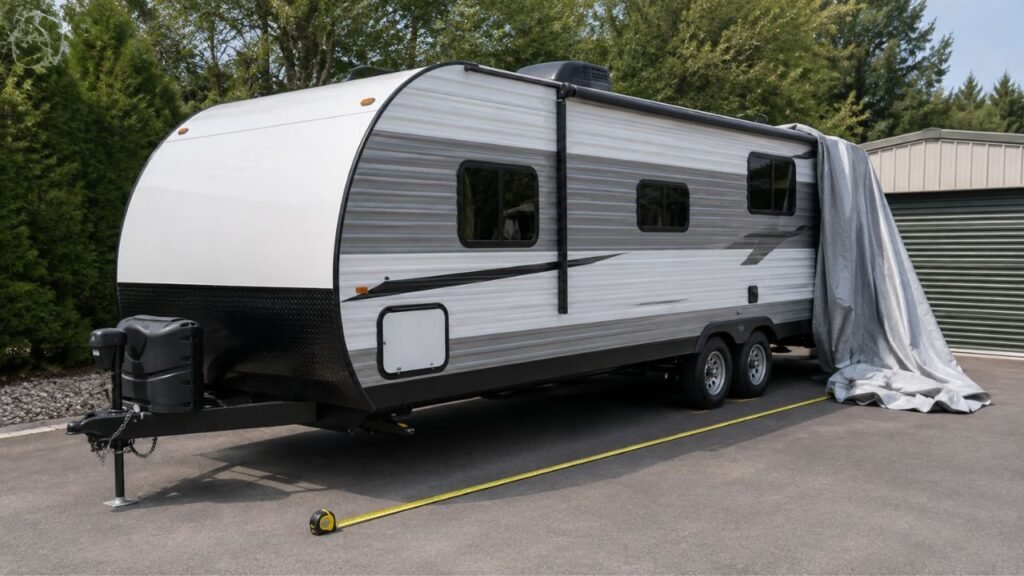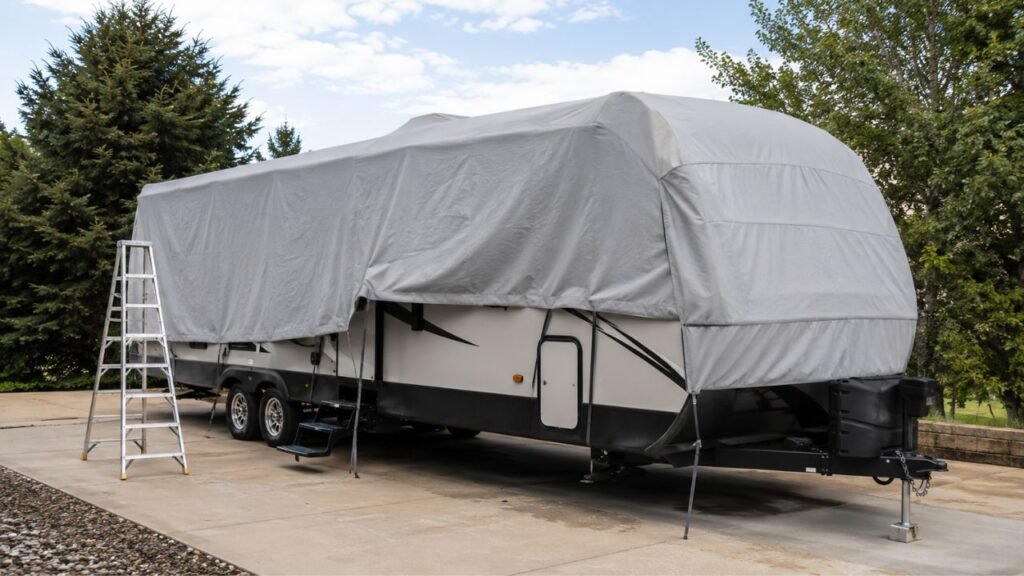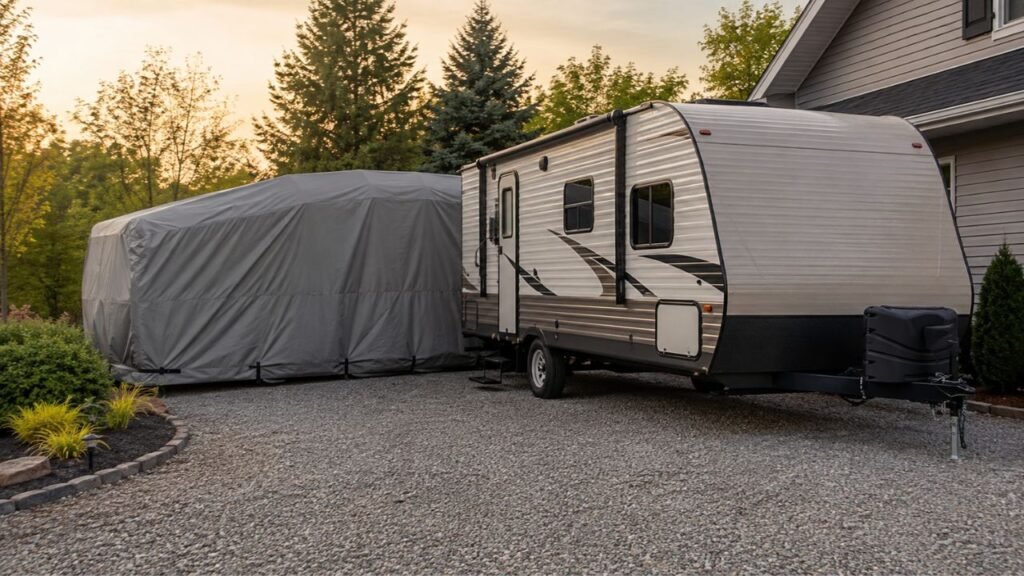
You stop rodents from nesting under an RV cover by removing food and shelter, clearing the storage area, blocking climbing routes, and sealing openings before covering the RV. Keep the cover fitted and secured so loose fabric does not create extra hiding spaces near the ground.
The goal is not simply keeping mice beneath the cover. You also need to stop them from turning that sheltered area into a doorway inside your RV. Here is how I recommend protecting both areas.
Key Takeaways
- Keep the RV cover properly fitted instead of letting fabric collect underneath.
- Clear grass, leaves, cardboard, wood, and debris around the RV.
- Remove food, pet supplies, crumbs, and possible nesting materials.
- Seal small openings around plumbing, wiring, vents, and the underbelly.
- Use metal barriers where rodents may chew through softer materials.
- Treat peppermint and similar repellents only as secondary protection.
- Check your covered RV regularly instead of leaving it untouched all winter.
Why Do Rodents Nest Under a Covered RV?
An RV cover does not automatically attract rodents. However, the protected space beneath it can become appealing when other conditions are right.
Mice and rats generally look for places offering shelter and little disturbance. A stored RV can provide both, especially during cold or wet weather.
Loose cover material may create protected pockets around tires and underneath body panels. Leaves, weeds, cardboard, and nearby clutter can make those spaces even more inviting.
There is also an important distinction to make here.
A rodent living under your RV cover is not necessarily inside your RV yet. However, once it spends enough time around the vehicle, it has opportunities to find openings.
Those openings may lead through the underbelly, storage compartments, wiring penetrations, vents, or gaps around plumbing.
That is why I would treat nesting beneath the cover as an early warning. The sooner you make that area unattractive, the easier prevention becomes.
Start by Making the Area Under the RV Cover Unattractive
Before buying repellents or setting traps, work on the storage environment itself. Removing shelter and easy access usually gives you a stronger first defense.
Keep the RV Cover Properly Fitted
Start by checking how your cover sits around the entire RV.
You want it secure enough to resist wind without excessive loose material hanging underneath. Large folds around the wheels, hitch, bumpers, or ground can create protected spaces.
Tighten the straps according to the cover manufacturer’s instructions. Do not pull them excessively tight just to fight rodents.
Overtightening may stress the fabric, buckles, seams, or painted surfaces.
After strong winds or storms, inspect the cover again. A properly fitted cover can become loose surprisingly quickly during outdoor storage.
Also avoid piling extra tarps over the RV unless necessary. Multiple loose layers can create additional cavities that rodents may explore.
Park on a Clean, Hard Surface When Possible
Your parking surface can make rodent prevention easier or harder.
Concrete and pavement are usually easier to keep clean than tall grass. Maintained gravel can also be better than an overgrown dirt storage area.
Grass and weeds give rodents more places to hide while approaching your RV. Seeds and insects around vegetation may also encourage animal activity.
If you cannot move the RV, keep vegetation trimmed around it. You do not need a perfectly sterile storage lot.
You simply want fewer protected travel routes leading toward the vehicle.
Clear Vegetation, Leaves, Wood, and Debris
Walk around your RV before installing the cover.
Remove anything that could provide hiding or nesting material, including:
- Fallen leaves
- Tall weeds
- Grass clippings
- Cardboard
- Paper bags
- Scrap lumber
- Firewood
- Fabric
- Old insulation
- Trash
- Birdseed
- Pet food
- Stored household items
Pay particular attention to objects touching the RV or cover.
A stack of lumber beside your camper may look harmless. To a mouse, it can become shelter and a convenient path upward.
Remove Overhanging or Touching Branches
Rodents do not always approach an RV from underneath.
Mice, rats, and squirrels can climb. Branches or shrubs touching the RV may provide another route toward the roof or upper body.
Trim vegetation that directly contacts the RV whenever practical.
You do not need to remove every tree nearby. Concentrate on preventing branches and dense plants from forming direct bridges to the vehicle.
Seal the RV Before You Put the Cover On
A cover should be your weather-protection layer, not your rodent barrier. Before covering the RV, inspect the vehicle itself for openings rodents could exploit.
Inspect the Underbelly First
The underbelly deserves special attention because rodents already beneath the RV can reach it easily.
Look for:
- Torn underbelly material
- Loose edges
- Missing fasteners
- Open seams
- Holes around tanks
- Damage around plumbing
- Gaps near wiring
- Previous chewing damage
Repair damaged underbelly panels or material before storage.
Do not assume a small opening is harmless. Mice can fit through surprisingly narrow spaces.
Check Plumbing, Wiring, and Utility Penetrations
Many RV openings are created intentionally during manufacturing.
Water lines, drain pipes, electrical cables, propane components, and accessory wiring must pass through walls or floors somewhere.
Those penetrations can leave gaps.
Use a flashlight and inspect areas around:
- Freshwater plumbing
- Drain pipes
- Electrical wiring
- Shore-power components
- Cable connections
- Propane line penetrations
- Water heater connections
- Utility compartments
You are looking for unused space around the component, not the component itself.
Never seal something in a way that interferes with movement, drainage, heat, ventilation, or servicing.
Inspect Doors, Storage Compartments, and Slide Areas
Rodents do not always enter through obvious holes underneath.
Check exterior storage doors and compartment seals. Look for weatherstripping that is torn, flattened, or missing.
Inspect the main entry door as well.
Slide-out mechanisms can also create complicated gaps. Look around slide openings, seals, tracks, and lower corners.
You do not need to make every exterior seam airtight. Focus on visible openings a rodent could physically enter.
Check Appliance and Exterior Vents Carefully
This is one area where you need to be especially careful.
RV refrigerators, furnaces, water heaters, and other appliances may require specific ventilation. Never plug or completely seal a functional vent just to stop rodents.
Instead, use an approved screen or guard when appropriate.
Make sure the screen does not restrict required airflow. Follow the RV or appliance manufacturer’s instructions when protecting functional vents.
Keeping mice out is important. Maintaining safe appliance ventilation is more important.
Use the 1/4-Inch Rule as a Warning Point
When inspecting your RV, pay close attention to openings around 1/4 inch wide or larger.
That is roughly the size commonly used when assessing possible mouse entry points.
A simple way to think about it is this:
If a gap looks wide enough for a pencil to enter, inspect it carefully.
Do not assume that every small gap automatically needs spray foam. First determine what the opening does and whether it requires ventilation or movement.
Which Materials Work Best for Sealing an RV Against Rodents?
Different openings need different materials. I prefer durable metal barriers wherever rodents could easily chew softer products.
| Material | Best Use Around an RV | Rodent Resistance | Important Limitation |
| Copper mesh with sealant | Irregular gaps around pipes or wiring | High when secured | Loose mesh may be pushed aside |
| 1/4-inch hardware cloth | Larger openings and suitable vents | High | Must not restrict necessary airflow |
| Stainless or galvanized mesh | Exterior openings | High | Needs firm attachment |
| Sheet metal | Larger damaged openings | Very high | Requires proper cutting and fastening |
| Steel wool with sealant | Small protected gaps | Moderate | Can rust and loosen over time |
| Pest-block foam alone | Filling voids | Limited | Rodents may chew through foam |
| Plastic screening | Temporary protection | Low | Easier to chew or damage |
| Weatherstripping | Doors and compartment edges | Moderate | Wears out and needs inspection |
One mistake I often see is treating expanding foam as the entire solution.
Foam is useful for filling space, but rodents can sometimes chew through it. For vulnerable exterior gaps, combining an appropriate sealant with durable metal material is usually stronger.
Copper mesh can work particularly well around irregular openings because it does not rust like ordinary steel wool.
Whatever you use, secure it properly.
Stuffing a loose wad of material into a hole may slow a mouse down. It does not necessarily create a long-term barrier.
Cut Off the Routes Rodents Use to Reach the Covered RV
Sealing openings protects the RV itself, but rodents still need routes toward those openings. Reducing easy climbing paths adds another defensive layer.
Tires and Wheels
RV tires provide a direct connection between the ground and vehicle.
Mice can climb textured rubber surfaces, so do not assume height alone protects your RV.
Some RV owners use smooth-sided rodent barriers around tires. These may make climbing harder when properly fitted.
I would treat them as supplemental protection.
Even the best wheel barrier cannot compensate for an open plumbing gap or damaged underbelly.
Stabilizer Jacks and Landing Gear
Jacks and landing gear also connect the RV directly to the ground.
They may provide climbing routes for determined rodents.
However, do not retract stabilizers or change your normal storage setup solely because of mice. Different RV manufacturers have different storage requirements.
Follow the instructions for your specific RV.
If your jacks remain deployed, simply include them during your inspection. Look for nearby nesting material, droppings, or other activity.
Hoses, Cords, and Cables
Connected utilities can create additional pathways.
Check:
- Shore-power cords
- Water hoses
- Sewer hoses
- Cable connections
- Extension cords
- Solar cables
- Other accessories touching the ground
Whenever possible during long-term storage, disconnect unnecessary equipment.
If a connection must remain, inspect the point where it reaches the RV. Make sure no entry gap exists around that connection.
Steps, Hitches, and Nearby Stored Objects
Anything touching the vehicle may help rodents climb.
That includes portable steps, storage bins, boards, tools, ramps, and other equipment.
Keep unnecessary items away from the sides of the RV.
The goal is not making the vehicle impossible to climb. You are simply removing the easiest routes.
Remove Food and Nesting Materials Before Covering the RV
Rodent control becomes much easier when your RV offers no reward. Before long-term storage, remove food smells and materials that mice could shred.
Focus on these jobs:
- Remove packaged and unpackaged food.
- Empty pet food and treat containers.
- Remove birdseed and fishing bait.
- Clean the refrigerator and freezer.
- Vacuum underneath dinettes and sofas.
- Check beneath removable cushions.
- Wipe kitchen counters and cabinet shelves.
- Clean grease around the stove.
- Empty all garbage.
- Remove cardboard boxes when possible.
- Store paper products securely.
- Put important fabrics inside sealed containers.
- Clean crumbs from cup holders and drawers.
Do not overlook dry goods.
A sealed-looking cardboard pasta box or snack package may still attract rodents during several months of storage.
For long storage periods, removing food completely is usually easier than trying to protect dozens of individual packages.
Do Peppermint Oil, Dryer Sheets, Ultrasonic Repellers, and Mothballs Work?
Plenty of RV owners have favorite mouse remedies. Some may discourage rodents temporarily, but I would never use scent-based methods instead of physical exclusion.
| Method | How I Would Use It |
| Sealing entry points | Primary protection |
| Cleaning and removing food | Primary protection |
| Snap traps | Useful monitoring and control |
| Peppermint oil | Optional secondary deterrent |
| Botanical rodent pouches | Optional secondary deterrent |
| Dryer sheets | Anecdotal; do not rely on them |
| Irish Spring soap | Anecdotal; not primary protection |
| Ultrasonic devices | Unreliable as the main defense |
| Mothballs | Do not use casually as a rodent repellent |
| Rodent poison | Requires considerable caution |
Peppermint oil smells strong to us, and some RV owners report success. The problem is that scent fades.
A hungry or sheltered rodent may also tolerate smells you expected it to avoid.
The same problem applies to dryer sheets and strongly scented soap.
Ultrasonic devices sound convenient because they require little effort. However, they should not replace sealing, cleaning, traps, and regular inspections.
Rodents may become accustomed to deterrents over time.
Mothballs deserve extra caution. They are pesticide products designed for specific labeled uses.
I would not scatter them around an RV, campground, or storage area as a homemade mouse treatment.
Should You Put Mouse Traps Under an RV Cover?
Traps can help when rodents are already active around your RV. However, they work best alongside exclusion and sanitation rather than replacing them.
Use Snap Traps When Rodent Activity Is Present
Traditional snap traps remain a practical option for mice.
Place them where you have actually seen evidence of activity rather than randomly scattering them everywhere.
Good locations may include protected areas near:
- Tires
- Underbelly access points
- Storage compartments
- Walls
- Known travel routes
Rodents often travel close to edges instead of crossing wide open areas.
Protect Traps From Pets and Children
An RV cover can hide traps from view, but it does not make them safe.
If pets or children can access your storage area, use appropriate enclosed trap stations or another protected setup.
Be equally cautious around wildlife.
Outdoor traps should never become hazards for animals you are not trying to catch.
Avoid Turning the Area Into a Feeding Station
A trap usually needs only a small amount of bait.
Do not scatter food underneath the RV hoping to draw mice toward traps. You may attract rodents that were not interested in your RV before.
Use minimal bait and keep the surrounding area clean.
Check Traps Regularly
Do not install traps and then ignore the RV for months.
Check them periodically.
A trapped rodent left beneath a covered vehicle can create odors, insects, and sanitation problems.
Regular checking also tells you whether your prevention strategy is working.
How Can You Tell Rodents Are Already Nesting Under the Cover?
Rodents usually leave evidence before you actually see one. When checking a stored RV, look for these warning signs:
- Small droppings
- Shredded paper
- Torn insulation
- Fabric scraps gathered together
- Grass or leaves forming a nest
- Gnaw marks
- Chewed wiring
- Tracks in dusty areas
- Damaged food packaging
- Musty or urine-like odors
- Scratching sounds
- Debris around tires or jacks
- Nesting material inside storage compartments
- Damage near the underbelly
Finding one dropping does not automatically mean you have a major infestation.
It does mean you should investigate.
Look nearby for entry gaps, nesting materials, chew marks, or repeated droppings.
What Should You Do If You Find a Rodent Nest Under Your RV Cover?
Finding a nest does not mean your RV is ruined. Remove the contamination safely, eliminate active rodents, and figure out how they reached the area.
Do Not Sweep or Vacuum Dry Droppings
Avoid immediately grabbing a broom or vacuum.
Dry rodent waste can release contaminated particles into the air when disturbed.
Ventilate the area when practical and avoid stirring up dry material.
Wet and Disinfect the Contaminated Area First
Wear disposable gloves.
Wet droppings, urine, and nesting material with an appropriate disinfecting solution before removing them.
Allow the disinfectant sufficient contact time according to its label.
Pick up the damp material using disposable towels and place everything into a sealed trash bag.
Wash your hands thoroughly afterward.
If contamination is extensive, especially inside enclosed compartments, professional cleanup may be appropriate.
Remove Active Rodents
Once you know rodents are present, use suitable traps and continue checking them.
Removing a nest without dealing with the animals may only result in another nest appearing nearby.
Inspect the RV for Damage
After cleanup, check surrounding components carefully.
Inspect:
- Electrical wiring
- Insulation
- Rubber hoses
- Plumbing
- Underbelly panels
- Storage compartments
- Engine areas on motorhomes
- Air intake areas
- Upholstery
- Plastic components
Chewed wiring deserves special attention because hidden electrical damage can become a safety issue.
If you see damaged wiring you cannot confidently evaluate, have it inspected before using the RV.
Find the Access Route Before Reinstalling the Cover
Do not simply clean the area and put the cover back.
Look at where the nest was located.
Ask yourself what allowed the rodent to reach that location. Check the nearest tire, jack, cable, underbelly seam, compartment, or vegetation.
Fixing that route is what prevents the same problem from returning.
Common Mistakes That Let Rodents Live Under an RV Cover
Most rodent problems do not happen because someone forgot one special product. They usually happen because several small vulnerabilities were left together.
Avoid these common mistakes:
- Letting loose cover material pile onto the ground.
- Parking the RV in tall weeds.
- Leaving leaves beneath the vehicle.
- Storing cardboard beside the RV.
- Leaving pet food inside.
- Ignoring crumbs underneath furniture.
- Assuming packaged food is rodent-proof.
- Ignoring tiny plumbing gaps.
- Using foam alone in vulnerable openings.
- Blocking necessary appliance ventilation.
- Relying entirely on peppermint oil.
- Assuming dryer sheets guarantee protection.
- Treating ultrasonic devices as complete pest control.
- Leaving unnecessary hoses connected.
- Ignoring damage around the underbelly.
- Covering the RV and never checking it again.
The biggest mistake is depending on a single defense.
Rodent prevention works better when several simple measures overlap.
A Simple Rodent-Proofing Routine Before You Cover Your RV
You do not need to turn storage preparation into an all-day pest-control project. Following the same routine each time makes prevention much easier.
- Remove all food and pet supplies.
- Vacuum floors, cabinets, furniture, and hidden areas.
- Remove cardboard and easy nesting materials.
- Inspect the entire RV underbelly.
- Check plumbing and wiring penetrations.
- Repair damaged compartment and door seals.
- Protect appropriate vents with approved screens.
- Clear weeds and debris from the storage area.
- Move stored objects away from the RV.
- Disconnect unnecessary hoses and cables.
- Install the RV cover according to its instructions.
- Secure straps and remove excessive loose fabric.
- Set protected traps if rodent activity has occurred before.
- Inspect the RV periodically throughout storage.
That final step matters more than many RV owners realize.
A cover makes it easy to forget what is happening underneath. A five-minute inspection can catch a problem before months of damage occur.
Does an RV Cover Actually Help Keep Rodents Away?
An RV cover can help protect your vehicle during storage, but it should not be treated as a mouse-proof enclosure.
The cover may reduce exposure to weather and protect exterior surfaces. A properly fitted cover can also eliminate some open shelter compared with a loose tarp.
However, rodents can still approach from underneath.
They may climb tires, jacks, cords, vegetation, or nearby objects. Once beneath the cover, they can begin searching for an opening into the RV itself.
So, I would never buy a better cover and assume the mouse problem is solved.
Use the cover for the job it was designed to do. Use cleaning, exclusion, storage-site maintenance, and inspections for rodent prevention.
Final Words
Stopping rodents from nesting under an RV cover is mostly about making the space difficult and unrewarding to use.
Start outside by clearing weeds, leaves, food, cardboard, and unnecessary clutter. Then inspect the RV itself and seal vulnerable openings with durable materials.
Keep the cover fitted properly instead of letting loose fabric collect around the ground.
Repellents can be an extra layer, but they should never replace these basic steps.
If you remember one simple sequence, use this:
Clean the area, remove attractants, block access, seal the RV, secure the cover, and check it regularly.
That approach gives rodents fewer reasons to stay and fewer ways to get inside.
Related FAQs
Can Mice Get Under an RV Cover?
Yes. Most RV covers protect the top and sides but remain open underneath. Mice can approach from ground level and may climb tires, jacks, cords, or other objects to reach sheltered areas beneath the cover.
Does an RV Cover Keep Mice Out of an RV?
Not by itself. An RV cover may provide weather protection, but mice can still reach openings underneath the vehicle. Sealing entry points and removing attractants are much more important for preventing infestation.
Should an RV Cover Touch the Ground?
A properly sized RV cover may extend close to the ground, but excessive loose fabric should not pile underneath the vehicle. Follow the cover manufacturer’s fitting instructions and keep unnecessary folds from creating sheltered pockets.
Can Mice Climb RV Tires and Stabilizer Jacks?
Yes. Mice are capable climbers and may use tires, jacks, hoses, cables, and nearby objects as routes toward an RV. Reducing easy access routes can support your overall rodent-prevention strategy.
What Size Hole Can a Mouse Get Through in an RV?
Openings around 1/4 inch deserve attention when mouse-proofing an RV. Check small gaps around plumbing, wiring, doors, compartments, and the underbelly instead of focusing only on obvious holes.
Can Mice Chew Through Spray Foam?
Yes, rodents may chew through ordinary expanding foam. Foam works better for filling space when combined with suitable metal mesh or another durable barrier in areas vulnerable to chewing.
Does Peppermint Oil Keep Mice Away From an RV?
Peppermint oil may discourage some mice temporarily, but the scent fades and results are inconsistent. Use it only as an additional deterrent after sealing openings and removing food sources.
Do Dryer Sheets Keep Mice Out of Campers?
Dryer sheets are widely discussed among RV owners, but they are not a dependable physical barrier. If you use them, treat them as an optional extra rather than your primary prevention method.
Do Ultrasonic Mouse Repellers Work in an RV?
Ultrasonic repellers should not be relied upon as your main mouse-control method. Physical exclusion, sanitation, traps, and routine inspections provide a more dependable prevention strategy for stored RVs.
Should You Put Mouse Traps Under a Covered RV?
You can use traps when there is evidence of rodent activity, provided they are protected from children, pets, and wildlife. Check them regularly and avoid using excessive bait that could attract additional rodents.
What Should You Do If You Find Mouse Droppings in a Stored RV?
Avoid sweeping or vacuuming dry droppings immediately. Wet them with an appropriate disinfectant, allow proper contact time, remove them while wearing gloves, and inspect nearby areas for nests, damage, and possible entry points.

Jack Collins specializes in RV routes, trail access, and travel logistics. His how-to articles help RV and trailer owners plan smoother trips and avoid common mistakes. Every review focuses on performance, safety, and value.