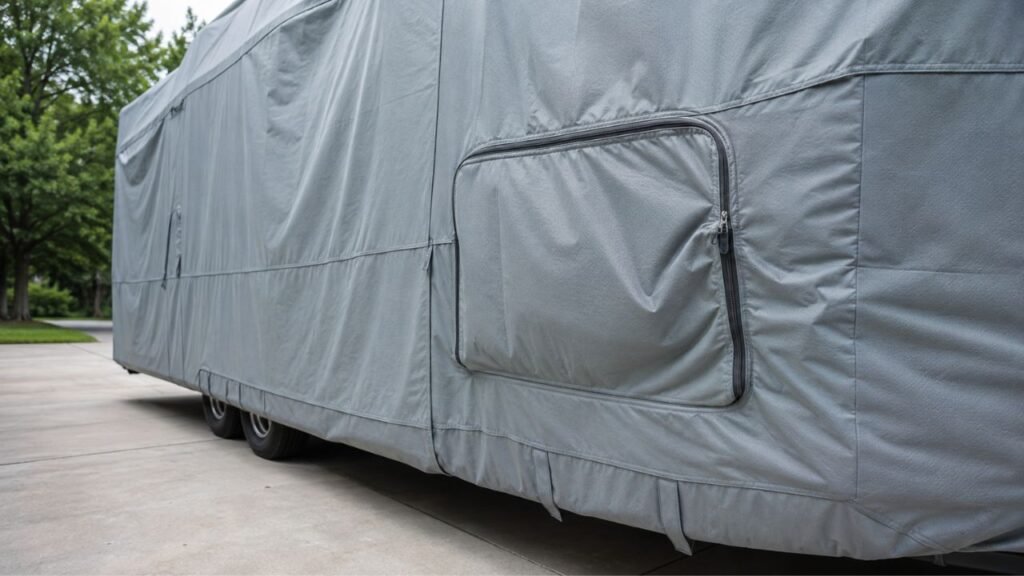
Your RV cover zipper is usually stuck because fabric is trapped inside the slider, dirt is packed into the zipper, or the cover is pulling too tightly across the track. A worn slider, damaged teeth, corrosion, or cold weather can also make the zipper bind. Whatever the cause, avoid forcing it.
In this guide, I’ll help you find the exact problem first. Then we’ll free the zipper safely, choose the right lubricant, correct cover tension, and figure out when a damaged zipper needs repair or replacement.
Key Takeaways
- Never yank a stuck RV cover zipper with extra force.
- Loosen the cover before assuming the zipper itself is damaged.
- Check first for trapped fabric, loose threads, dirt, and grit.
- Clean the zipper before adding any type of lubricant.
- Use zipper-safe lubricant lightly rather than soaking the entire track.
- A zipper that works while loose often indicates cover tension.
- Repeated sticking in one spot usually points to localized damage.
- Broken teeth, torn zipper tape, or damaged stitching may require replacement.
What Usually Causes an RV Cover Zipper to Get Stuck?
An RV cover zipper lives a harder life than most clothing zippers. It sits outdoors while the cover stretches around corners, ladders, gutter spouts, bumpers, and other RV parts. That means the zipper can jam even when the zipper itself is still usable.
Cover Fabric Is Caught in the Slider
This is one of the easiest problems to spot.
Loose cover material can fold inward as you pull the zipper. The slider grabs that fold and clamps it between the zipper components.
You may notice fabric bunching around the slider. The zipper often stops very suddenly instead of becoming gradually stiffer.
Loose threads can cause the same problem. A small frayed section may enter the slider and wrap around its internal edges.
If you see fabric inside the slider, stop pulling immediately. More force can tear the cover before the zipper releases.
Dirt, Dust, Sand, or Dried Grime Is in the Zipper
An RV cover spends months exposed to outdoor debris.
Dust, sand, pollen, road grime, dried mud, and small plant particles can settle into the zipper. Eventually, those particles create friction between the slider and zipper track.
You may feel a gritty or rough sensation while moving it. Sometimes the zipper still moves, but only in short, jerky movements.
This problem is especially common after windy storage periods. Fine debris can work deep into the slider without looking obvious.
The RV Cover Is Pulling Sideways on the Zipper
This is a very common RV-specific problem.
A zipper works best when the slider moves straight along its track. However, a tight cover can pull both zipper sides away from each other.
That sideways pressure makes the slider work much harder.
Imagine trying to zip a jacket while someone pulls both sides apart. The zipper may be perfectly clean but still become difficult to move.
RV covers can create the same condition around access panels.
If the zipper becomes easier after loosening nearby fabric, excessive side tension is probably the main cause.
The Cover Is Too Small or Installed Too Tightly
A snug RV cover is helpful because it reduces wind movement. However, snug and overstretched are very different things.
An undersized cover may pull extremely hard around:
- Front and rear corners
- Roof edges
- Bumpers
- Ladders
- Spare tires
- Gutter spouts
- Awning hardware
That tension eventually reaches the zipper panels.
Overtightening straps can create a similar problem even with the correct cover size. Pulling every strap as tightly as possible may distort the zipper track.
Your goal is a secure cover without stretching zipper panels sideways.
The Zipper Panel Is Misaligned With the RV
Sometimes the cover fits correctly but sits slightly off-center.
That small shift can place an access zipper directly across an RV corner or accessory. The fabric then pulls harder on one part of the zipper.
For example, a gutter spout may push against the cover near the track. A ladder or awning component can create another pressure point.
The zipper may repeatedly stick near that exact location.
If that happens, look beyond the zipper itself. The RV underneath may be causing the resistance.
Water, Corrosion, and Weather Exposure Have Increased Friction
Outdoor storage exposes zipper components to changing temperatures and moisture.
Metal components can develop oxidation or corrosion over time. Plastic and coil-style zippers can also become dirty, stiff, or weathered.
Salt air deserves extra attention if you store near coastal areas. Salt residue can increase friction and accelerate corrosion on exposed metal parts.
UV exposure can also age nearby zipper tape and cover fabric.
Weather damage usually develops gradually. You may notice the zipper becoming stiffer each season instead of suddenly locking.
The Slider, Coil, or Teeth Are Damaged
Cleaning and lubrication cannot repair every zipper problem.
The slider may become worn or distorted. Molded teeth can crack, and coil zippers can develop damaged or stretched sections.
Inspect the zipper carefully if it always catches at one location.
Look for:
- Missing teeth
- Bent components
- Cracked molded teeth
- Damaged zipper coil
- Torn zipper tape
- Loose stitching
- A visibly twisted slider
- Gaps between zipper sections
Physical damage requires a different solution than simple dirt.
Quickly Diagnose Why Your RV Cover Zipper Is Stuck
Before trying several different fixes, match the symptom to the likely cause. A short inspection can save you from making the problem worse.
| What You Notice | Most Likely Cause | What to Try First |
| Slider stopped suddenly and fabric is puckered | Fabric caught inside slider | Back up the slider and free the fabric |
| Zipper feels gritty or rough | Dirt, sand, or debris | Brush and clean the track |
| Zipper improves when cover is loosened | Excessive cover tension | Loosen straps and reposition fabric |
| Zipper sticks near the same RV corner | Obstruction or fit problem | Reposition cover and inspect underneath |
| Zipper moves but separates behind slider | Worn slider or damaged track | Inspect slider and zipper alignment |
| Teeth or coil will not align | Misalignment or structural damage | Remove tension and inspect closely |
| Zipper becomes stiff after long storage | Dirt, weathering, or corrosion | Clean, dry, and lubricate |
| Teeth or coil are visibly broken | Structural damage | Repair or replace damaged components |
How Do You Unstick an RV Cover Zipper Safely?
Start with the gentlest fix and work upward from there. Most stuck zippers can be released without pliers, aggressive pulling, or complicated repair work.
Step 1: Stop Pulling the Zipper
Your first reaction may be pulling harder. That is exactly what I recommend avoiding.
A small fabric snag can become a torn cover quickly. Excessive force can also break the pull tab or distort the slider.
Release the handle and inspect what is happening.
If the zipper moved normally before stopping suddenly, something may have entered the slider.
Step 2: Take Tension Off the RV Cover
Before touching the zipper again, give it some slack.
Loosen nearby straps, buckles, or lower cinches. If necessary, loosen the front or rear adjustment system slightly.
Then hold the fabric beside the zipper.
Push the two zipper sides gently toward each other. You want to remove sideways pulling before moving the slider.
Try moving the zipper slightly.
If it suddenly becomes easier, tension was probably the main problem.
Step 3: Check for Fabric Caught in the Slider
Look closely around both sides of the slider.
If fabric is trapped, do not pull it straight outward aggressively. That can wedge it deeper.
Instead, move the slider slightly backward toward its previous position.
At the same time, gently tease the trapped material away from the opening. Small movements usually work better than one strong pull.
You can use tweezers for a loose thread if needed. Avoid cutting nearby fabric unless you clearly identify a disposable thread.
Step 4: Brush Dirt Out of the Zipper
If nothing is trapped, inspect for dirt.
Use a soft toothbrush or another small soft-bristled brush. Work along both sides of the zipper.
Pay extra attention around the slider.
Brush away:
- Sand
- Dust
- Dried mud
- Plant debris
- Small fibers
Move slowly rather than grinding dirt deeper into the track.
Step 5: Clean Stubborn Grime
Dry brushing may not remove everything.
For stubborn buildup, use clean water with a small amount of mild soap. Dampen a soft cloth or small brush instead of soaking the entire cover.
Gently clean the zipper track.
Then wipe away remaining soap with clean water.
Allow the zipper to dry before applying lubricant. Lubricating a dirty, wet zipper can trap more grime.
Step 6: Apply a Small Amount of Zipper Lubricant
Once the zipper is clean and dry, lubrication can reduce remaining friction.
Use a product intended for zippers or outdoor gear whenever possible.
Apply only a light amount to the working surfaces. Avoid saturating the RV cover fabric.
If you are using a spray product, applying it to a cloth or cotton swab can give you better control.
Always check the lubricant instructions first. RV cover materials and zipper designs can vary.
Step 7: Work the Slider Back and Forth Slowly
Do not immediately attempt one long pull.
Move the slider a short distance forward. Then bring it backward again.
Repeat those short movements gently.
This helps distribute lubricant and reveals whether one section still has resistance.
Continue until the slider travels smoothly.
If it stops at exactly the same point every time, inspect that area for physical damage.
Step 8: Inspect the Entire Zipper Once It Moves
Getting the zipper moving does not always mean the problem is solved.
Run your fingers carefully along the zipper track.
Look for:
- Frayed zipper tape
- Loose stitching
- Distorted coil
- Cracked teeth
- A damaged slider
- Areas rubbing against the RV
- Unusually tight cover sections
Finding the original cause now can prevent another jam later.
What Should You Use to Lubricate an RV Cover Zipper?
The best lubricant is one approved for your zipper or cover material. Outdoor zippers benefit from products that reduce friction without leaving a heavy, dirt-catching residue.
Good options may include:
- Zipper-specific lubricant: Usually the safest general choice.
- Dry zipper wax: Useful for many outdoor zipper systems.
- Paraffin wax: Can work as a temporary solution on compatible zippers.
- Dry silicone lubricant: Suitable for some materials when manufacturer-approved.
- Graphite from a pencil: A temporary dry option for some zipper types.
- Mild soap: May provide short-term help after cleaning.
Use the smallest amount necessary.
More lubricant does not automatically make a zipper smoother. Excess product can collect dust and eventually create another problem.
If the RV cover is light-colored, test any lubricant somewhere inconspicuous first.
What Should You Not Put on an RV Cover Zipper?
Some household products may loosen a zipper temporarily while creating problems later.
Try to avoid:
- Heavy grease that traps dirt and sand.
- Cooking oil that becomes sticky over time.
- Motor oil or automotive lubricants.
- Large amounts of petroleum-based products.
- Sticky waxes containing scents or additives.
- Strong solvents that may affect cover coatings.
- Excessive multipurpose spray around surrounding fabric.
- Any product specifically prohibited by the cover manufacturer.
Be especially careful with oily sprays.
Even when the zipper itself tolerates them, the surrounding fabric may stain or collect grime.
When you are unsure, use a zipper-specific product instead.
Why Does My RV Cover Zipper Work When the Cover Is Off but Stick When It Is Installed?
If the zipper works normally while the cover is loose, the zipper probably is not your main problem.
Installation is placing stress somewhere along the track.
The most common cause is excessive side tension. Once the cover stretches over the RV, both zipper sides can pull away from each other.
The problem may come from an undersized cover. However, installation position matters just as much.
A cover sitting several inches too far forward or backward can shift the access panel away from its natural position.
Overtightened straps can also distort the zipper.
Check whether the zipper becomes easier after loosening nearby straps. If it does, adjust the cover before lubricating anything further.
Also inspect everything underneath that zipper area.
A gutter spout, ladder, awning arm, mirror, bumper corner, or spare tire can push against the cover and create localized tension.
Fix that pressure point instead of repeatedly forcing the zipper.
Could the Wrong RV Cover Size Be Causing the Zipper Problem?
Yes. Incorrect sizing can absolutely make an RV cover zipper difficult to use.
An undersized cover stretches tightly across the RV body. That pressure often concentrates around corners, seams, and zippered access panels.
You may notice that closing the zipper requires pulling both fabric sides together first.
That is a warning sign.
However, an oversized cover can also create problems.
Excess fabric may shift in strong wind. That movement can twist the access panel or allow loose material to enter the zipper.
Measure your RV using the cover manufacturer’s specific instructions.
Do not rely only on the advertised model length. Accessories, bumpers, ladders, and other equipment may affect the required cover size.
The correct cover should remain secure without forcing zipper panels apart.
Can Cold Weather Freeze or Stiffen an RV Cover Zipper?
Yes. Cold weather can make an RV cover zipper harder to move.
Sometimes water has entered the zipper and frozen. In other cases, the zipper tape, cover fabric, or slider simply becomes less flexible.
If you suspect ice, do not yank the pull tab.
Let the area warm gradually whenever possible.
Avoid using:
- Open flames
- Heat guns
- Boiling water
- Irons
- Extremely hot air directly against the cover
High heat can damage synthetic fabric, coatings, zipper tape, or nearby stitching.
Once the zipper thaws, dry it thoroughly.
Then inspect for dirt before applying any lubricant.
Why Does the Zipper Keep Getting Stuck in the Same Spot?
A zipper that repeatedly catches at exactly one location usually has a localized problem. The cause may be inside the zipper or underneath the cover.
There Is a Damaged Tooth or Coil Section
Look closely at the problem area.
A single damaged tooth can interrupt slider movement. Coil-style zippers may develop a bent, stretched, or damaged section instead.
The damage may be small enough to miss during a quick inspection.
Compare the problem section with healthy areas nearby.
An RV Corner or Accessory Is Loading That Area
The zipper may be fine until the cover is installed.
Check what sits directly underneath the sticking point.
Common pressure areas include:
- Gutter spouts
- Awning brackets
- Ladder edges
- Bumper corners
- Spare tire carriers
- Antennas
- Trim edges
Padding or repositioning the cover may remove that pressure.
The Zipper Tape or Seam Has Become Distorted
The zipper is sewn into fabric called zipper tape.
If that tape stretches, wrinkles, or pulls away from the seam, the slider may no longer travel straight.
Loose stitching can create the same effect.
Look for uneven fabric beside the zipper.
A repair shop may need to restitch the section if the seam itself has shifted.
The Slider Is Worn
A worn slider may move inconsistently even after cleaning.
You might notice it wobbling or failing to keep the zipper properly meshed.
Another common symptom is separation behind the slider.
If the zipper closes and immediately opens again, inspect the slider closely.
Can You Fix a Bent or Worn RV Cover Zipper Slider?
Sometimes, but mechanical adjustment should not be your first move.
Start by removing cover tension. Then clean the zipper, remove trapped fabric, and test it with proper lubrication.
Only consider adjusting the slider after ruling out those simpler causes.
Some metal sliders can occasionally be tightened very slightly with suitable pliers. However, squeezing too hard can permanently distort the slider.
Plastic sliders require even more caution.
I would avoid experimenting aggressively on an expensive RV cover.
If the zipper track remains healthy but the slider is clearly worn, replacing only the slider may be the cleaner repair.
Matching the replacement size and zipper style correctly is important.
When Should You Repair or Replace the RV Cover Zipper?
Not every stuck zipper needs replacement, but visible structural damage changes the situation. Continuing to force a damaged zipper can tear a much larger section of your cover.
Consider repair or replacement when:
- Several teeth are missing.
- Molded zipper teeth are cracked.
- The zipper coil is torn or distorted.
- Zipper tape is ripped.
- Stitching has separated from the cover.
- The slider is cracked or badly bent.
- The zipper keeps separating after closing.
- Severe corrosion has damaged moving parts.
- One section keeps jamming after cleaning.
- The cover remains under warranty.
Sometimes only the slider needs replacement.
If the teeth, coil, stitching, and zipper tape remain healthy, replacing the complete zipper may be unnecessary.
Before paying for repair, check your cover warranty. Some manufacturers may cover zipper or stitching failures within specific conditions.
How to Prevent Your RV Cover Zipper From Sticking Again
A few small habits can save you from dealing with another jam. Focus on keeping the zipper clean while reducing unnecessary stress from the cover.
Clean the Zipper Before Long-Term Storage
Brush visible dust and debris from the zipper before covering your RV.
Starting the season with a clean track prevents dirt from becoming compacted inside the slider.
Also clean the zipper when removing the cover after storage.
Operate Zippers With the Cover Relaxed
Before opening or closing an access panel, reduce nearby tension.
Hold the cover fabric toward the zipper instead of pulling it away.
The slider should not have to fight against stretched fabric.
Do Not Over-Tighten Cover Straps
Straps should prevent excessive movement without distorting the cover.
Pulling them extremely tight can create unnecessary pressure around seams and zipper panels.
Secure the cover evenly instead.
Pad Sharp RV Corners and Projections
Sharp edges can create tight spots and damage the cover.
Pay attention to:
- Gutter spouts
- Ladder corners
- Awning hardware
- Antennas
- Trim edges
- Bumper corners
Use suitable padding where your cover manufacturer recommends it.
Reducing those pressure points also helps zipper alignment.
Check the Cover’s Position After High Winds
Strong wind can shift a poorly secured RV cover.
After severe weather, inspect the overall position.
Make sure access-panel zippers still align naturally and are not being pulled sideways.
Correcting a shifted cover early prevents unnecessary zipper stress.
Lubricate Only When Needed
A zipper should stay clean rather than constantly coated in lubricant.
Apply an appropriate product when movement becomes noticeably dry or stiff.
Always clean first.
Adding lubricant over accumulated dirt can create abrasive paste inside the slider.
Inspect the Zipper Before Every Storage Season
Spend a few minutes inspecting the zipper before installation.
Look for frayed fabric, loose stitches, damaged teeth, and slider wear.
A minor repair is much easier before the zipper becomes completely unusable.
Common Mistakes That Turn a Stuck Zipper Into a Broken One
Most zipper damage happens after the zipper begins sticking, not before it.
Avoid these common mistakes:
- Yanking the zipper pull repeatedly.
- Pulling the slider diagonally instead of straight.
- Lubricating before removing dirt.
- Soaking the surrounding cover with lubricant.
- Closing the zipper while stretching both sides apart.
- Using pliers before diagnosing the problem.
- Squeezing the slider too aggressively.
- Ignoring damaged teeth or coil sections.
- Applying excessive heat to a frozen zipper.
- Assuming every stiff zipper needs more lubricant.
- Repeatedly using a zipper that separates behind the slider.
A few extra minutes of inspection usually cost less than repairing torn cover fabric.
A Simple RV Cover Zipper Maintenance Routine
You do not need an elaborate maintenance schedule. A quick inspection during installation and removal is usually enough to catch developing problems.
- Loosen cover tension around the zipper.
- Inspect the slider for trapped fabric.
- Brush dirt from both zipper sides.
- Clean stubborn grime when necessary.
- Let the zipper dry completely.
- Apply compatible lubricant only when needed.
- Move the zipper through its full travel gently.
- Reposition and secure the cover evenly.
- Check for pressure from RV corners and accessories.
Repeating those steps before long-term storage can prevent many common zipper jams.
Final Words
A stuck RV cover zipper usually needs less force, not more.
Start by taking tension off the cover. Then look for trapped fabric and debris before reaching for lubricant.
If cleaning solves the problem, keep the track clean and avoid overtightening the cover. If loosening the cover solves it, correct the fit or installation position.
A zipper that repeatedly sticks in one location deserves closer inspection.
Look for damaged teeth, distorted coil, worn sliders, loose stitching, or an RV accessory pressing against the cover.
Fixing the actual cause will protect both the zipper and the cover.
Related FAQs
These quick answers cover several common questions RV owners have when a storage-cover zipper becomes difficult to move.
Can I Use WD-40 on an RV Cover Zipper?
I would generally choose a zipper-specific dry lubricant instead. Oily multipurpose products can leave residue that attracts dust, and they may not be suitable for every zipper or RV cover material.
Is Silicone Spray Safe for an RV Cover Zipper?
A dry silicone lubricant can work with some outdoor zippers, but compatibility depends on the zipper and cover materials. Check your cover manufacturer’s instructions first and apply it sparingly without saturating nearby fabric.
Can I Use Candle Wax on an RV Cover Zipper?
Plain paraffin or candle wax can sometimes provide temporary lubrication for a compatible zipper. Apply only a small amount because excess wax can collect dirt and make future cleaning more difficult.
Can I Use Pencil Graphite on a Stuck RV Cover Zipper?
Graphite can provide temporary dry lubrication on certain zippers, but it is not my first choice for a large RV cover. It can also leave dark marks on light-colored fabric.
How Do I Remove Fabric Caught in an RV Cover Zipper?
Stop pulling and loosen the cover around the zipper. Move the slider slightly backward while gently pulling the trapped fabric away from the opening until it releases.
Why Is My RV Cover Zipper Hard to Close but Easy to Open?
The cover may be pulling the zipper sides apart during closing. Check for excessive tension, panel misalignment, dirt, or an obstruction underneath the cover before assuming the slider is damaged.
Why Does My RV Cover Zipper Stick Only When the Cover Is Tight?
That usually points to excessive sideways tension. Loosen nearby straps, reposition the cover, and support the fabric toward the zipper before trying to close it again.
Can Freezing Weather Make an RV Cover Zipper Stick?
Yes. Moisture can freeze inside the zipper, and cold temperatures can make surrounding materials stiffer. Let the area warm gradually instead of forcing the slider or applying extreme heat.
Can I Replace Only the Slider on My RV Cover?
Often, yes. If the zipper teeth or coil, tape, and stitching remain in good condition, replacing a correctly matched worn slider may restore normal operation without replacing the entire zipper.
How Often Should I Lubricate an RV Cover Zipper?
There is no universal schedule for every RV cover. Inspect and clean the zipper during installation and removal, then lubricate only when needed or according to the manufacturer’s maintenance instructions.

Jack Collins specializes in RV routes, trail access, and travel logistics. His how-to articles help RV and trailer owners plan smoother trips and avoid common mistakes. Every review focuses on performance, safety, and value.