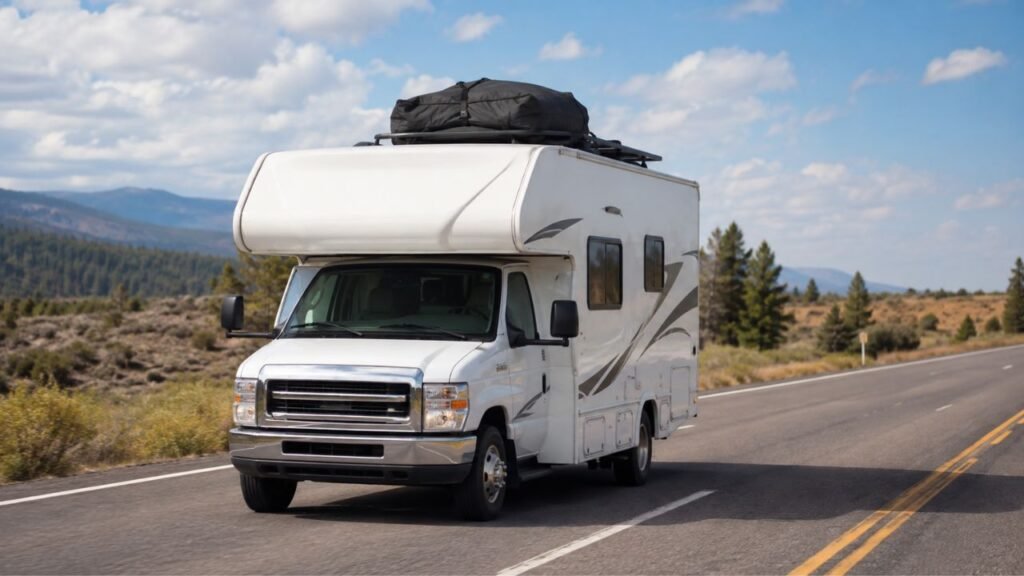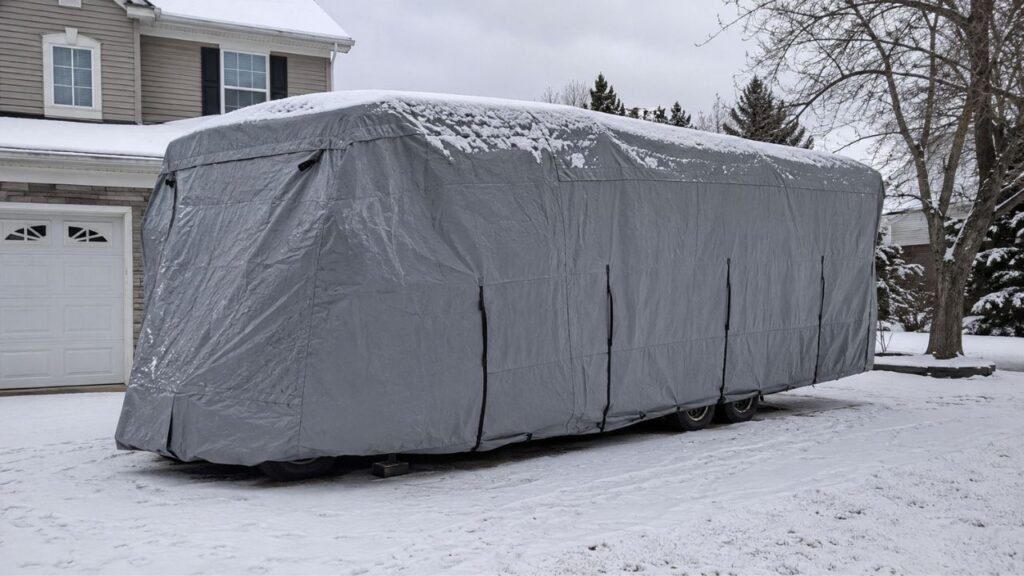
Yes, snow and ice can damage an RV even through a cover. A cover protects the surface, but it does not support the weight above it. Heavy snow, refreezing water, ice buildup, and wind can still stress the roof, seams, and rooftop equipment.
In this guide, I’ll show you exactly how that damage happens. You’ll also learn when to remove snow, what warning signs matter, and how to protect your covered RV safely all winter.
Key Takeaways
- An RV cover does not remove snow weight from the roof.
- Wet snow and solid ice create more stress than light powder.
- Freeze-thaw cycles can worsen cracks in old roof sealant.
- Loose covers can collect water and rub against RV surfaces.
- Heavy accumulation should be removed before it becomes compacted.
- Always follow your RV manufacturer’s winter-storage recommendations.
Does an RV Cover Actually Protect Against Snow and Ice?
An RV cover does provide useful winter protection. It creates a barrier between the weather and your RV’s exterior.
That barrier can keep snow from freezing directly onto the roof membrane. It also helps reduce exposure to dirt, debris, UV rays, and moisture.
However, there is one important limitation.
An RV cover is not a load-bearing structure.
When several inches of snow sit on the cover, the weight still transfers to the RV underneath. The cover simply sits between the snow and the roof.
Think of it like putting a blanket over a table. The blanket protects the surface, but anything heavy placed above still rests on the table.
That distinction matters during long periods of winter storage.
How Can Snow and Ice Damage an RV Through Its Cover?
Several winter problems can develop even while your RV remains covered. Most involve weight, moisture, freezing temperatures, wind, or a combination of them.
Heavy Snow Can Still Load the RV Roof
Heavy snow pressing against the cover still pushes downward on your roof.
That pressure can affect large roof sections and weaker rooftop components. Vents, skylights, air conditioners, and other accessories may receive concentrated pressure.
Problems become more likely when several storms occur without snow removal.
Fresh snow can also compress older layers beneath it. Over time, a light-looking layer may become surprisingly dense.
The cover itself does very little to reduce this weight.
Wet Snow and Ice Can Become Much More Problematic
Not all snow weighs the same.
Dry, fluffy snow is usually much lighter than wet snow. Snow mixed with rain can become significantly heavier.
This is why judging safety only by snow depth can mislead you.
Six inches of light powder may create less concern than several inches of dense, wet snow.
Ice adds another problem.
Once snow partially melts and freezes again, it becomes harder to remove. It may also create concentrated pressure around vents, roof edges, and accessories.
That is why early snow removal is usually easier and safer.
Freeze-Thaw Cycles Can Exploit Weak Seams
Freeze-thaw cycles can cause problems around damaged or aging seals.
Here is what happens.
Snow melts during warmer daytime temperatures. Water then reaches tiny cracks or weak spots around roof seams.
Temperatures drop again overnight.
The trapped moisture freezes and expands. Repeated cycles may gradually make an existing weakness worse.
Common trouble spots include:
- Roof vents
- Skylights
- Plumbing vents
- Antenna mounts
- Roof-to-wall seams
- Air conditioner openings
- Old lap sealant
The cover may reduce direct water exposure, but it cannot repair a weak seal underneath.
Meltwater Can Pool in a Sagging Cover
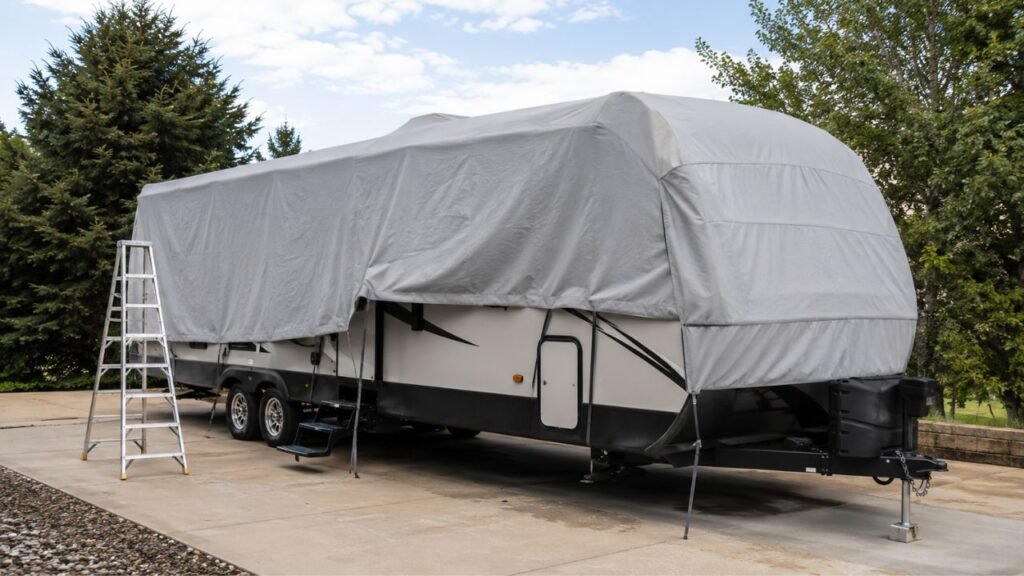
A loose cover can form low spots across the roof.
Snow melts and collects inside these depressions. Instead of draining away, the water remains over one area.
That creates two problems.
First, pooled water adds extra weight.
Second, moisture stays against the same roof area for longer periods.
The problem becomes more noticeable around air conditioners, vents, and other raised components. The cover can sag between them and create pockets.
A properly tightened cover helps reduce these areas.
A Frozen Cover Can Rub Against the RV
Wind can cause a loose cover to move against your RV.
Normally, that movement may only create mild rubbing. Add ice and snow, however, and the cover becomes heavier.
The extra pressure can make abrasion more aggressive.
Over a long winter, rubbing may damage:
- Decals
- Gelcoat
- Painted surfaces
- Roof edges
- Ladder contact points
- Gutter spouts
- Sharp corners
A frozen section may also become stiff enough to scrape the surface repeatedly.
Good fit and proper strap tension make a major difference here.
Snow and Ice Can Damage Rooftop Accessories
Your roof membrane is not the only thing at risk.
RVs often have several plastic or lightweight components mounted overhead.
These may include:
- Air conditioner shrouds
- Vent covers
- Skylights
- Solar panels
- Antennas
- Satellite equipment
- Plumbing vent caps
Cold temperatures can make some plastic components more brittle.
Heavy snow pressing against them may cause cracks or deformation.
Ice can also form around edges and mounts, making removal more difficult.
Which Winter Problems Can a Cover Prevent, and Which Can It Not?
An RV cover helps with many winter conditions, but it cannot solve everything. The table below shows where a cover helps and where extra protection is still needed.
| Winter Problem | Does a Cover Help? | Can Damage Still Occur? | Best Protection |
| Direct snow contact | Yes | Yes | Cover plus regular snow removal |
| Heavy snow load | Very little | Yes | Remove excessive accumulation |
| Meltwater exposure | Yes | Yes | Good fit and healthy roof seals |
| Freeze-thaw damage | Somewhat | Yes | Inspect and repair sealant |
| Wind abrasion | Depends on fit | Yes | Tight, properly sized cover |
| Ice around rooftop equipment | Yes | Yes | Careful snow and ice management |
| Trapped moisture | Breathable covers help | Yes | Ventilation and proper installation |
| UV exposure | Yes | Much less likely | UV-resistant RV cover |
The main point is simple.
A cover protects the RV’s exterior surface. It does not replace roof maintenance or snow removal.
How Much Snow Is Too Much on a Covered RV?
There is no single snow-depth number that is safe for every RV.
Different RV roofs use different materials and construction methods. Snow density also changes dramatically depending on weather conditions.
Your rooftop accessories can affect how weight gets distributed too.
For that reason, I would not wait for an exact depth before taking action.
Pay more attention to the type of accumulation.
Wet snow, compacted layers, drifting snow, or repeated freeze-thaw buildup deserve quicker attention than light powder.
If the snow begins looking dense or difficult to move, it is better to deal with it early.
Also check your owner’s manual for model-specific guidance.
Which Type of Snow Is Most Likely to Cause Trouble?
Snow conditions can change quickly during winter storage. Understanding the differences makes it easier to judge when your covered RV needs attention.
Fresh Powdery Snow
Fresh powder is usually the easiest type to manage.
It is lighter and often brushes away without much effort.
However, do not ignore it indefinitely.
Additional storms can compress older snow. Sunlight can also partially melt the lower layer before it refreezes.
That fluffy snow can eventually become dense and heavy.
Wet, Heavy Snow
Wet snow deserves much more attention.
It contains considerably more water than dry powder. That means extra weight reaches the roof underneath your cover.
Wet snow also sticks to the fabric more easily.
If temperatures suddenly fall, the wet layer can freeze in place.
Removing it before that happens is much easier.
Packed or Refrozen Snow
Packed snow often develops after repeated storms or temperature changes.
The lower layers become dense while new snow collects above them.
This makes the total load harder to judge visually.
Packed snow can also cling tightly to the cover.
I recommend dealing with buildup before it reaches this stage whenever possible.
Solid Ice
Solid ice can create one of the trickiest winter situations.
It is heavy, difficult to remove, and can make the cover stiff.
Trying to break it aggressively can damage the cover or rooftop parts underneath.
If ice is already frozen firmly in place, use patience rather than force.
What Should You Do Before Snow Falls on a Covered RV?
Winter protection works best when you prepare before the first major storm. A few simple checks can prevent much bigger problems later.
- Inspect all roof seams and sealant.
- Repair cracks, gaps, or lifting sealant.
- Clean the roof before installing the cover.
- Let the RV dry completely before covering it.
- Check skylights, vent lids, and A/C shrouds.
- Pad sharp corners and gutter spouts.
- Use a properly sized RV-specific cover.
- Tighten the front, rear, and underbody straps.
- Remove excessive slack from the cover.
- Keep ventilation panels clear.
- Secure antennas when the manufacturer allows it.
- Check roof accessories for loose hardware.
- Read your owner’s manual before winter storage.
These steps give the cover a better chance to work properly.
How Do You Safely Remove Snow From an RV Cover?
Snow removal should reduce roof weight without creating new damage. The safest approach is usually gentle, gradual, and performed before the snow freezes solid.
Remove Fresh Snow Before It Freezes
Fresh snow is much easier to move than frozen buildup.
After a significant storm, inspect the RV as soon as conditions are safe.
Removing lighter accumulation early can prevent compaction.
It also reduces the chance of snow melting and refreezing against the cover.
Work From the Ground When Possible
Avoid climbing onto a snowy or icy RV roof whenever possible.
Use a long-handled tool from the ground.
This reduces your fall risk and keeps unnecessary weight off the roof.
If your RV manufacturer limits roof access, follow those instructions carefully.
Use a Foam Head or Soft-Bristled Tool
A foam snow broom or soft tool is much safer than metal equipment.
You want to push or pull snow gently.
Avoid sharp edges that could catch the cover.
Remember that vents and other accessories may be hidden underneath.
Move slowly around those areas.
Leave a Thin Layer Rather Than Scraping the Cover
You do not need to make the cover perfectly clean.
Your main goal is reducing weight.
Trying to scrape away every bit of snow increases the chance of tearing the fabric.
Leave a thin layer rather than pressing hard against the covered roof.
Do Not Chop or Pry Frozen Ice
Never attack frozen ice with a shovel, hammer, or metal scraper.
You may not know exactly what sits underneath that section.
A hard impact could damage:
- Vent lids
- Skylights
- A/C covers
- Roofing material
- Solar equipment
- The RV cover itself
If the ice will not move easily, forcing it usually creates more risk.
Do Not Pour Hot Water Over the Cover
Hot water may sound like an easy solution.
Unfortunately, it can create another freeze-thaw problem.
The water may run into low areas and refreeze.
It can also increase the amount of water sitting around seams and roof accessories.
Gentle removal is the safer approach.
What If Ice Is Already Frozen to the RV Cover?
If ice has bonded to the cover, do not pull the fabric forcefully.
A frozen cover becomes less flexible. Pulling hard can stretch seams or tear the material.
Start by removing loose snow surrounding the icy section.
If the ice is not creating an immediate structural concern, allowing warmer conditions to soften it naturally is often safer.
Avoid chopping or prying underneath the frozen layer.
If the buildup is extremely heavy or difficult to reach safely, professional snow removal may be worth considering.
Your goal is protecting both yourself and the RV.
Can Snow Get Under an RV Cover?
Yes, small amounts of snow can sometimes get underneath an RV cover.
Wind-driven powder can enter around lower edges, openings, or ventilation areas.
A loose cover makes this more likely.
However, snow underneath the cover is usually a different problem from heavy roof accumulation.
Small amounts of dry powder may not create serious trouble by themselves.
The larger concern remains heavy snow sitting above the roof.
Make sure the cover is properly fitted and secured after major storms.
Can an RV Cover Cause More Winter Damage Than No Cover?
A good RV cover usually helps, but poor installation can create problems. Fit, ventilation, and proper securing matter just as much as the fabric itself.
When the Cover Is Too Loose
A loose cover can flap constantly during windy weather.
That movement can rub against paint, decals, corners, and trim.
Snow and ice add pressure, making the rubbing more aggressive.
Tighten loose straps before winter storms arrive.
When the Cover Is Not Breathable
Moisture can become trapped underneath some non-breathable materials.
This is one reason a basic plastic tarp is not ideal for long-term RV storage.
A breathable RV cover allows moisture vapor to escape more easily.
That helps reduce condensation and mildew concerns.
When Water and Snow Collect in Deep Sags
Deep cover pockets can collect snow and meltwater.
The extra weight then remains concentrated in one place.
Tightening the cover helps prevent these depressions.
Check the roofline after installation from several angles.
When Sharp RV Components Are Not Padded
Sharp corners can eventually cut through fabric.
Gutter spouts, ladder edges, and other protrusions deserve extra protection.
Once a cover tears, wind can enlarge the damaged section quickly.
Padding those contact points before winter takes only a few minutes.
What Are the Warning Signs of Snow or Ice Damage Under the Cover?
Winter damage is easier to manage when you spot it early. Check your RV after severe weather and watch for these warning signs.
- Deep or unusual sagging in the cover
- Heavy pockets of snow or water
- Torn or stretched cover material
- Cracked vent lids
- Damaged A/C shrouds
- Loose rooftop accessories
- Lifted or separated sealant
- Damp areas inside the RV
- Ceiling stains
- Musty interior odors
- Soft or swollen wall panels
- Moisture around roof penetrations
If you notice interior moisture, investigate it quickly.
Small leaks can become much more expensive when left through winter.
What Should You Inspect After a Heavy Snowstorm?
You do not need to uncover the entire RV after every storm. A quick inspection can often tell you whether something needs attention.
- Check overall snow depth and density.
- Look for deep snow drifts on one side.
- Inspect the cover for sagging sections.
- Check strap tension.
- Look for water-filled or icy pockets.
- Inspect visible tears or exposed corners.
- Pay attention to A/C and vent areas.
- Check inside the RV for moisture.
- Inspect visible roof edges and seals.
- Make sure water can drain around the RV.
Repeat the inspection after major storms or sudden temperature changes.
Is Covered RV Storage Better Than Using a Fabric Cover in Snow?
Yes, roofed storage generally provides better snow protection than a fabric cover.
A carport, RV shelter, or indoor storage facility keeps most snow from landing directly over the RV.
That means the storage structure carries the snow load instead.
A fabric cover cannot do that.
If you have several winter-storage choices, protection generally improves in this order:
Indoor storage → roofed RV shelter → properly covered outdoor storage → uncovered outdoor storage.
A quality cover is still useful when covered storage is unavailable.
Just remember that it works best as part of a winter-maintenance routine.
How to Protect a Covered RV Through a Snowy Winter
Protecting your RV does not require constant attention. A simple routine before and after storms usually gives you the best results.
- Inspect and reseal the roof before winter.
- Clean and dry the RV before covering it.
- Install a properly sized breathable cover.
- Pad sharp corners and protrusions.
- Tighten straps without overstretching the fabric.
- Check the RV after major snowfall.
- Remove substantial snow before it compacts.
- Avoid scraping or chopping frozen ice.
- Check cover tension after strong winds.
- Inspect the interior periodically for moisture.
- Recheck the roof when spring arrives.
Following these steps helps your cover do the job it was designed for.
Final Words
An RV cover is valuable winter protection, but it cannot make your RV immune to snow and ice.
The cover protects the surface underneath. The RV roof still carries accumulated weight.
That is why proper roof maintenance, good cover installation, and regular snow removal matter together.
Pay special attention to wet snow, ice, sagging fabric, and old roof seals.
Handle those problems early, and you greatly reduce the chance of discovering expensive winter damage when camping season returns.
Related FAQs
Can Heavy Snow Collapse an RV Roof Even With a Cover?
Yes, enough snow can overload or damage an RV roof even when covered. The cover does not support the weight, so heavy accumulation still presses against the roof underneath.
Should I Remove Snow From My Covered RV?
Yes, you should remove substantial snow accumulation from a covered RV. Clearing it before it becomes wet, packed, or frozen usually makes the job safer and easier.
How Often Should I Clear Snow From an RV Roof?
Check the roof after significant storms and major temperature changes. There is no universal schedule because snow density, accumulation, and RV roof construction vary.
How Much Snow Can an RV Roof Hold?
There is no single safe snow depth for every RV. Roof designs differ, and wet snow can weigh much more than dry powder, so follow your manufacturer’s guidance.
Can Ice Damage an RV Roof?
Yes, ice can add weight, stress rooftop equipment, and worsen existing seal problems. It can also make cover removal and snow clearing more difficult.
Can Snow Melt Through an RV Cover?
Melting snow can create moisture around or beneath a cover, especially where water pools. A breathable, well-fitted cover helps, but good roof seals remain essential.
Can Water Get Through a Breathable RV Cover?
Breathable covers are designed to resist outside moisture while allowing trapped vapor to escape. However, damaged fabric, seams, or prolonged pooling can still create problems.
Can I Use a Tarp Over My RV in Winter?
You can, but a generic plastic tarp is usually less suitable for long-term storage. It may trap moisture, flap badly, and fit poorly compared with an RV-specific breathable cover.
Should an RV Cover Be Tight in Winter?
It should fit snugly and stay secure without being overstretched. Excessive slack encourages wind movement and creates low areas where snow or water may collect.
Can I Leave an RV Cover on All Winter?
Yes, a properly installed RV cover can remain on throughout winter. Inspect it after storms and strong winds to make sure the straps and fabric remain secure.
Should I Walk on My RV Roof to Remove Snow?
Avoid walking on a snowy or icy RV roof whenever possible. Use a long-handled soft tool from the ground and follow your RV manufacturer’s roof-access instructions.
Is It Better to Cover an RV or Leave It Uncovered in Winter?
A properly fitted breathable cover usually provides better outdoor winter protection. However, covered or indoor storage offers stronger protection because snow does not accumulate directly over the RV.

Jack Collins specializes in RV routes, trail access, and travel logistics. His how-to articles help RV and trailer owners plan smoother trips and avoid common mistakes. Every review focuses on performance, safety, and value.