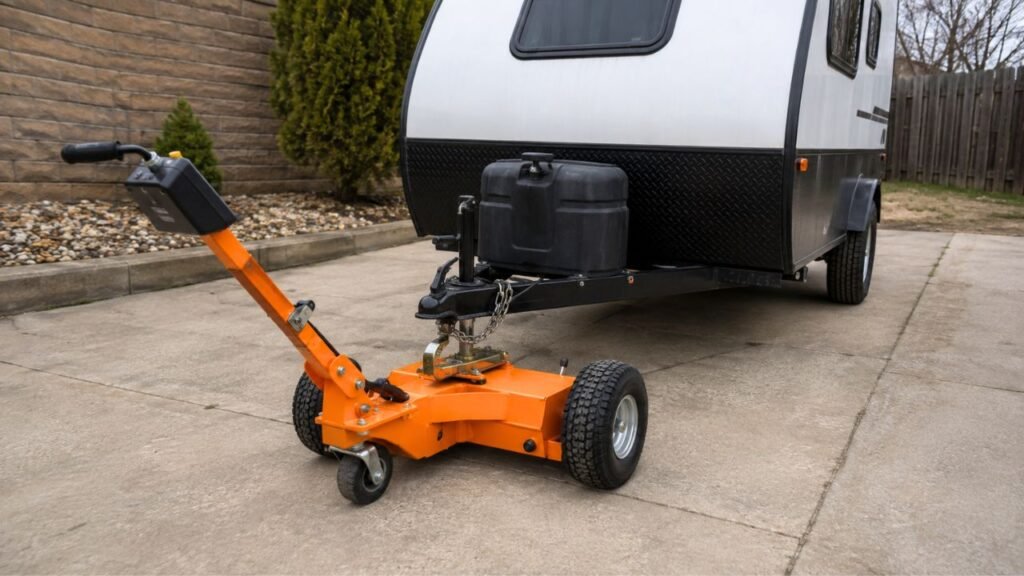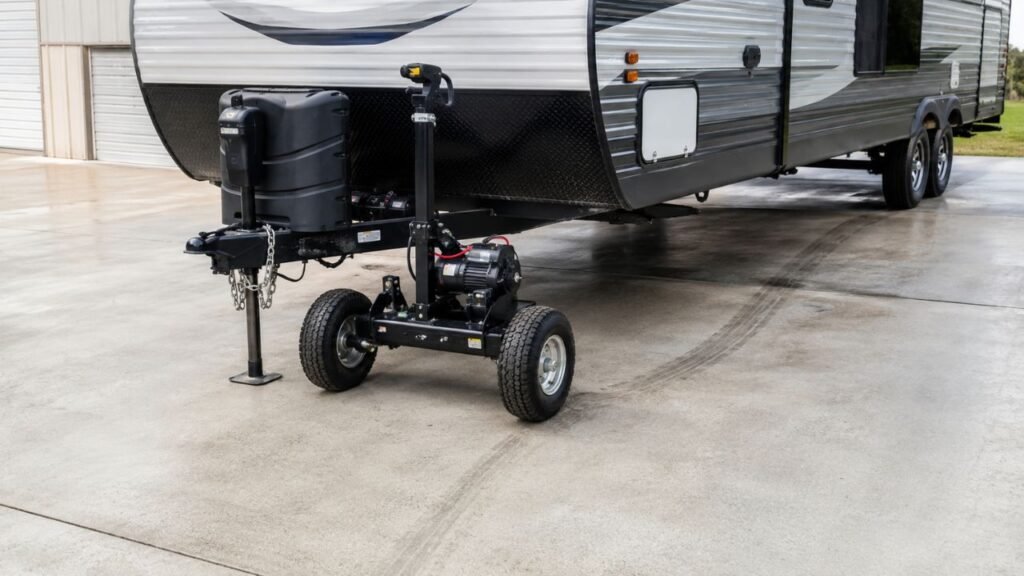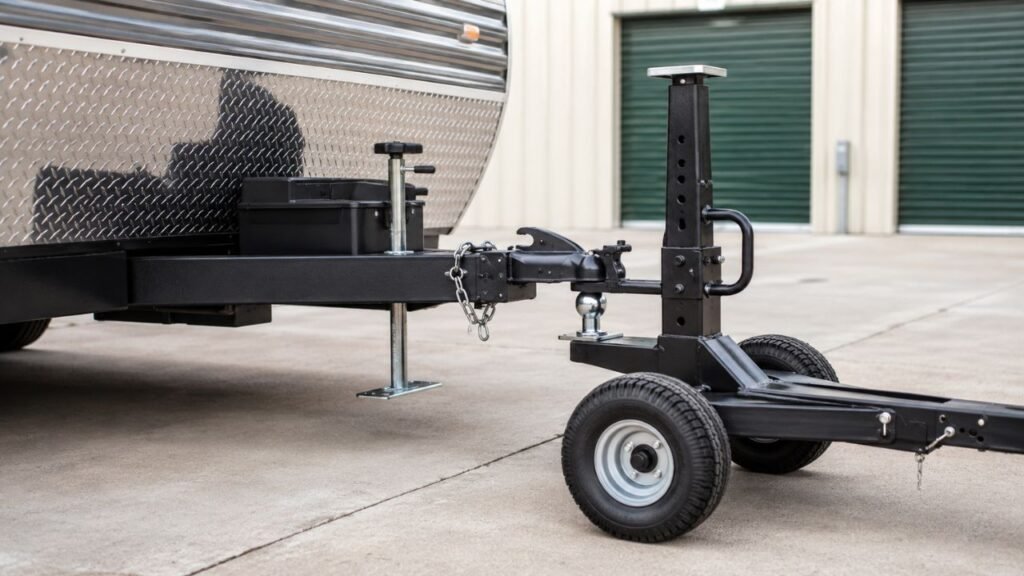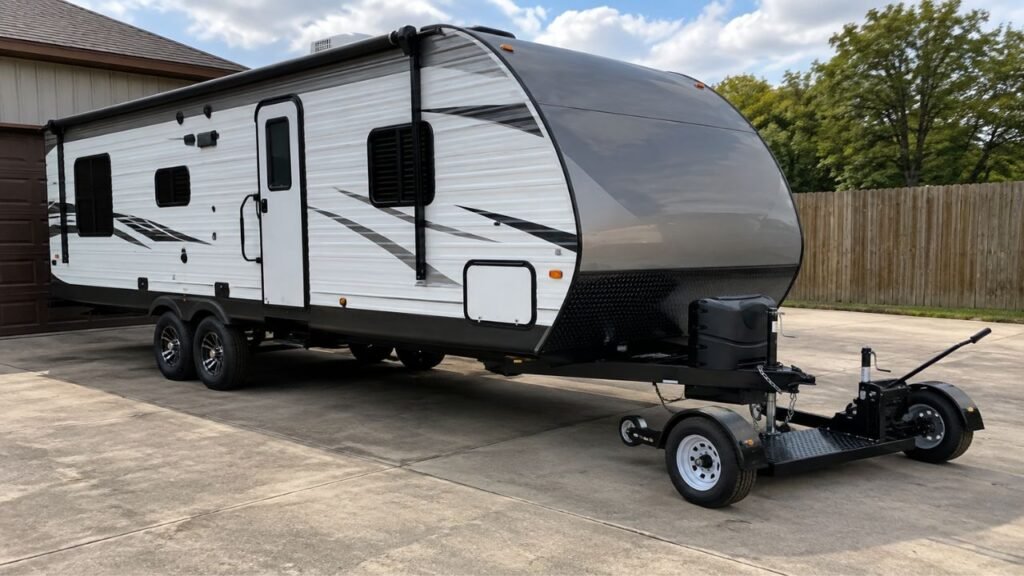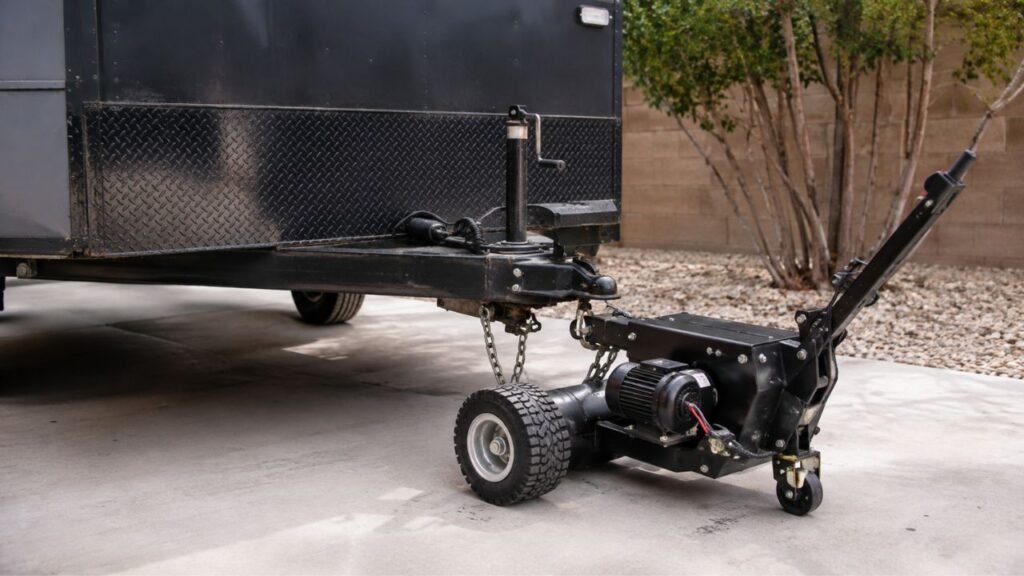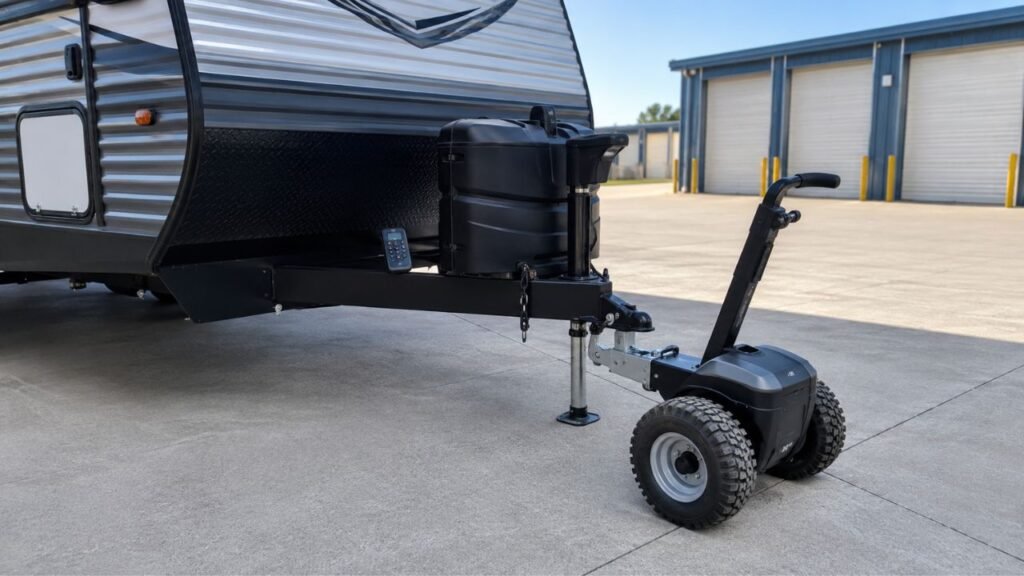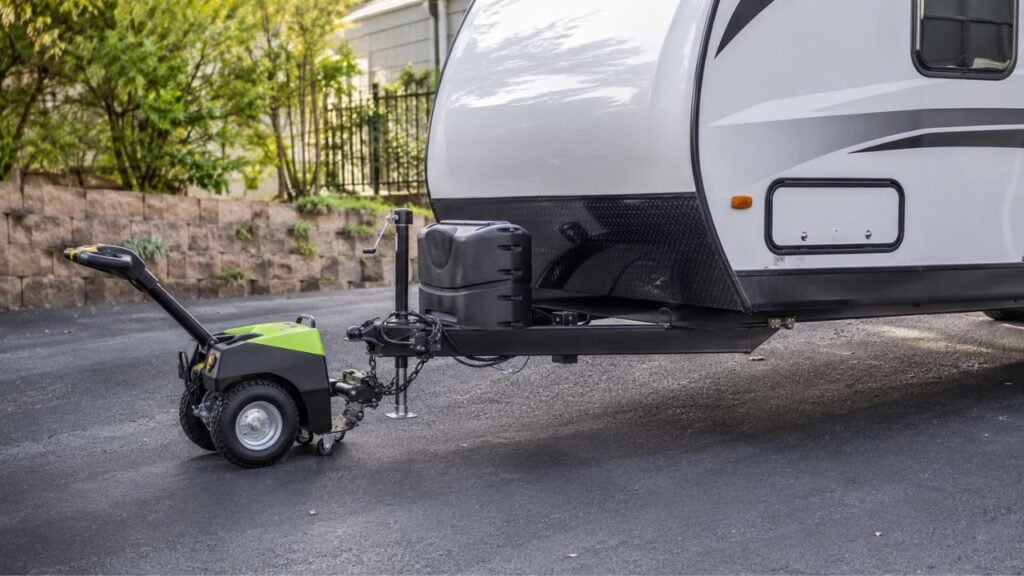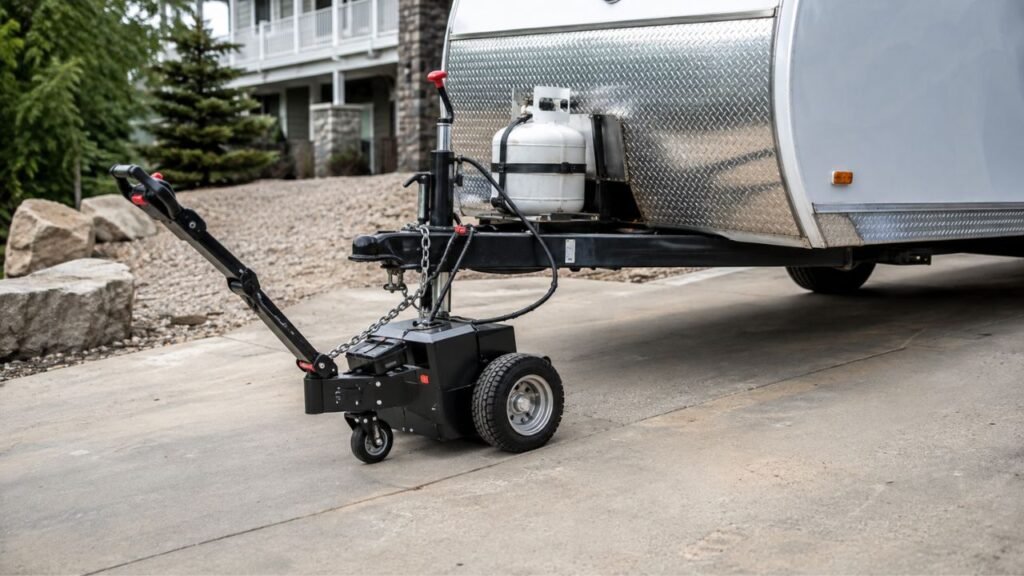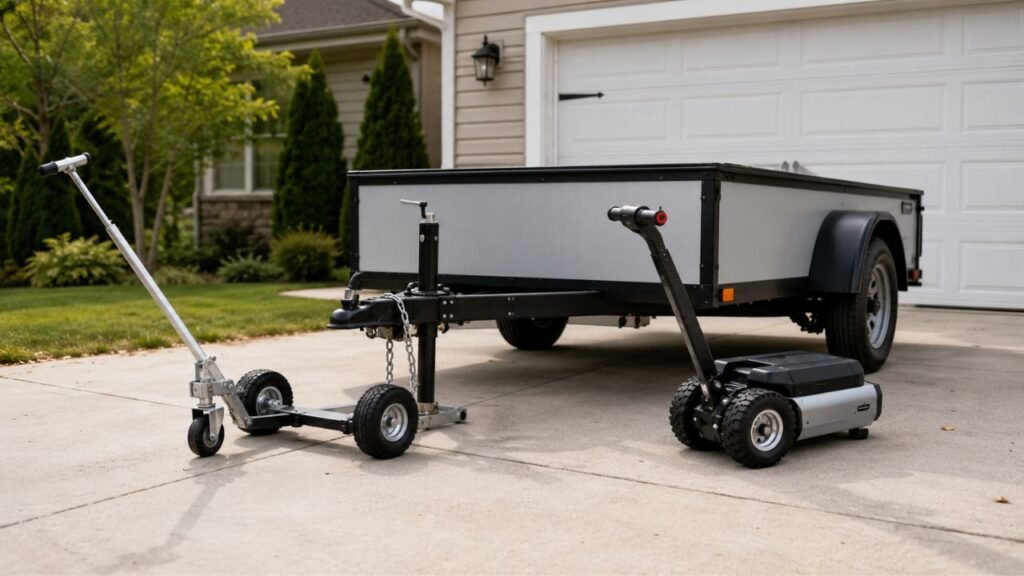
An electric trailer dolly is usually better for heavy trailers, frequent repositioning, and tight spaces where you want minimal physical effort. A manual trailer dolly is often the better value for lighter trailers moved occasionally on firm, level pavement. However, geared manual dollies can handle much more than basic hand-pushed models.
The right choice depends on more than trailer size alone. Below, I’ll help you compare weight capacity, tongue weight, terrain, slopes, maneuverability, braking, maintenance, cost, and real-world trailer types.
Key Takeaways
- Manual dollies are generally cheaper, lighter, and simpler to maintain.
- Electric dollies reduce physical effort and make repeated moves easier.
- Basic hand dollies and geared manual movers are very different tools.
- Always check both loaded trailer weight and tongue-weight capacity.
- Electric power does not automatically make a dolly suitable for grass.
- Slopes require extra caution regardless of which dolly you choose.
- Tandem-axle trailers need more turning force than single-axle trailers.
- A geared or drill-assisted mover can bridge manual and electric designs.
Manual vs Electric Trailer Dolly: Quick Comparison
Both types can make trailer positioning much easier than using your tow vehicle. The differences become clearer when you compare how they perform in everyday situations.
| Factor | Manual Trailer Dolly | Electric Trailer Dolly |
| Power source | Human force, leverage, or gearing | Battery-powered electric motor |
| Physical effort | Moderate to high | Low |
| Best for | Light or occasional trailer movement | Heavy or frequent trailer movement |
| Purchase cost | Usually lower | Usually higher |
| Weight capacity | Depends heavily on dolly design | Usually available in higher capacities |
| Tight-space control | Good with manageable loads | Excellent with slow-speed control |
| Flat pavement | Excellent | Excellent |
| Gravel or grass | Often difficult | Depends on tires, traction, and model |
| Slopes | Usually limited | Better potential, but still restricted |
| Tandem axles | Can require significant effort | Easier, though tire scrub remains |
| Braking | Varies by design | Varies by model |
| Maintenance | Usually simple | Battery and electrical maintenance needed |
| Storage | Often lighter and smaller | Usually heavier and bulkier |
| Best user | Occasional recreational owner | Frequent or heavy-duty trailer owner |
Neither column should be treated as an absolute rule. Trailer dollies vary tremendously in construction, gearing, tires, braking, and capacity.
What Is a Manual Trailer Dolly?
A manual trailer dolly moves the trailer without its own electric drive motor. However, there are several types, and understanding them prevents you from choosing the wrong tool.
Basic Push/Pull Manual Trailer Dolly
This is probably what you picture when someone says “trailer dolly.”
It normally has two or three wheels, a long handle, and a hitch ball. You attach the trailer coupler, then push or pull using the handle.
The long handle gives you leverage and much better steering control. It works especially well with smaller utility, boat, PWC, and similar trailers.
These dollies are simple, inexpensive, and easy to store. There is also no battery to charge before moving your trailer.
The downside is that you provide all the movement force.
Once the trailer becomes heavier, the ground becomes uneven, or the driveway starts climbing, moving it becomes considerably harder.
Geared Hand-Crank Trailer Mover
A geared trailer mover is also manually operated, but it works differently.
Instead of pushing the entire trailer through a long handle, you turn a crank. Internal gearing converts your effort into wheel movement.
That mechanical advantage allows some geared manual movers to handle trailers far heavier than ordinary hand dollies.
This distinction matters because you cannot reasonably compare every manual dolly using one capacity range.
A basic hand dolly may be intended for a relatively light trailer. A heavy-duty geared mover may be designed for trailers weighing several thousand pounds.
Some also include automatic or mechanical braking features. That provides more control than a simple free-rolling hand dolly.
Drill-Assisted Manual Trailer Dolly
There is another option sitting between fully manual and fully electric operation.
Some geared trailer movers accept a cordless-drill attachment. Instead of turning the crank by hand, your drill powers the dolly’s drive mechanism.
This setup can be useful when you want more assistance without buying a dedicated battery-powered trailer mover.
You can usually operate the mover manually if your drill battery dies. That backup capability can be particularly useful while traveling.
For many RV and boat owners, this middle-ground approach deserves consideration.
What Is an Electric Trailer Dolly?
An electric trailer dolly uses a motor to move the trailer instead of relying mainly on your strength.
Depending on the design, you may control movement through buttons, a throttle, a wired controller, or a wireless remote. Some models use driven wheels, while heavier designs may use wider tires or tracks.
Electric dollies are particularly useful when you repeatedly position a trailer. They can move slowly enough for controlled adjustments inside garages, storage spaces, narrow driveways, and parking areas.
However, electric does not automatically mean unlimited capability.
Every model has limits for total trailer weight, tongue weight, grade, surface type, tire traction, and sometimes trailer configuration.
You still need to match the dolly to your specific trailer.
Manual Trailer Dolly vs Electric Trailer Dolly: The Important Differences
Price is only one part of this comparison. These practical differences determine whether a dolly actually works well once your trailer is attached.
Trailer Weight and Tongue Weight Capacity
Start here before looking at convenience features.
Trailer weight tells you how much overall mass the dolly must move. Tongue weight tells you how much downward load the dolly must physically support.
Those are not the same specification.
For example, a dolly might advertise enough towing capacity for your trailer but have insufficient tongue-weight capacity.
That would still make the dolly unsuitable.
Also, use your trailer’s actual loaded weight whenever possible. Dry weight can leave out water, batteries, propane, camping equipment, tools, food, and other cargo.
Manual capacities vary dramatically.
A small push/pull dolly may suit lightweight recreational trailers. Geared hand-crank movers can be rated for significantly heavier loads.
Electric models also vary widely. Never assume an electric motor automatically means greater capacity than every manual design.
Physical Effort
This is one of the biggest differences you’ll notice immediately.
A standard manual dolly still depends on your ability to start, stop, turn, and control the trailer.
That may feel easy with a small trailer on smooth concrete.
Add more weight, a small incline, cracked pavement, gravel, or tight steering, and the effort increases quickly.
A geared manual mover reduces that effort through mechanical advantage. However, you still need to crank or operate the system yourself.
An electric dolly removes most of that propulsion effort.
You primarily guide and control the trailer instead of physically forcing it to move.
If you reposition your trailer frequently, that difference can become more important than purchase price.
Precision and Tight-Space Maneuverability
Both types can provide much better positioning control than backing with a truck.
With a manual dolly, you stand near the trailer tongue and directly control its direction. This makes small corrections easier to understand.
Electric dollies add powered creeping movement.
That can be especially helpful when you need to stop within inches of a wall, garage door, another vehicle, or storage rack.
Remote-controlled models may provide another advantage. You can sometimes stand where you have a better view of clearances while moving the trailer.
However, don’t dismiss manual control completely.
With a properly sized lightweight trailer, a manual dolly can provide excellent precision.
Flat Pavement Performance
Firm, level pavement is where manual dollies make the strongest case.
Concrete and asphalt provide low rolling resistance and predictable traction. That makes your trailer much easier to start and steer.
If you only move a small trailer ten or twenty feet across a garage or driveway, an electric unit may provide little practical benefit.
A quality manual dolly can accomplish the job without batteries or charging.
Electric dollies also perform well on pavement. Their advantage becomes more obvious as trailer weight or moving frequency increases.
Gravel, Grass, and Soft Ground
This is where many trailer-dolly comparisons become too optimistic.
An electric motor gives you power. It does not guarantee traction.
A small drive tire can still spin on loose gravel. Narrow tires can sink into soft grass. Wet soil can stop an otherwise powerful dolly.
Terrain performance depends on several factors:
- Tire diameter
- Tire width
- Tread pattern
- Tire material
- Number of driven wheels
- Trailer weight
- Ground firmness
- Available traction
Some powered models are specifically designed for improved off-pavement performance. Others still require hard, relatively level surfaces.
If gravel or grass is part of your normal route, check the manufacturer’s stated surface requirements before buying.
Don’t rely only on phrases such as “all-terrain.”
Slopes and Inclines
A slope changes this decision significantly.
On level ground, trailer weight mostly creates rolling resistance. On an incline, gravity begins pulling the trailer downhill.
That increases both the force needed to move it and the importance of braking.
A manual dolly can become difficult or unsafe surprisingly quickly on a slope.
Electric power can help move a trailer uphill, but the motor alone does not solve the downhill-control problem.
You should check:
- Maximum permitted grade
- Maximum load allowed on that grade
- Required trailer orientation
- Braking requirements
- Surface requirements
- Manufacturer operating instructions
Also remember that percent grade and degrees are different measurements.
A 10-percent grade does not mean a 10-degree slope.
If your driveway has a noticeable incline, treat slope capability as a primary buying specification.
Single-Axle vs Tandem-Axle Trailers
A tandem-axle trailer usually requires more force during tight turns.
When two axles are close together, their tires cannot all follow exactly the same turning path. The tires may scrub sideways across the pavement.
You will often feel this resistance when attempting sharp turns.
A light single-axle utility trailer may pivot easily with a manual dolly. A similarly sized tandem-axle trailer can feel considerably harder.
Electric power helps overcome some of that resistance.
However, it does not eliminate tire scrub itself.
If you have a tandem-axle travel trailer, boat trailer, cargo trailer, or toy hauler, include turning resistance when choosing capacity.
Braking and Runaway Protection
Braking deserves more attention than it usually gets.
Not every manual dolly is free-rolling. Some geared movers include mechanisms that prevent uncontrolled movement.
Likewise, not every electric dolly has the same braking system.
Depending on the product, you may encounter:
- Mechanical brakes
- Automatic gear locking
- Motor braking
- Emergency-stop controls
- Trailer electric-brake integration
- No dedicated braking system
This becomes especially important near slopes.
Don’t assume that “electric” automatically means safer braking.
Instead, look at how the specific dolly stops and holds the trailer.
Setup and Hitch Compatibility
A high-capacity dolly is useless if it cannot connect correctly.
Check your trailer coupler and the dolly’s mounting design before purchasing.
Common areas to verify include:
- Hitch-ball size
- Coupler type
- Adjustable hitch height
- Tongue-frame clearance
- Jack-post compatibility
- Mounting brackets
- Special adapters
Conventional trailers commonly use several different ball sizes. Larger trailers may also use specialized couplers.
Some trailer movers attach directly to the frame instead of simply using a hitch ball.
Make sure the entire mounting system fits your trailer.
Storage and Portability
Manual dollies generally have an advantage here.
A basic hand dolly can often be stored against a garage wall or inside a storage compartment.
Some handles can also be removed or folded.
Electric dollies include motors, batteries, drive components, and heavier frames. That typically makes them more difficult to lift and store.
This matters if the dolly stays at home.
It matters even more if you plan to carry it inside your RV or tow vehicle.
Check the unit’s actual weight before purchasing. A powered dolly may save physical effort while moving your trailer but still be awkward to load into storage.
Maintenance and Reliability
Manual dollies are mechanically simple.
Routine maintenance may include checking:
- Tires
- Wheel bearings
- Fasteners
- Hitch components
- Lubrication points
A geared manual mover may also require occasional drivetrain maintenance.
Electric units add more components.
You may need to maintain the battery, charger, wiring, motor, controller, switches, remote, and drive system.
None of this necessarily makes an electric dolly unreliable.
It simply means there are more components to maintain.
Battery care becomes particularly important when the dolly sits unused through an RV off-season.
Purchase Price and Long-Term Cost
Manual trailer dollies usually have the lowest entry cost.
A simple hand dolly can be an inexpensive solution if your trailer and driveway suit it.
Geared manual and drill-assisted movers typically cost more because their drive systems are more sophisticated.
Fully electric movers usually represent the highest investment.
Heavy-duty remote-operated models can cost considerably more than basic hand dollies.
Long-term costs may also include:
- Battery replacement
- Charger replacement
- Tires
- Drive components
- Replacement remotes
- General repairs
Don’t buy solely based on the cheapest initial price.
The better question is whether the dolly makes your normal trailer-moving routine easier and safer.
Which Dolly Is Better for Different Trailers?
Trailer type gives you a useful starting point, but it should never replace checking actual weight and tongue-weight specifications.
- Jet ski or PWC trailer: A basic manual dolly is often enough on level pavement.
- Small utility trailer: Manual usually works well for occasional short moves.
- Small boat trailer: Manual or geared manual can both make sense.
- Popup camper: Manual may work if weight and terrain remain manageable.
- Travel trailer: Geared manual or electric options become more practical.
- Heavy boat trailer: Electric or heavy-duty geared movers are often easier.
- Tandem-axle trailer: Extra power helps overcome turning resistance.
- Large travel trailer: Electric models generally reduce effort considerably.
- Enclosed cargo trailer: Choose based on loaded weight and moving frequency.
- Fifth-wheel or gooseneck trailer: Use only equipment designed specifically for that connection.
Always use the trailer’s real operating conditions rather than category alone.
A lightly loaded cargo trailer stored inside a flat garage presents a very different challenge from the same trailer parked on an inclined gravel driveway.
How to Choose the Correct Trailer Dolly Capacity
Capacity labels can be confusing because several different weight figures appear on trailers and dollies. Work through them separately before making your decision.
Find Your Loaded Trailer Weight
Start with what the trailer actually weighs when you move it.
Dry weight only represents the trailer before much of your equipment is added.
Depending on the trailer, additional weight may include:
- Fresh water
- Propane
- Batteries
- Camping gear
- Tools
- Boats or equipment
- Food
- Personal belongings
If you usually store the trailer loaded, size the dolly for that condition.
Don’t buy around an empty-trailer figure you rarely use.
Determine Your Tongue Weight
Tongue weight is the downward force placed on the hitch.
For many conventional trailers, tongue weight often falls somewhere around 10 to 15 percent of loaded trailer weight when properly balanced.
However, don’t use that percentage as your only measurement.
Your actual tongue weight can change with cargo location, tanks, batteries, storage compartments, and trailer design.
Whenever possible, use a known or measured figure.
Compare Both Numbers With the Dolly Ratings
Now compare your figures with both dolly limits.
Suppose your loaded trailer fits comfortably under the dolly’s advertised towing capacity.
That sounds good.
But if your actual tongue weight exceeds the dolly’s vertical-load limit, the setup is still wrong.
You need both numbers to remain within specifications.
I also prefer leaving some margin rather than operating equipment constantly at its absolute maximum.
Check Whether Ratings Change With Accessories or Terrain
Capacity may change depending on how the dolly is configured.
An adapter, mounting bracket, steep grade, loose surface, or alternative hitch arrangement can affect what the manufacturer permits.
Read the instructions for the exact setup you intend to use.
This is particularly important with heavier RV and boat trailers.
When a Manual Trailer Dolly Is the Better Choice
Manual does not automatically mean outdated or inconvenient. In the right situation, it can be the simplest solution.
A manual dolly makes sense when:
- Your trailer comfortably fits its weight ratings.
- You move the trailer only occasionally.
- Your driveway or garage floor is level.
- The surface is firm concrete or asphalt.
- Moving distances are relatively short.
- Storage space is limited.
- Low purchase cost matters.
- You prefer minimal maintenance.
- You don’t want another battery to maintain.
- You can comfortably handle the required effort.
For heavier trailers, don’t automatically abandon manual options.
A geared hand-crank mover can provide much greater mechanical advantage than a basic push/pull dolly.
That may give you enough assistance without requiring a full electric system.
When an Electric Trailer Dolly Is Worth the Extra Cost
Electric dollies become easier to justify as weight, frequency, and parking difficulty increase.
Consider paying more for electric assistance when:
- You move a heavy trailer regularly.
- Parking requires several small corrections.
- The trailer goes into a narrow garage.
- You normally reposition the trailer alone.
- You want to minimize physical effort.
- Your storage arrangement requires frequent maneuvering.
- Slow powered movement improves control.
- You need better visibility around obstacles.
- A remote control would improve positioning.
- Your chosen model supports your surface and grade.
The important qualification is the last one.
Don’t buy an electric dolly simply because your driveway is difficult. Make sure the specific product is designed for those conditions.
Don’t Overlook a Geared or Drill-Powered Trailer Mover
You don’t necessarily have to choose between a basic hand dolly and an expensive fully electric mover.
A geared manual trailer mover can offer a useful middle ground.
Its mechanical gearing lets you move significantly more weight with less effort than a basic push/pull dolly.
Some models also accept a cordless drill.
That gives you powered assistance when needed while keeping manual operation available as a backup.
This approach can make sense if you move a medium-to-heavy trailer occasionally rather than every week.
You also avoid maintaining a dedicated drive battery inside the mover.
For many RV and boat owners, this category provides the balance they were actually looking for.
Trailer Dolly Safety Checks Before Moving Any Trailer
Trailer dollies make positioning easier, but you are still controlling a heavy rolling load. A quick safety check before every move can prevent expensive mistakes.
- Verify the trailer’s loaded weight.
- Confirm the tongue weight fits the dolly rating.
- Secure the coupler or mounting system completely.
- Inspect dolly tires before moving.
- Check trailer tires for obvious problems.
- Walk the intended route first.
- Remove rocks, hoses, tools, and other obstacles.
- Check manufacturer slope restrictions.
- Check manufacturer surface restrictions.
- Test forward and reverse controls before moving.
- Test the braking system where applicable.
- Keep wheel chocks within reach.
- Move slowly near walls and vehicles.
- Avoid standing directly downhill from the trailer.
- Keep feet away from drive wheels.
- Never exceed the manufacturer’s rated capacity.
- Stop if the dolly begins losing traction.
- Don’t use motor power to force an unsafe situation.
The safest setup is one that works comfortably within its limits.
If the dolly struggles continuously, slips, overheats, or cannot stop confidently, reconsider the setup before continuing.
Final Verdict: Manual or Electric Trailer Dolly?
For a small trailer that only needs occasional repositioning on a flat concrete or asphalt surface, a manual trailer dolly is usually the more practical purchase. It costs less, stores easily, requires little maintenance, and can provide excellent control.
For a heavier trailer, frequent repositioning, tight parking, or situations where physical effort needs to stay low, an electric trailer dolly is generally the better tool. Powered creeping movement can make difficult parking much easier.
Still, trailer weight should never be your only deciding factor.
Tongue weight, axle configuration, driveway slope, surface type, braking system, storage space, hitch compatibility, and frequency of use all matter.
And remember the option between those two extremes.
A geared or drill-assisted trailer mover can offer substantial capacity and mechanical advantage without committing to a fully electric system.
Choose the tool that fits how and where you actually move your trailer. That will matter much more than whether the label says manual or electric.
Related FAQs
Here are short answers to a few common questions that often come up when choosing between manual and electric trailer dollies.
Can You Move a Travel Trailer With a Manual Dolly?
Yes, but only if the manual dolly is rated for both your trailer’s loaded weight and tongue weight. Basic hand dollies usually suit lighter trailers, while geared manual movers can handle much heavier applications.
How Heavy of a Trailer Can a Manual Dolly Move?
There is no single weight limit for manual dollies. Basic push/pull models may suit relatively light trailers, while geared manual movers can be rated for several thousand pounds. Always follow the specific dolly’s ratings.
Is an Electric Trailer Dolly Better on Gravel?
Sometimes, but electric power alone does not guarantee good gravel performance. Tire size, tread, drive-wheel configuration, trailer weight, and gravel depth all affect traction. Check whether the specific model permits gravel use.
Can You Use an Electric Trailer Dolly on a Slope?
Some electric trailer dollies can operate on limited grades, but each model has its own restrictions. Check maximum grade, trailer weight, braking requirements, surface conditions, and manufacturer instructions before using one on an incline.
Do Electric Trailer Dollies Have Brakes?
Some do, but braking systems vary considerably. A model may use motor braking, mechanical braking, automatic locking, trailer-brake integration, or another system. Never assume braking capability simply because the dolly is electric.
Can a Trailer Dolly Move a Tandem-Axle Trailer?
Yes, a properly rated trailer dolly can move many tandem-axle trailers. However, tandem tires create additional scrubbing resistance during tight turns, so you may need more power and should avoid forcing extremely sharp pivots.
Is a Trailer Dolly Safe to Use Alone?
Many trailer dollies are designed for one-person positioning. Safe use still depends on proper attachment, adequate braking, good visibility, suitable terrain, wheel chocks, and staying within the manufacturer’s operating limits.
What Size Trailer Dolly Do I Need?
Choose a dolly that safely supports your trailer’s actual loaded weight and tongue weight. You should also consider hitch compatibility, axle configuration, terrain, driveway grade, tire design, and how frequently you move the trailer.
Is a Powered Trailer Dolly the Same as an Electric Trailer Dolly?
Not always. Electric trailer dollies are powered dollies, but the broader powered category can also include drill-assisted, motorized, or other drive systems. Product terminology varies between manufacturers.
Are Drill-Powered Trailer Dollies Better Than Electric Dollies?
Drill-powered movers can be a better middle-ground choice for occasional use. They provide powered assistance, often retain manual backup, and avoid a dedicated drive battery. Fully electric dollies usually offer greater convenience for frequent movement.

Jack Collins specializes in RV routes, trail access, and travel logistics. His how-to articles help RV and trailer owners plan smoother trips and avoid common mistakes. Every review focuses on performance, safety, and value.