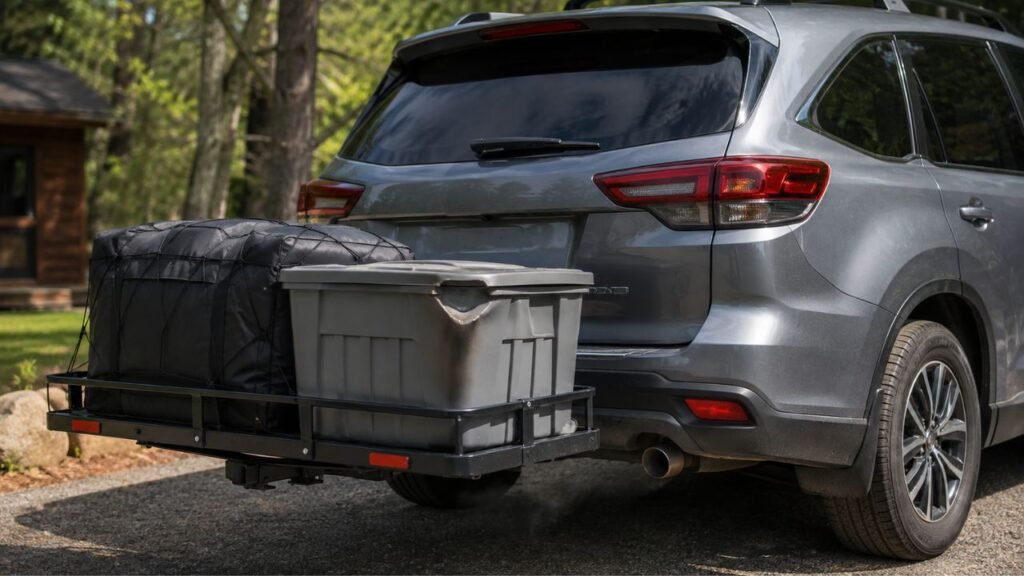
Yes, vehicle exhaust can melt or damage cargo on a hitch carrier. Hot exhaust aimed directly at plastic totes, cargo bags, straps, coolers, or other heat-sensitive gear can cause warping, scorching, softening, or complete melting.
In this guide, I’ll show you why this happens, how to check your carrier setup, which cargo is most vulnerable, and the safest ways to prevent exhaust heat damage.
Key Takeaways
- Direct exhaust flow is more dangerous than distance alone.
- Plastic totes, soft bags, straps, and rubber parts are vulnerable.
- There is no universal safe exhaust-to-carrier clearance.
- Raising or repositioning the carrier can reduce heat exposure.
- Redirecting the exhaust is often more effective than insulating cargo.
- Diesel vehicles may produce especially high exhaust temperatures during regeneration.
- Hitch risers and extenders can affect allowable tongue weight.
- Never ignore melting smells, warping, scorching, or unusually hot cargo.
Can Vehicle Exhaust Really Melt Cargo on a Hitch Carrier?
Vehicle exhaust can absolutely get hot enough to damage cargo sitting behind your vehicle. The problem becomes more serious when the tailpipe points directly toward the carrier.
The metal basket itself may look perfectly fine. Meanwhile, the plastic tote sitting on top of it may soften or warp.
Soft cargo bags can also suffer damage. Their vinyl coatings, synthetic fabrics, plastic buckles, and straps often tolerate much less heat than steel.
You may first notice a slightly deformed corner or hot-plastic smell. In worse cases, a tote can partially melt where the exhaust plume hits it.
This is why you should evaluate the position of your actual cargo. Looking only at the distance between the exhaust and metal basket can give you false confidence.
Why Does Exhaust Heat Damage Hitch-Carrier Cargo?
Exhaust heat problems usually come down to geometry, temperature, and cargo material. Understanding those three factors will help you fix the problem correctly.
The Tailpipe Points Directly at the Carrier
A rear-facing tailpipe can send concentrated hot exhaust toward one section of your cargo carrier.
That direct path matters enormously.
A carrier may seem several inches away from the exhaust. However, if the tailpipe points straight at a plastic container, that container can continuously absorb heat during the trip.
Side-facing or downward-facing exhaust generally creates less direct exposure.
The Carrier Sits at the Same Height as the Exhaust
Many hitch carriers sit close to bumper height.
Unfortunately, that can place the platform directly in line with the exhaust outlet.
A raised-shank cargo carrier often improves the situation because the basket sits higher than the hottest exhaust flow.
Even a small change in height can sometimes move your cargo completely outside the exhaust stream.
The Cargo Sits Too Close to the Tailpipe
Hot exhaust gradually mixes with cooler outside air after leaving the tailpipe.
Cargo positioned very close to the outlet receives hotter, more concentrated gases.
Greater separation normally helps. However, distance alone does not guarantee safety.
A tote directly behind the tailpipe may experience more heat than another tote positioned closer but well above the exhaust path.
The Engine Is Working Hard
Your exhaust temperature does not remain constant during every drive.
Higher engine loads can produce considerably more exhaust heat.
Situations that may increase heat include:
- Driving uphill for extended periods
- Heavy acceleration
- Towing
- Carrying heavy loads
- Driving in very hot weather
- Long highway climbs
This means a carrier setup that seems fine around town might become much hotter during a demanding road trip.
Diesel Particulate Filter Regeneration Raises the Risk
Diesel owners need to pay extra attention to this issue.
Many modern diesel trucks and SUVs periodically perform diesel particulate filter regeneration. During regeneration, exhaust temperatures can become significantly higher than during ordinary driving.
That matters if your cargo carrier sits directly behind the exhaust.
Plastic containers, rubber components, bags, straps, or combustible materials should never sit where extremely hot exhaust can reach them.
If you drive a diesel vehicle, checking your exhaust-to-carrier geometry becomes even more important.
What Cargo Is Most Likely to Be Damaged by Exhaust Heat?
Not everything on your cargo carrier reacts to heat the same way. Synthetic materials and plastics usually deserve the closest inspection.
Items that may be vulnerable include:
- Plastic storage totes
- PVC or vinyl cargo bags
- Nylon tie-down straps
- Polyester straps
- Plastic buckles
- Bungee cords
- Plastic cooler shells
- Foam sleeping pads
- Rubber boots or mats
- Plastic toolboxes
- Camping gear with molded plastic parts
- Electronics in plastic cases
- Battery-powered equipment
- Plastic water containers
I would also be careful with anything containing adhesives. Heat can soften adhesive-backed materials long before the main item appears damaged.
Avoid placing fuels, aerosol cans, or highly combustible items near the exhaust path. Heat exposure involving those materials creates a more serious hazard than damaged luggage.
How Much Clearance Should There Be Between the Exhaust and Cargo Carrier?
You may see specific clearance numbers recommended online, but no single measurement works for every vehicle. Tailpipe direction and carrier position can matter just as much as distance.
There Is No Universal Safe Clearance
There is no reliable one-size-fits-all clearance that guarantees your cargo will stay cool.
Several factors change the result:
- Tailpipe direction
- Exhaust outlet size
- Vehicle engine type
- Carrier height
- Carrier distance
- Cargo height
- Engine load
- Outside temperature
- Driving speed
- Cargo material
Your vehicle, hitch, carrier, and exhaust system should always be evaluated together.
Manufacturer instructions should also take priority over generic measurements.
Is 12 Inches From the Exhaust Enough?
You may see roughly 12 inches mentioned as a practical reference for separating cargo from an exhaust outlet.
I would not treat that number as a guaranteed safe distance.
Twelve inches directly behind a rear-facing exhaust may still expose cargo to substantial heat.
Meanwhile, cargo sitting slightly closer but several inches above the exhaust stream may receive much less direct heat.
Think of 12 inches as a starting reference, not a universal safety rule.
Vertical Clearance Can Matter More Than Straight-Line Distance
This point is easy to overlook.
Imagine your tailpipe sits 10 inches from the carrier. Raising the carrier three inches could move the cargo completely above the exhaust stream.
Simply extending the carrier another three inches backward may not achieve the same result.
Always look at where the exhaust actually travels, not just the tape-measure distance.
How to Check Whether Your Hitch Carrier Is Too Close to the Exhaust
You can evaluate your setup before committing to a long trip. I recommend checking the carrier while it is loaded exactly as you plan to travel.
- Install your hitch carrier normally.
- Locate every exhaust outlet on the vehicle.
- Look directly behind each tailpipe.
- Identify where the exhaust stream would travel.
- Check whether that path hits the carrier.
- Measure the distance to the closest cargo.
- Check the vertical difference between exhaust and cargo.
- Load the carrier exactly as you plan to use it.
- Repeat the inspection with the cargo installed.
- Take a short test drive.
- Park safely and inspect the cargo for unusual heat.
- Look for odors, soft plastic, discoloration, or strap damage.
A non-contact infrared thermometer can also help you compare temperatures in different parts of the carrier.
Do not place your hand close to the exhaust outlet while testing. Exhaust components and gases can cause serious burns.
What Are the Best Ways to Protect Hitch Cargo From Exhaust Heat?
You usually have several ways to solve the problem. The best option depends on whether your issue comes from exhaust direction, carrier height, or limited separation.
Redirect the Exhaust With a Turndown or Side-Exit Tip
Redirecting exhaust can be one of the most effective solutions.
A properly fitted turndown tip sends exhaust toward the ground instead of directly toward the carrier.
A side-facing outlet can achieve a similar result.
The important goal is moving the hottest exhaust stream away from your cargo.
Make sure any exhaust modification fits correctly and does not restrict exhaust flow.
Use a Cargo Carrier With a Raised Shank
Some hitch cargo carriers have a built-in rise.
That design positions the basket several inches higher than the receiver opening.
A raised carrier can help when your current tray sits directly level with the tailpipe.
I generally prefer this type of solution over stacking unnecessary adapters because fewer connections usually mean less movement and fewer capacity complications.
Increase the Distance Between the Exhaust and Cargo
Moving your cargo farther behind the exhaust outlet can help the hot gases mix with cooler air.
However, increasing distance is most useful when the exhaust stream also disperses away from your cargo.
Simply extending a carrier farther backward while keeping it directly in the exhaust path may not completely solve the problem.
Install a Proper Heat Shield
A heat shield can protect a localized area from concentrated heat.
Metal shields are commonly used because they tolerate much higher temperatures than plastic.
The shield should create separation between the hot exhaust and cargo.
Avoid installing something that simply conducts heat directly into the tote or bag you are trying to protect.
Move Heat-Sensitive Cargo Away From the Exhaust Side
Sometimes the simplest solution is repositioning your load.
For example, you might move a plastic tote from the exhaust-side corner toward the opposite side of the carrier.
This works particularly well when only one small section sits directly behind the tailpipe.
However, I would consider this a supplemental solution.
If the entire carrier sits directly in the exhaust path, changing cargo position may not be enough.
Which Exhaust-Heat Solution Works Best?
Each solution handles a slightly different problem. Use this table to decide which approach makes the most sense for your setup.
| Solution | Best For | Main Advantage | Important Limitation |
| Exhaust turndown tip | Rear-facing exhaust | Redirects heat before reaching cargo | Must fit properly |
| Side-exit exhaust tip | Exhaust aimed at carrier center | Moves hot gases sideways | Vehicle compatibility varies |
| Raised-shank carrier | Carrier level with tailpipe | Moves cargo above exhaust | May affect hatch clearance |
| Longer carrier shank | Cargo extremely close | Adds separation | Adds leverage and rear overhang |
| Heat shield | Localized hot spot | Protects one vulnerable area | Poor placement may transfer heat |
| Hitch riser | Existing carrier sits too low | Raises carrier position | Can affect hitch capacity |
| Repacking cargo | One corner receives heat | Costs nothing | Not enough for severe exposure |
| Different carrier | Unsafe geometry cannot be corrected | Removes the conflict | More expensive |
Is Using a Hitch Riser or Extender Safe?
A hitch riser or extender can improve exhaust clearance, but you should never add one without checking your weight limits.
Moving the carrier farther away increases leverage on the hitch.
Some hitch adapters and extenders may significantly reduce allowable tongue weight. A 50 percent reduction is common with certain setups, but you should never apply that number automatically.
Check the ratings for your:
- Vehicle
- Receiver hitch
- Hitch adapter
- Cargo carrier
Then follow the lowest applicable rating.
Remember that the cargo carrier itself counts toward the total hitch load.
For example, a 60-pound carrier carrying 200 pounds of gear places about 260 pounds on the hitch before accounting for any adapter restrictions.
Solving an exhaust problem should never create an overloaded hitch problem.
Will a Metal Hitch Cargo Carrier Protect Your Gear From Exhaust Heat?
A metal cargo basket does not automatically protect your belongings from exhaust heat.
Steel and aluminum usually tolerate temperatures that would quickly damage plastic cargo.
However, the metal platform can still become hot.
That heat can transfer into:
- Plastic tote bottoms
- Cargo bags
- Rubber feet
- Tie-down straps
- Plastic cases
- Foam pads
The metal carrier surviving the trip does not prove your cargo is safe.
Inspect the actual items sitting closest to the exhaust.
Does Highway Driving Prevent Exhaust From Melting Cargo?
Highway airflow can help disperse heat, but you should not rely on it as protection.
Fast-moving air around the vehicle may cool the carrier and dilute the exhaust plume.
At the same time, highway driving can place the engine under sustained load.
Long climbs, heavy cargo, towing, strong headwinds, and hot weather can all increase engine demand.
That means you can have more airflow and hotter exhaust at the same time.
A setup that stays cool during a short neighborhood drive may behave differently after several hours on the interstate.
Is Exhaust Heat Worse While Idling or Driving Slowly?
Slow driving and idling can sometimes make exhaust heat problems more noticeable because there is less airflow around the rear of the vehicle.
Hot gases may remain near the carrier longer.
However, low speed does not always create the hottest exhaust.
A heavily loaded engine climbing a mountain highway may produce considerably more heat than an idling engine.
This is why you should evaluate both exhaust temperature and airflow conditions.
Can Exhaust Heat Actually Start a Fire on a Cargo Carrier?
Yes, exhaust heat can create more than a melting problem.
Combustible materials exposed to concentrated exhaust heat can potentially scorch, smoke, or ignite.
That is why you should never allow cargo to block or sit directly against the tailpipe.
Pay particular attention to:
- Dry fabric
- Cardboard
- Paper products
- Fuel containers
- Aerosol cans
- Plastic bags
- Synthetic straps
- Foam materials
If you smell burning, see smoke, or notice severe discoloration, stop somewhere safe and inspect the carrier immediately.
Do not continue driving while assuming airflow will solve the problem.
What Are the Warning Signs That Your Cargo Is Getting Too Hot?
Exhaust damage often gives you warning signs before complete melting occurs.
Watch for:
- Hot-plastic odors
- Burning rubber smells
- Softened plastic corners
- Warped totes
- Shiny or glossy melted areas
- Bubbled plastic
- Discolored carrier paint
- Distorted straps
- Melted bungee cords
- Damaged plastic buckles
- Heat marks behind one tailpipe
- A single unusually hot area on the carrier
If the same area repeatedly becomes hot, fix the exhaust alignment before your next long drive.
What Should You Do If the Exhaust Already Melted Your Cargo?
If you discover heat damage, do not reload everything exactly the same way and continue your trip.
Instead:
- Move the vehicle somewhere safe.
- Allow the exhaust and carrier to cool.
- Remove damaged cargo.
- Replace melted or weakened straps.
- Check the carrier coating and hardware.
- Inspect nearby wiring and lights.
- Look for melted plastic on the tailpipe.
- Identify where the exhaust stream hits the carrier.
- Redirect, raise, or reposition the setup.
- Replace badly deformed storage containers.
Pay special attention to tie-down straps.
A strap can look only slightly melted but still lose enough strength to become unsafe.
When Should You Use a Different Cargo Carrier Instead?
Sometimes modifying your existing setup is not worth the risk.
I would consider a different cargo solution when the carrier remains directly behind the exhaust after reasonable adjustments.
The same applies when adding a riser or extender would reduce your available hitch capacity too much.
A different solution might include:
- A raised-shank hitch carrier
- A carrier with different dimensions
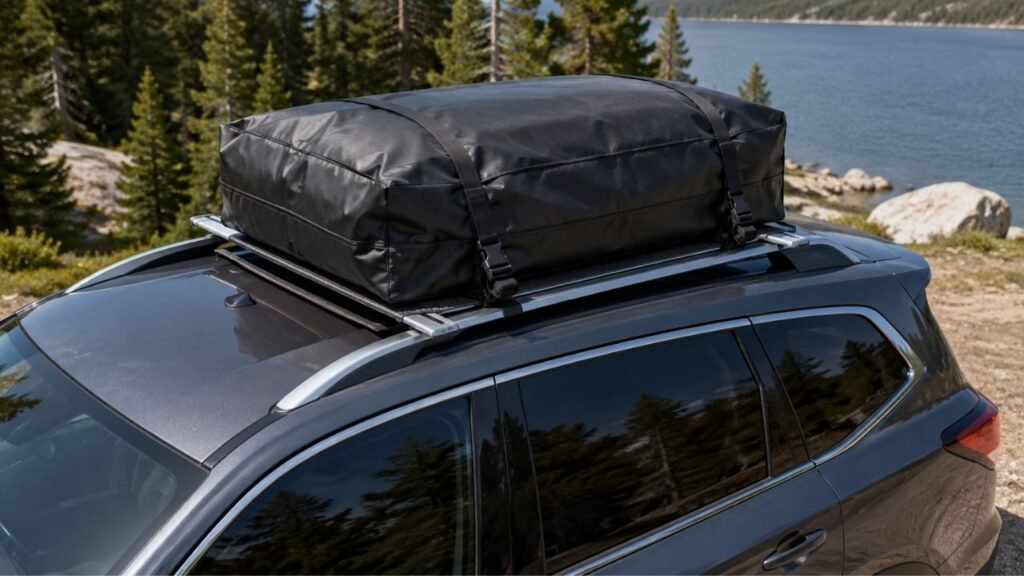
- A roof cargo box
- A roof basket
- Interior cargo storage
- A trailer designed for additional cargo
The goal is not to force one carrier to work with every vehicle.
If the geometry remains unsafe, changing the carrier is often the cleaner solution.
Final Words
Vehicle exhaust can definitely melt cargo on a hitch carrier, especially when the tailpipe points directly at plastic totes, bags, straps, or other heat-sensitive equipment.
The safest approach is not chasing one magic clearance number. Focus on keeping cargo out of the direct exhaust stream while staying within every hitch and carrier weight rating.
Redirecting the exhaust, using a properly raised carrier, repositioning cargo, or installing a suitable heat shield can solve many setups.
Check everything before a long trip. A few minutes spent inspecting your carrier can save you from melted gear, damaged straps, or a much more serious heat-related problem.
Related FAQs
Can Car Exhaust Melt a Plastic Storage Tote on a Hitch Carrier?
Yes. Plastic storage totes can warp, soften, discolor, or melt when hot exhaust blows directly against them for extended periods, especially when they sit close to the tailpipe.
Can Exhaust Melt a Waterproof Hitch Cargo Bag?
Yes. Many waterproof cargo bags use PVC, vinyl coatings, polyester, nylon, plastic buckles, and synthetic seams that can soften or become damaged by concentrated exhaust heat.
How Far Should a Cargo Carrier Be From the Exhaust Pipe?
There is no universal safe distance because exhaust direction, vehicle type, carrier height, engine load, and cargo materials all matter. Greater separation usually helps, but keeping cargo outside the direct exhaust path is more important.
Is 12 Inches From the Tailpipe Enough for a Hitch Carrier?
Twelve inches can be a useful reference, but it does not guarantee safety. Cargo sitting directly behind a rear-facing exhaust may still become hot even with that amount of separation.
Will a Raised Hitch Cargo Carrier Clear the Exhaust?
It can. A raised carrier may move the basket above the main exhaust stream, which often reduces direct heat exposure. You should still check the loaded carrier before traveling.
Can I Put a Heat Shield Between the Exhaust and Cargo Carrier?
Yes. A properly installed metal heat shield can reduce direct heat exposure, but it should create adequate separation and should not simply transfer heat into the cargo.
Does a Hitch Riser Reduce Tongue Weight Capacity?
Some hitch risers, extenders, and adapters can reduce allowable hitch capacity because they increase leverage on the receiver. Always check the specific ratings for your vehicle, hitch, adapter, and carrier.
Will Exhaust Heat Damage Tie-Down Straps or Bungee Cords?
Yes. Nylon, polyester, rubber, and plastic strap components can soften, distort, or weaken when exposed to concentrated exhaust heat, potentially reducing their ability to secure cargo.
Can Exhaust Heat Damage a Cooler on a Hitch Carrier?
Yes. A cooler’s plastic shell, handles, hinges, wheels, or insulation can suffer heat damage when positioned directly behind a hot tailpipe.
Is Exhaust Heat More Dangerous on Diesel Trucks?
It can be. Modern diesel vehicles may produce very high exhaust temperatures during diesel particulate filter regeneration, making carrier placement especially important.
Can DPF Regeneration Melt Cargo Behind a Diesel Vehicle?
Potentially, yes. DPF regeneration raises exhaust temperatures significantly, so heat-sensitive or combustible cargo should always remain well outside the exhaust stream.
Is Exhaust Heat Worse While Idling or Driving on the Highway?
Both situations can create problems. Idling provides less cooling airflow, while highway driving under heavy engine load can produce hotter exhaust. Carrier geometry matters in either situation.
Can a Metal Cargo Basket Still Get Hot Enough to Damage Cargo?
Yes. The metal basket itself may withstand the heat while becoming hot enough to transfer heat into plastic totes, bags, rubber components, and straps placed on it.
Should I Redirect the Exhaust or Raise the Cargo Carrier?
Redirecting the exhaust is often best when the tailpipe points straight toward the carrier. Raising the carrier makes more sense when the basket simply sits at the same height as the exhaust outlet.

Jack Collins specializes in RV routes, trail access, and travel logistics. His how-to articles help RV and trailer owners plan smoother trips and avoid common mistakes. Every review focuses on performance, safety, and value.