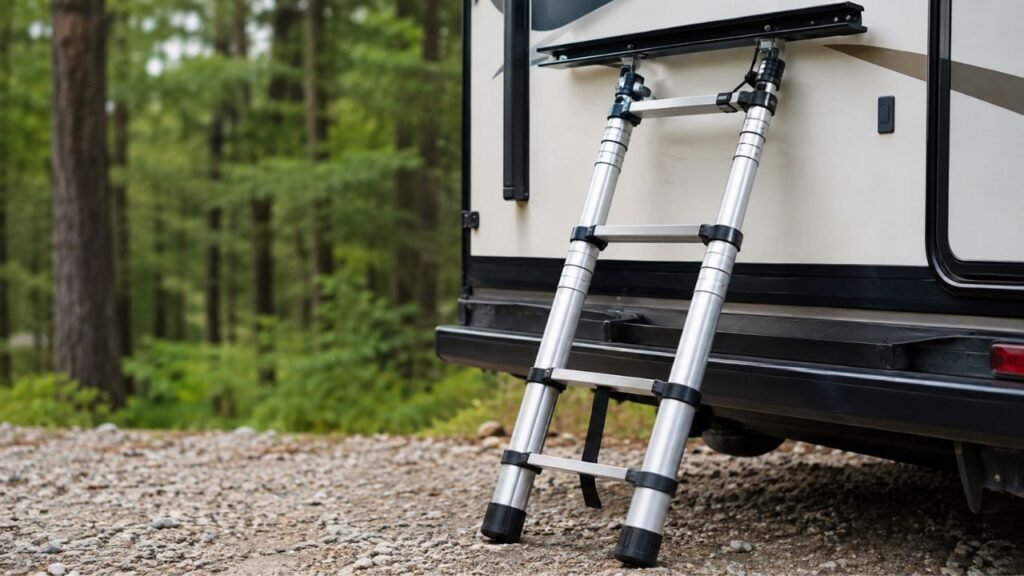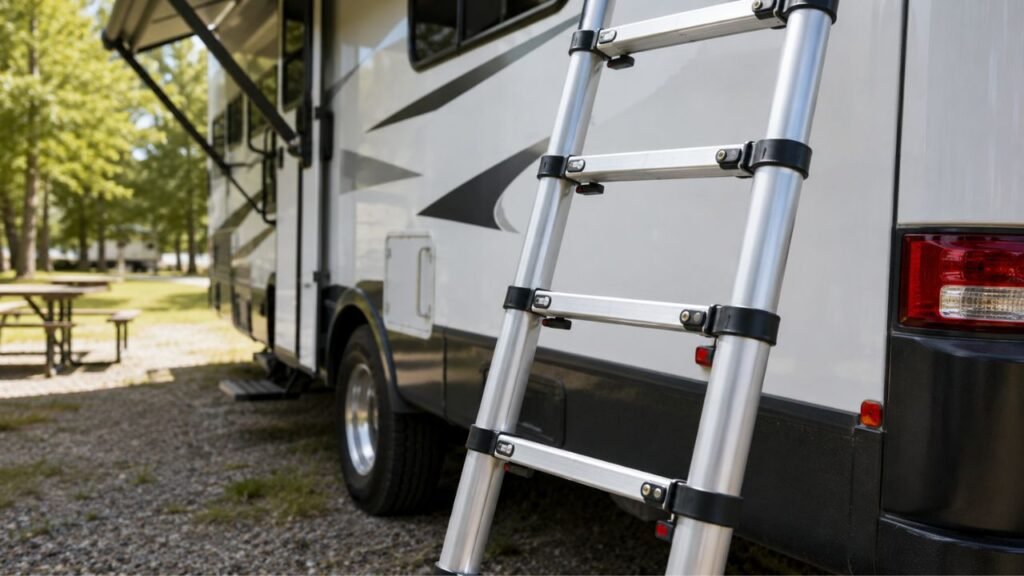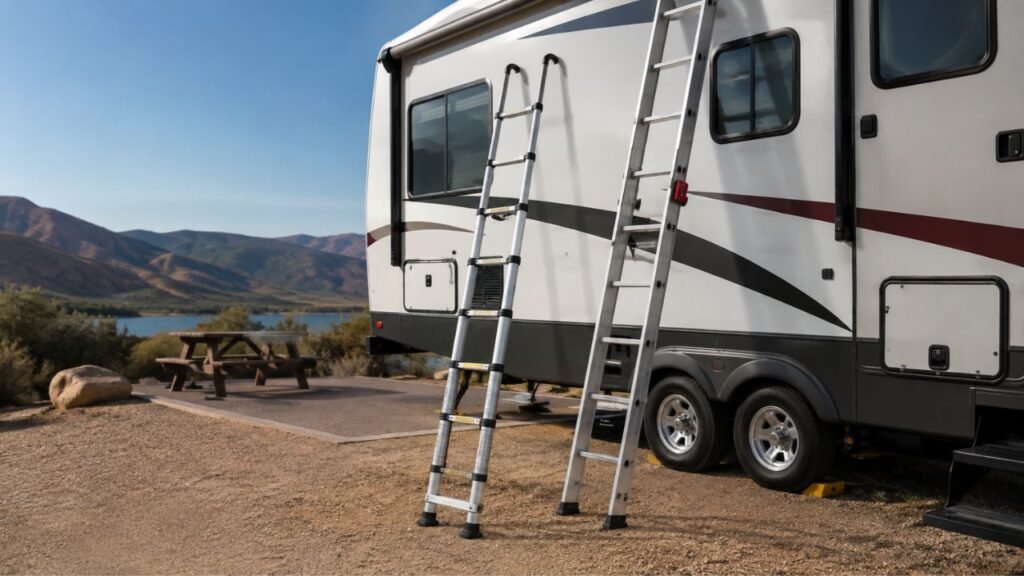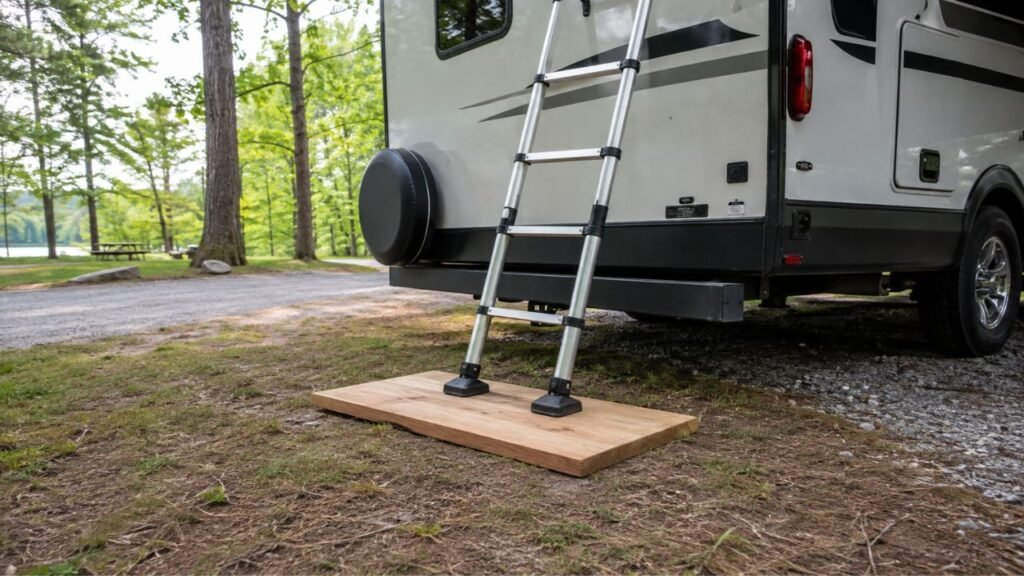
You can stop RV ladder feet from sinking by placing the ladder on firm, level ground whenever possible. If the soil is still slightly soft, use a wide, rigid board or compatible ladder base support beneath both feet to spread the load across a larger area.
In this guide, I’ll show you how to handle wet grass, dirt, gravel, sand, and uneven campsite surfaces. I’ll also explain which supports work well, which ones can create new problems, and when you should simply move the ladder.
Key Takeaways
- Start with firm, level ground before adding any support.
- A wide, rigid base helps distribute ladder weight.
- Rubber ladder feet improve grip but may still sink.
- Soft ground and uneven ground need different solutions.
- Use ladder levelers only when compatible with your ladder.
- Avoid stacking loose blocks under individual ladder feet.
- Move the ladder if the ground keeps settling.
- Inspect telescoping locks and ladder feet before climbing.
Why Do RV Ladder Feet Sink Into Campsite Ground?
RV ladder feet sink because your weight gets concentrated into two relatively small contact points. Soft soil may look solid until you actually begin putting weight on the ladder.
This is especially common after rain, irrigation, or several days of campground traffic. Wet grass can hide soft soil underneath, while sand and loose gravel may shift even when they initially look level.
The problem can become worse with a leaning ladder. Your weight pushes downward while the ladder also places outward pressure near the base. If one foot sinks faster than the other, the ladder can tilt or move unexpectedly.
Rubber feet help with traction, but they do not necessarily spread weight very far. That means a ladder can have excellent rubber grips and still sink into soft ground.
What Should You Put Under RV Ladder Feet?
The right support depends heavily on the campsite surface. I would not use the same setup on wet grass that I would use on concrete or compacted gravel.
| Campsite Surface | Better Approach | Main Concern | What to Avoid |
| Firm dry grass | Use ladder feet directly, or add a rigid board if needed | Minor settling | Loose stacked blocks |
| Wet or soft grass | Wide, rigid load-spreading board | Sinking | Thin flexible mats alone |
| Firm dirt | Rigid board if the feet begin sinking | Concentrated pressure | Small rocks as shims |
| Sand | Very wide rigid support or move locations | Deep settling | Narrow individual pads |
| Loose gravel | Find compacted ground first | Rolling and shifting | Resting feet on loose stones |
| Mud | Move to firmer ground | Ongoing sinking | Adding more loose blocks |
| Sloped ground | Relocate or use compatible levelers | Uneven foot height | Makeshift stacking |
| Concrete or asphalt | Clean rubber ladder feet | Slipping | Loose material beneath feet |
The main goal is always the same. Both ladder feet need stable, secure contact without sinking, rocking, or shifting when you begin loading the ladder.
Best Ways to Stop RV Ladder Feet From Sinking
There are several ways to improve ladder footing at a campsite, but they are not interchangeable. I recommend matching the solution to the actual problem instead of adding random blocks underneath the ladder.
Use a Wide, Rigid Board to Spread the Load
A wide board is one of the simplest ways to prevent ladder feet from sinking into moderately soft ground.
The idea is straightforward. Instead of concentrating your weight into two small ladder feet, the board spreads that force across a larger area of soil.
Choose a board that is solid, flat, and stiff enough that it does not bend noticeably under the ladder. Both feet should sit completely on the supported surface.
Place the board directly against the ground. Make sure it is not balancing across rocks, roots, holes, or clumps of soil.
Before climbing, apply gentle pressure to the ladder. Watch whether the board moves, rocks, or begins sinking.
If the board itself keeps settling, the ground is probably too soft. Moving the ladder is usually safer than trying to build a larger makeshift platform.
Use a Purpose-Built Ladder Footing or Stabilizing Device
Some ladder systems can accept dedicated footing accessories, stabilizer bars, replacement feet, or levelers.
These can be useful because they are designed around ladder stability rather than RV leveling.
However, compatibility matters.
Do not assume an accessory made for one extension ladder will fit an RV telescoping ladder. Ladder rails, foot shapes, locking mechanisms, and load ratings can differ considerably.
Check the instructions for your specific ladder before installing anything on the feet.
Use Spiked Feet Only When Your Ladder Is Designed for Them
Some traditional ladders have reversible feet that can expose spikes for use on appropriate soil.
Those spikes can improve grip on certain outdoor surfaces, but they are not a universal RV ladder solution.
Many telescoping RV ladders have fixed molded rubber feet. You should not drill, cut, or modify those feet simply to add spikes.
If your ladder includes a manufacturer-approved spike position, follow its instructions carefully. Otherwise, leave the original feet unchanged.
Use a Compatible Ladder Leveler for Firm but Uneven Ground
A ladder leveler addresses a different problem than a board.
A wide board helps prevent sinking. A leveler helps compensate for reasonable height differences when the ground is firm but uneven.
For example, you might have solid campsite ground where one ladder foot naturally sits slightly lower.
A compatible leveler may help in that situation.
It should not be used as an excuse to set up on mud, loose sand, or unstable soil. The ground beneath the leveler still needs to support the ladder properly.
How Do You Set Up an RV Telescoping Ladder on Soft Ground?
A few extra minutes spent checking the base can prevent a lot of trouble later. Here is the setup process I recommend whenever the campsite surface looks questionable.
- Inspect the ground before extending the ladder.
- Look for mud, soft grass, holes, loose gravel, roots, and depressions.
- Move to firmer and flatter ground when possible.
- Place a wide rigid support on the ground if sinking is likely.
- Make sure the support sits flat without rocking.
- Position both ladder feet fully on the supported area.
- Extend the ladder according to its instructions.
- Confirm every required telescoping lock is engaged.
- Set the ladder at the recommended climbing angle.
- Secure any approved upper RV receiver or attachment point.
- Apply light pressure while standing near the bottom.
- Watch both feet carefully for movement or sinking.
- Reset the ladder if one side settles.
- Climb only after the base remains completely stable.
Never use the first step onto the ladder as your stability test. Check the setup while you are still close enough to the ground to correct it safely.
Can You Use RV Leveling Blocks or Jack Pads Under Ladder Feet?
RV leveling blocks and jack pads may look like an obvious solution, but I would not automatically use them under a portable ladder.
Jack pads are mainly designed to spread static loads from leveling jacks, stabilizers, or tongue jacks. A leaning ladder behaves differently because it depends on stable footing and resistance against movement.
Small leveling blocks can also introduce another surface that may rock or shift.
The risk increases when several pieces are stacked together. Individual layers can move separately, especially on grass, gravel, or uneven soil.
If a specific pad is rated and recommended for ladder footing, follow the product and ladder instructions. Otherwise, a single rigid load-spreading surface is usually easier to evaluate.
Most importantly, never stack blocks simply to make the ladder reach higher. Use a ladder that is long enough for the job.
Why Rubber Ladder Feet May Still Sink
Rubber ladder feet are very useful, but they solve a different problem than soft soil.
Their main purpose is usually to provide grip against the surface beneath them. This works well on firm concrete, asphalt, or another solid base.
On wet grass or soft dirt, however, the entire rubber foot can push into the soil.
The foot may not slide, yet the ladder can still become unstable because one side settles deeper than the other.
Check the rubber feet before every setup. Remove mud, stones, grease, and other debris. Replace damaged or badly worn feet according to the ladder manufacturer’s instructions.
A good rubber foot needs good ground underneath it.
How Should You Handle Different Campsite Surfaces?
Campsites vary more than people often realize. A ladder setup that feels secure on one site may be completely unsuitable just a few feet away, so it helps to treat each surface differently.
Wet Grass
Wet grass deserves extra attention because the turf can hide very soft soil.
Push lightly against the ground with your boot before setting up. If your shoe sinks noticeably, expect the ladder feet to do the same.
A wide rigid board may help when the soil is only moderately soft.
After placing the ladder, load it gradually and watch the board. If water comes to the surface or the board continues dropping, move somewhere firmer.
Loose Gravel
Loose gravel can create both sinking and sliding problems.
Individual stones may roll away from the ladder feet when pressure increases.
Look for a section of compacted gravel where the stones are tightly packed. Remove obvious loose rocks directly beneath the feet.
If the surface continues shifting during your test, choose another location.
Sand
Sand can be difficult because it may continue settling after the ladder initially looks stable.
A larger rigid support can distribute the weight better, but the support itself still needs to remain level.
Do not rely on two small individual pads if they can sink at different rates.
If you cannot create a stable, consistent base, move the ladder to firmer terrain.
Mud or Saturated Soil
Mud is one surface where I would usually recommend moving the ladder rather than trying to fix the base.
A board may initially help, but saturated soil can continue moving underneath it.
If the board starts sinking or tilting as you apply pressure, do not keep adding blocks.
Find a better location and reset the ladder.
Sloped Campsites
A sloped campsite creates a leveling problem in addition to possible sinking.
Avoid placing one foot on a pile of scrap wood, stones, or RV blocks to make the ladder look level.
Move the ladder to flatter ground whenever possible.
If your ladder supports a proper manufacturer-compatible leveler, you can use it within the limits given in the instructions.
What Should You Never Put Under RV Ladder Feet?
Some campsite materials may seem convenient, but convenience should not come before stability.
Avoid putting these items beneath ladder feet:
- Loose bricks
- Rounded rocks
- Small unsecured pavers
- Stacked pieces of scrap lumber
- Tall stacks of RV leveling blocks
- Thin plywood that bends under pressure
- Rotten or cracked wood
- Soft foam used as the only support
- Flexible rubber mats used to solve deep sinking
- Different loose supports under each ladder foot
- Anything added only to increase ladder height
If your setup requires several improvised pieces just to keep the ladder standing, I would consider that a sign to relocate.
When Is the Campsite Ground Too Soft for a Ladder?
Sometimes there is no accessory that can make the location suitable. Knowing when to stop is an important part of safe ladder setup.
Watch for these warning signs:
- One ladder foot leaves a deep impression.
- One side sinks faster than the other.
- A supporting board rocks when loaded.
- The entire board begins sinking.
- Water appears around the base.
- Gravel continues moving under pressure.
- The ladder angle changes after setup.
- The feet shift when you gently load the ladder.
- One foot cannot maintain full contact.
- You need multiple improvised supports to stay level.
A wider base can improve reasonably soft ground. It cannot turn unstable ground into stable ground.
Sometimes moving the ladder three or four feet is the simplest solution.
Does an RV Ladder Receiver Prevent the Feet From Sinking?
An RV ladder receiver can improve stability at the upper end, but it does not replace proper footing at the bottom.
Some telescoping RV ladders connect to receiver brackets mounted on the RV. That attachment can help limit unwanted movement near the top.
However, your body weight still travels through the ladder and into the ground.
If one lower foot sinks, the ladder can tilt even while the upper portion remains attached.
Treat the receiver as one part of the setup. You still need firm ground, properly positioned feet, and a stable climbing angle.
Check These Things Before You Climb
A quick inspection can catch most footing problems before your weight is several feet above the ground.
Check the following before climbing:
- Ground feels firm enough to support the ladder.
- The ladder base is level.
- Neither foot is sinking.
- Both feet make full contact.
- Any supporting board sits flat.
- The board does not rock.
- Ladder feet are clean and undamaged.
- Telescoping locks are fully engaged.
- Ladder angle follows the manufacturer’s guidance.
- Any approved RV receiver is properly connected.
- The ladder is within its rated load capacity.
- Rain, wind, and other conditions are suitable.
- The climbing area is clear.
- You can maintain three points of contact.
- The RV roof is suitable for the access you intend.
Do not rush this check just because you have used the ladder many times before. Ground conditions can change even at the same campsite.
Final Words
The easiest way to stop RV ladder feet from sinking is to begin with the best ground you can find. Firm and level footing should always come before accessories.
If the soil is only slightly soft, a wide, rigid board can help spread the load and keep both feet supported. When the problem is uneven ground, use a compatible ladder leveler rather than improvised stacking.
Most importantly, do not keep modifying a setup that continues moving. If the feet, board, or soil will not remain stable during a controlled test, relocate the ladder before climbing.
Related FAQs
Here are a few common questions RV owners have when setting up portable ladders on campsite surfaces.
Can I Put Plywood Under RV Ladder Feet?
Yes, sturdy plywood can help spread the ladder load on moderately soft ground. It needs to be rigid enough not to flex noticeably and large enough for both feet to remain fully supported.
How Wide Should a Board Under Ladder Feet Be?
There is no single board size that works for every ladder. The board should extend beyond the ladder feet, remain rigid under load, and provide enough surface area to stop the soil from settling.
Can You Use a Telescoping Ladder on Grass?
Yes, you can use a telescoping ladder on firm, level grass when the ladder manufacturer allows outdoor use. Check the soil beneath the grass first because wet or loose ground can cause the feet to sink.
Can You Use an RV Ladder on Gravel?
You can use an RV ladder on firm, compacted gravel if both feet remain stable. Avoid loose stones that roll or shift when the ladder is loaded.
Are Rubber Ladder Feet Enough for Soft Ground?
Not always. Rubber feet provide grip, but their contact area may still be too small for wet soil, sand, or soft grass. A rigid load-spreading base may be necessary.
Can I Put RV Leveling Blocks Under a Ladder?
I would only use them when the block manufacturer and ladder instructions specifically support that application. Loose or stacked leveling blocks can rock or shift beneath a leaning ladder.
Are Spiked Ladder Feet Better on Dirt?
Spiked feet can provide useful grip on suitable soil when they are built into the ladder design. Never add makeshift spikes or modify fixed rubber feet on an RV telescoping ladder.
How Do You Stabilize a Ladder on Uneven Campsite Ground?
Start by moving to the flattest firm area available. If the ground is firm but slightly uneven, use a manufacturer-compatible ladder leveler rather than stacking loose materials under one foot.
Can You Use a Telescoping Ladder on Sand?
You may be able to use one on firm sand with a sufficiently wide, rigid base, but loose sand can keep settling. If the support does not remain stable during testing, move to firmer ground.
Should Both Ladder Feet Be on the Same Board?
Using one wide board beneath both feet can create a more consistent support surface than separate small pads. The board still needs to lie flat and remain rigid without sinking or rocking.
Does a Lippert Ladder Receiver Make Soft Ground Safe?
No. A ladder receiver helps secure the upper portion of the ladder, but the lower feet still require stable, level support. Soft or sinking soil must still be addressed before climbing.

Jack Collins specializes in RV routes, trail access, and travel logistics. His how-to articles help RV and trailer owners plan smoother trips and avoid common mistakes. Every review focuses on performance, safety, and value.