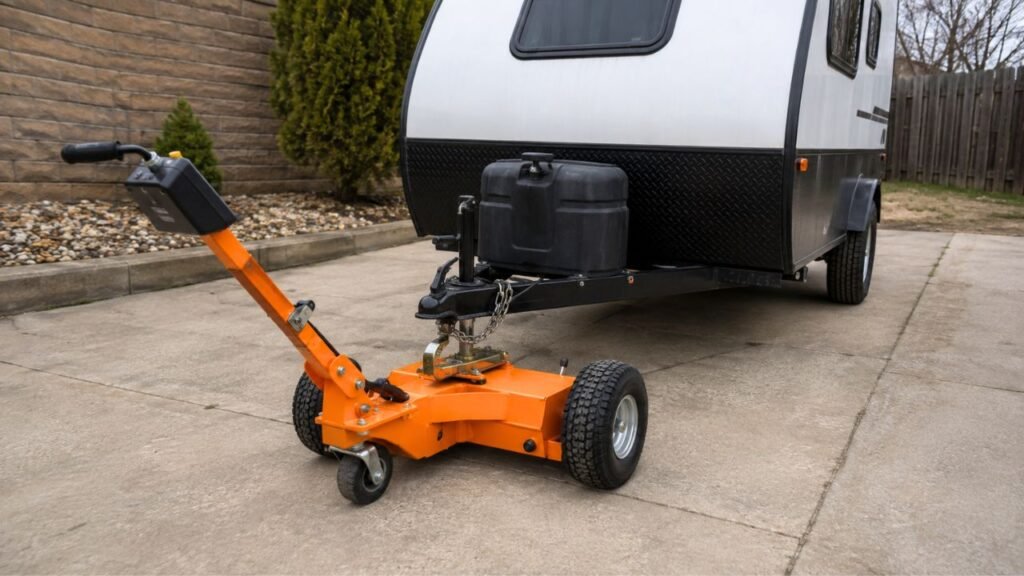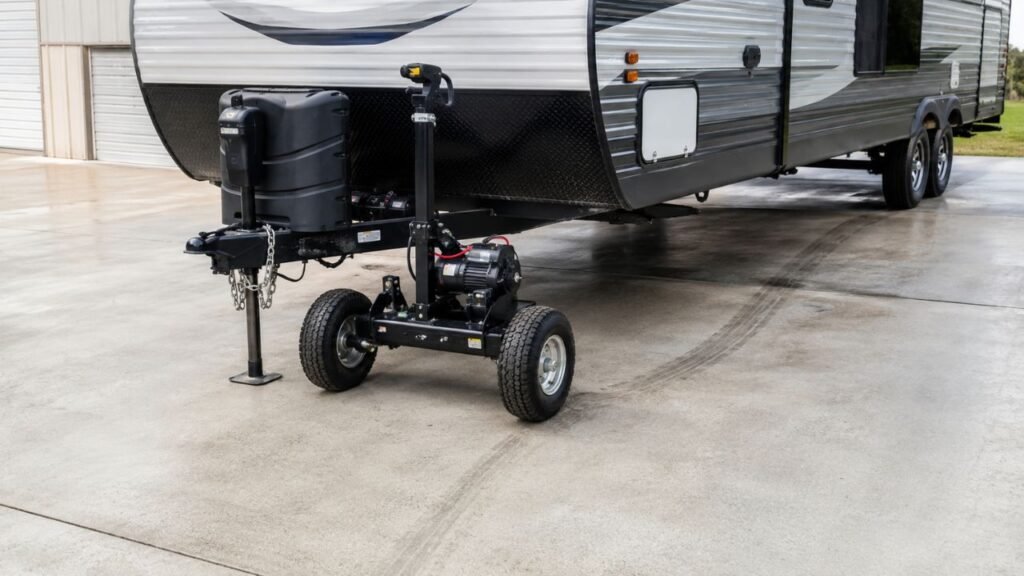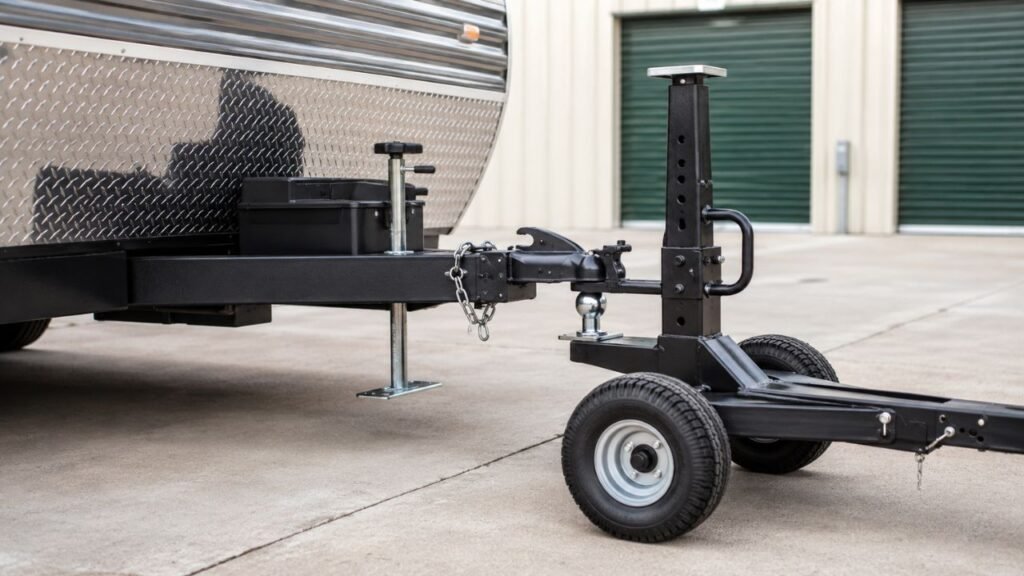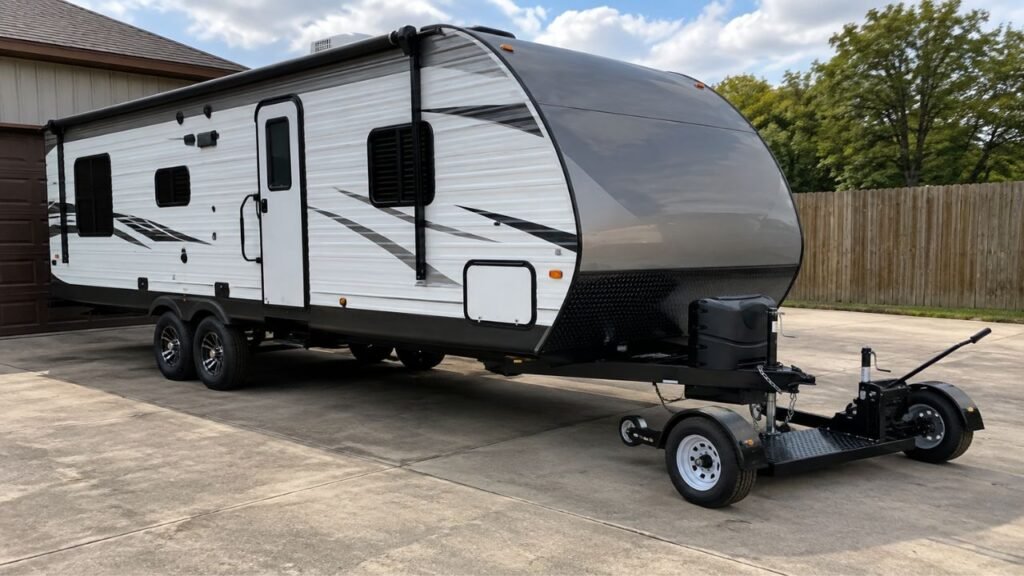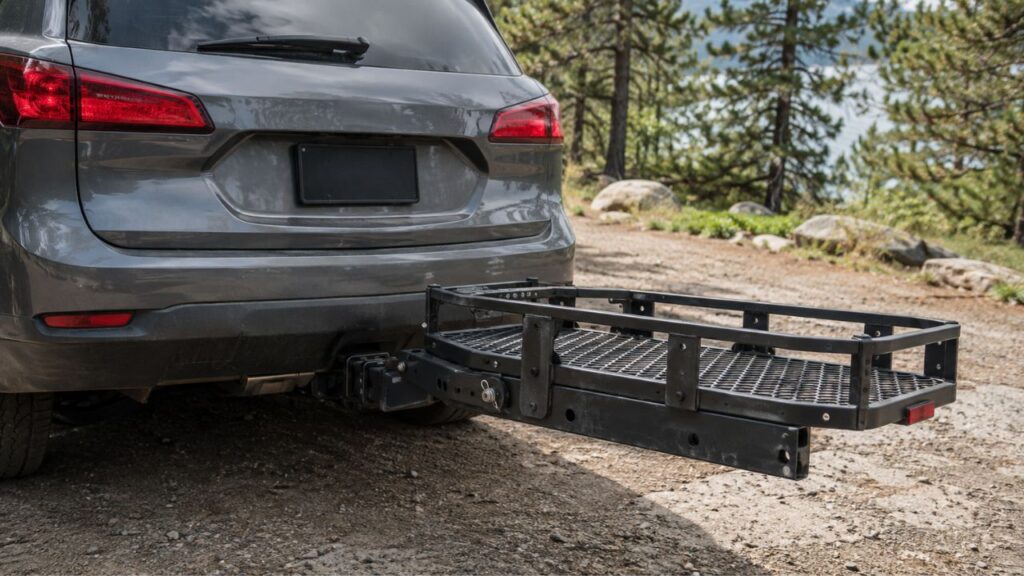
A folding hitch carrier latch usually sticks because weight binds the locking pin, the holes become misaligned, or rust and road debris seize the moving parts. A bent pin, worn bracket, or damaged latch spring can also prevent smooth release.
The good news is that many stuck latches can be freed safely. I’ll show you how to identify the cause, release the mechanism, inspect for damage, and keep it from sticking again.
Key Takeaways
- Remove all cargo before working on the folding mechanism.
- Support the carrier so its weight does not bind the pin.
- Slight lifting or lowering often releases a stuck folding pin.
- Rust, road salt, sand, and grime commonly cause sticking.
- A rotating pin that will not slide may be bent.
- Worn holes or metal burrs can repeatedly trap the pin.
- Never drive unless every required locking part fully engages.
- Stop forcing the mechanism if you notice structural damage.
What Part of Your Folding Hitch Carrier Is Actually Stuck?
Before reaching for lubricant or a hammer, identify the stuck part first. Different components require different fixes, and forcing the wrong one can make things worse.
A folding hitch cargo carrier may have several locking components:
- Folding pin: Passes through aligned holes to hold the platform.
- Retaining clip: Keeps the main folding pin from sliding out.
- Spring-loaded latch: Releases automatically or through a handle.
- Pivot bolt: Allows the platform to rotate up or down.
- Receiver hitch pin: Secures the carrier shank inside the receiver.
- Hitch lock: Replaces a standard receiver pin with a keyed lock.
- Anti-rattle device: Tightens the carrier inside the hitch receiver.
For this article, I’m mainly talking about the mechanism that lets your cargo platform fold upward or return to its carrying position.
That is different from a trailer coupler latch. Trailer couplers connect to hitch balls, while folding cargo carriers normally use pins, brackets, hinges, or spring-loaded locking systems.
Why Is My Folding Hitch Carrier Latch Stuck?
Several small problems can create the same frustrating symptom. The key is noticing exactly how the latch behaves before applying more force.
The Carrier’s Weight Is Binding the Folding Pin
This is one of the most common causes.
Even an empty steel cargo carrier can weigh considerably. Its weight pulls against the folding bracket and creates sideways pressure on the locking pin.
That pressure can effectively clamp the pin inside its mounting holes.
You may notice the pin suddenly loosens when you lift the basket slightly. That usually means weight tension, rather than severe rust, caused the problem.
Cargo makes the situation worse.
If coolers, generators, totes, or camping equipment remain on the platform, the extra leverage can place much more pressure against the latch.
Always unload the carrier before attempting to release it.
The Pin Holes Are Slightly Misaligned
The folding pin normally passes through several aligned metal holes.
Those holes must line up closely before the pin moves freely.
A small shift can push one bracket against the pin. Sometimes the misalignment is barely visible, yet it creates enough pressure to stop removal.
This commonly happens when:
- The vehicle is parked on uneven ground.
- The carrier platform is leaning toward one side.
- Weight is distributed unevenly across the basket.
- The platform is not completely raised or lowered.
- Someone is pulling the pin while pushing the carrier incorrectly.
Try supporting the platform and changing its angle slightly.
You often need only a tiny movement to center everything again.
Rust or Corrosion Has Seized the Pin
Folding carrier hardware lives in a harsh location.
It sits behind your vehicle where rainwater, road spray, snow, salt, mud, and humidity constantly reach exposed metal.
Once protective paint or coating wears away, corrosion can develop quickly.
Rust may form between the pin and mounting hole where you cannot easily see it. The exposed end might look acceptable while the hidden section becomes badly corroded.
This problem is especially common after winter driving.
Road salt speeds corrosion significantly, particularly when the carrier remains mounted for weeks without cleaning.
Dirt and Road Debris Are Jamming the Mechanism
Not every stuck latch is rusty.
Sometimes the problem is simply dirt packed around the mechanism.
Common contaminants include:
- Sand
- Dried mud
- Road salt
- Dust
- Gravel particles
- Pollen
- Old grease
- Rust flakes
Grease can also trap dirt over time.
Eventually, the mixture becomes thick enough to make the latch feel gritty or unusually stiff.
Cleaning the mechanism thoroughly often improves movement before additional lubricant is applied.
The Folding Pin Is Bent
A folding pin should remain straight.
Unfortunately, years of vibration, heavy loading, rough roads, and repeated binding can slowly bend one.
A slightly bent pin can be surprisingly difficult to remove.
One useful clue is rotation.
If the pin turns but refuses to slide outward, bending or side pressure becomes more likely.
You may also notice shiny scrape marks along one side.
Do not keep hammering a visibly bent pin through the bracket. You could damage or enlarge the mounting holes.
The Pin Holes Are Worn or Have Metal Burrs
The holes themselves can wear with repeated use.
Every time the carrier shifts, vibrates, or bounces, the pin can contact the edges of those holes.
Over time, round holes may become slightly oval.
Small raised burrs can also form around their edges.
Those burrs may catch grooves, corrosion, or damaged areas on the pin during removal.
A carrier that repeatedly sticks in exactly the same position deserves closer inspection for this type of wear.
The Latch Spring or Release Mechanism Is Damaged
Some folding carriers use spring-loaded latches instead of simple removable pins.
These systems can develop different problems.
Possible failures include:
- A broken spring
- A weak spring
- A bent release handle
- A damaged detent
- Internal corrosion
- Loose mounting hardware
- Jammed internal parts
A release handle that suddenly feels unusually loose may indicate something disconnected internally.
One that refuses to move may have corrosion or mechanical damage.
Avoid taking apart a sealed latch unless your carrier manufacturer provides instructions.
Something Is Physically Blocking the Carrier
Sometimes the latch works perfectly.
The carrier simply cannot move far enough for the mechanism to release or engage.
Common obstacles include:
- Rear-mounted spare tires
- Vehicle bumpers
- Exhaust components
- Trailer wiring
- License plate brackets
- Added hitch accessories
- Mud flaps
- Aftermarket steps
Check the entire folding path before assuming the hinge is seized.
A carrier touching another component may remain under constant pressure.
Cold or Frozen Moisture Is Holding the Mechanism
Winter temperatures can create another problem.
Water collects around exposed folding pins and pivot areas. When temperatures drop below freezing, trapped moisture can lock those parts together.
Frozen road slush can create the same effect.
Do not pour boiling water onto cold metal.
Rapid heating is unnecessary and may create other problems.
Move the vehicle somewhere warmer when practical, then clean and dry the mechanism.
Folding Hitch Carrier Latch Troubleshooting Table
The way your latch behaves can quickly narrow down the cause. Use this table before trying more aggressive removal methods.
| What You Notice | Most Likely Cause | First Thing to Try | Possible Repair |
| Pin will not move at all | Rust or heavy binding | Support carrier and relieve pressure | Clean and lubricate |
| Pin turns but will not slide | Side pressure, bend, or burr | Change carrier angle slightly | Inspect pin and holes |
| Pin releases when basket lifts | Carrier weight binding | Support platform during removal | Usually no repair needed |
| Pin comes out but carrier stays rigid | Seized pivot or obstruction | Inspect hinge and clearance | Clean, lubricate, or repair |
| Carrier folds but pin will not reinsert | Hole misalignment | Adjust platform position | Inspect brackets |
| Latch feels gritty | Dirt or corrosion | Clean moving parts | Lubricate afterward |
| Problem appeared after winter | Salt corrosion | Clean and treat exposed metal | Replace damaged hardware |
| New carrier never aligned correctly | Assembly problem | Recheck installation | Contact manufacturer |
| Pin shows deep scoring | Wear or bending | Stop forcing it | Replace and inspect holes |
How Do You Free a Stuck Folding Hitch Carrier Latch?
Start with the least aggressive method and work gradually. The goal is releasing pressure first, not overpowering the mechanism.
1. Park on Firm, Level Ground
Choose a stable surface before touching the latch.
Put your vehicle in Park and engage the parking brake.
Level ground helps keep the carrier from twisting sideways while you work.
Avoid troubleshooting beside traffic or on a steep campsite slope.
2. Remove Everything From the Carrier
Unload the basket completely.
Do not leave storage bins or camping gear aboard because they appear lightweight.
Cargo adds leverage against the folding assembly.
Removing everything also makes the carrier easier to control once the latch releases.
This matters because the platform may move suddenly.
3. Support the Carrier Before Pulling the Folding Pin
This step solves many stuck-pin problems.
Hold the outer edge of the platform securely.
You can also use a stable support when the carrier is particularly heavy.
The goal is taking weight off the locking pin.
Keep your fingers away from gaps between folding brackets.
Those areas become serious pinch points once the mechanism releases.
4. Remove the Retaining Clip First
Check the small clip that holds the folding pin.
Depending on your carrier, this may be an R-clip, hairpin clip, cotter-style retainer, or locking clip.
Make sure it is completely removed.
A bent retainer can wedge itself against the main pin.
Clean away dirt if the clip feels stuck.
Do not pull aggressively at an angle because small clips can deform easily.
5. Lift or Lower the Carrier Slightly While Pulling the Pin
Now place gentle outward pressure on the folding pin.
At the same time, move the platform slightly upward.
If that increases resistance, lower it slightly instead.
You are searching for the point where all mounting holes line up.
When you find it, pin tension often disappears immediately.
You may feel the pin become loose before it starts sliding outward.
That is a strong sign the problem was mechanical binding.
6. Wiggle the Platform Side to Side
Sideways pressure can also trap a folding pin.
While supporting the platform, move it gently from side to side.
Keep those movements small and controlled.
You are not trying to shake the carrier aggressively.
The purpose is simply to center the brackets around the pin.
7. Clean Dirt From Around the Pin and Pivot
If the pin still refuses to move, inspect the surrounding area.
Use a stiff nylon brush or appropriate wire brush to remove loose contamination.
Wipe away:
- Dirt
- Rust flakes
- Old grease
- Road salt residue
- Sand
- Mud
Cleaning first helps lubricant reach the metal instead of soaking into grime.
Pay attention to both exposed ends of the pin.
8. Apply Penetrating Lubricant to Rusted Areas
Penetrating lubricant can help loosen corrosion around exposed metal pins.
Apply a small amount where the pin enters the bracket.
Treat both sides when accessible.
Allow time for the fluid to work into tight spaces.
Do not immediately soak the entire carrier.
More lubricant does not always mean faster release.
Afterward, repeat the lifting and alignment method.
9. Tap the Pin Gently
A light tap can help break surface corrosion.
A rubber mallet is generally better for controlled force.
Tap the pin while the carrier is properly supported.
Avoid hard sideways blows against thin folding brackets.
Do not repeatedly strike the pin with a large steel hammer.
Heavy impacts can mushroom the pin end or distort the surrounding holes.
10. Reposition the Carrier and Try Again
If nothing changes, stop pulling for a moment.
Move the carrier through a very small range.
Try slightly higher, slightly lower, then centered.
Sometimes the correct alignment point is surprisingly narrow.
Having another person support the platform can make this easier.
One person controls carrier position while the other works the pin.
11. Stop If the Pin or Bracket Looks Damaged
More force is not always the solution.
Stop when you see:
- A noticeably bent pin
- Deep scoring
- Cracked metal
- Distorted brackets
- Enlarged holes
- Missing weld material
- Severe rust pitting
At this stage, releasing the mechanism is less important than preserving its structural integrity.
What If the Pin Moves but Still Will Not Come Out?
A pin that rotates but refuses to slide gives you an important clue.
It probably is not completely frozen by corrosion.
Side-loading becomes more likely.
Support the carrier and carefully change the platform height while pulling outward.
If rotation changes resistance at certain positions, inspect for a bent pin.
A damaged pin may rotate around its curve while catching inside the bracket.
Metal burrs can create a similar feeling.
If the pin consistently stops at exactly the same location, do not keep forcing it.
Inspect the accessible hole edges closely.
A replacement pin may solve the problem, but damaged mounting holes require attention too.
What If the Pin Comes Out but the Carrier Still Will Not Fold?
If the locking pin comes out normally, the problem is probably elsewhere.
Focus on the actual folding hinge.
Rust may have formed around the pivot bolt or between overlapping metal plates.
Dirt can also build up around those surfaces.
Apply controlled pressure to the platform while watching the pivot.
Do not stand directly beneath the carrier.
Also check for physical interference.
A spare tire, bumper edge, exhaust pipe, or accessory may prevent the basket from moving through its normal arc.
If the hinge remains completely rigid after cleaning, inspect it for bending.
A damaged pivot should not be forced with a long pry bar.
That can turn a repairable hinge problem into structural damage.
What If My Carrier Folds but the Pin Will Not Go Back In?
When the carrier moves normally but will not lock, alignment is usually the first thing to check.
Possible causes include:
- The platform is not completely horizontal.
- The platform is not fully raised.
- The basket is leaning sideways.
- The vehicle is parked unevenly.
- Dirt is blocking a pin hole.
- The bracket has become slightly bent.
- The carrier was assembled incorrectly.
- A mounting hole has worn unevenly.
Support the basket and move it slightly while looking through the pin holes.
You may be able to see them shift into alignment.
Do not automatically drill the hole larger.
Those holes are part of the carrier’s locking system.
Removing material can increase movement and reduce proper pin engagement.
If a new carrier requires drilling just to make the factory folding pin fit, stop and review the installation instructions first.
Why Is the Latch Stuck on a Brand-New Hitch Carrier?
A new carrier should not have significant rust.
That changes the troubleshooting process.
Start by checking installation and assembly.
Look for brackets installed backward, bolts placed through incorrect holes, missing spacers, or hardware tightened in the wrong sequence.
Shipping damage can also bend a bracket slightly.
A few millimeters of distortion may be enough to prevent pin alignment.
Compare both sides of the folding assembly.
They should generally sit evenly unless the design intentionally differs.
Also check whether the carrier is fully inserted and secured inside the receiver.
If everything matches the installation instructions but the latch still refuses to align, contact the manufacturer before modifying anything.
Grinding or enlarging new components can make warranty support more difficult.
Should You Use WD-40 on a Stuck Hitch Carrier Latch?
A penetrating or water-displacing lubricant can help loosen exposed rusted pins.
It works best as part of the troubleshooting process, not as the entire solution.
First remove carrier pressure.
Then clean loose dirt before applying lubricant.
Otherwise, you may simply create an oily paste filled with road grime.
After freeing the mechanism, use the lubricant recommended by your carrier manufacturer for ongoing maintenance.
The correct product may differ depending on the component.
A plain steel folding pin and a keyed hitch-lock cylinder do not necessarily need the same lubricant.
Avoid flooding lock cylinders with heavy grease unless the lock manufacturer specifically recommends it.
What Should You Never Do With a Stuck Folding Carrier Latch?
A stubborn latch can make excessive force tempting. These methods can damage the carrier or create unnecessary safety risks.
- Do not work on the mechanism while the carrier is loaded.
- Do not place fingers between folding brackets.
- Do not crawl beneath an unsupported cargo platform.
- Do not use your vehicle to jerk the mechanism loose.
- Do not repeatedly strike the pin with heavy steel tools.
- Do not use excessive pry-bar pressure against thin brackets.
- Do not casually drill larger locking holes.
- Do not grind structural parts without manufacturer guidance.
- Do not drive when the required pin cannot engage.
- Do not ignore cracked welds or badly bent brackets.
- Do not substitute undersized hardware just because it fits easily.
If a pin requires destructive removal, structural inspection should follow.
The original problem may have already damaged the surrounding bracket.
When Should You Replace the Folding Pin or Latch?
Cleaning and lubrication cannot repair damaged metal. Once wear becomes significant, replacing affected parts is usually the safer option.
Consider replacement or professional inspection when you notice:
- A visibly bent folding pin
- Deep rust pitting
- Cracked hardware
- Damaged retaining-pin holes
- Severe pin scoring
- Enlarged mounting holes
- Oval-shaped holes
- Large metal burrs
- Broken latch springs
- Bent folding brackets
- Excessive carrier movement
- Repeated binding after proper cleaning
- A latch that will not stay fully engaged
Use hardware intended for your specific carrier whenever possible.
A generic pin may have the correct diameter but wrong usable length, retaining method, or strength rating.
If replacement parts are unavailable, ask the carrier manufacturer which hardware is appropriate.
Can You Drive With a Stuck Folding Hitch Carrier Latch?
Do not drive if the carrier cannot lock securely in its intended position.
Every required folding pin, retaining clip, latch, and hitch connection should be fully engaged before traveling.
There is an important difference between a stiff mechanism and an unlocked mechanism.
A latch that moves reluctantly but eventually locks correctly may simply need maintenance.
A latch that cannot engage its locking position creates another situation entirely.
Do not rely on straps, bungee cords, or cargo tie-downs as substitutes for structural locking hardware.
They are designed to restrain cargo, not replace a missing folding pin.
If you are unsure whether the carrier is secured properly, remove it or have the mechanism inspected before driving.
How to Prevent Your Folding Hitch Carrier Latch From Sticking Again
Preventive care is much easier than freeing a corroded pin roadside. A few minutes after dirty trips can save significant frustration later.
- Remove cargo before folding the carrier when appropriate.
- Wash road salt away after winter trips.
- Clean mud and sand from the folding mechanism.
- Dry exposed hardware after washing.
- Lubricate moving parts according to manufacturer guidance.
- Operate the folding mechanism periodically during storage.
- Inspect pins for bending and scoring.
- Check mounting holes for wear or burrs.
- Touch up chipped protective coating when appropriate.
- Replace badly corroded retaining clips.
- Store the carrier somewhere dry when possible.
- Remove the carrier during extended periods of non-use.
- Check clearance around spare tires and bumpers.
- Inspect the mechanism before long road trips.
Pay special attention after winter.
Salt can remain hidden between tightly fitted metal parts long after the carrier looks clean.
When Should You Stop Trying to Free the Latch Yourself?
There is a point where continued DIY troubleshooting becomes unnecessary risk.
Stop and seek professional or manufacturer assistance if you find cracked welds, significantly bent structural brackets, or badly elongated holes.
You should also stop if releasing the pin would require cutting or drilling structural hardware.
A carrier involved in a rear collision deserves careful inspection, even when the damage looks minor.
Likewise, repeated sticking after correct cleaning and alignment can indicate underlying wear.
Remember that freeing the latch is only half the job.
The mechanism must still lock securely afterward.
A carrier that folds again but no longer retains its pin properly is not repaired.
Final Words
Most stuck folding hitch carrier latches come down to pressure, alignment, contamination, or corrosion. Start by unloading and supporting the platform before applying lubricant or additional force.
Work through the problem gradually: unload, support, align, clean, lubricate, move gently, then inspect. If you find bent metal or damaged locking holes, replacement is safer than repeatedly forcing worn hardware.
Related FAQs
Why Does My Hitch Carrier Pin Turn but Not Come Out?
A pin that rotates but will not slide is often under sideways pressure. It may also be slightly bent or catching on worn hole edges. Support the carrier, adjust its angle slightly, and inspect the pin if the problem continues.
Why Won’t My Folding Cargo Carrier Lock in the Upright Position?
The locking holes may not be perfectly aligned. Lift the carrier completely, move it slightly side to side, and check for obstructions. A bent bracket or damaged pin can also prevent full engagement.
Can I Fold My Hitch Carrier While It Is Loaded?
It is generally safer to unload the carrier before folding it. Added cargo creates more leverage against the hinge and locking pin. Always follow the instructions supplied with your specific carrier model.
Can Road Salt Make a Hitch Carrier Latch Stick?
Yes. Road salt holds moisture against exposed steel and accelerates corrosion. Folding pins, clips, and pivot areas are especially vulnerable because road spray reaches them easily behind the vehicle.
Can I Hammer Out a Stuck Folding Hitch Pin?
Light tapping may help release minor corrosion after the carrier is supported. Heavy hammering can deform the pin or surrounding holes. Stop if gentle tapping produces no improvement.
Why Does My New Hitch Carrier Folding Pin Not Line Up?
Incorrect assembly, uneven bracket positioning, or minor shipping damage may cause poor alignment. Review the installation instructions and confirm every part is installed correctly before modifying any holes.
Can I Drill the Folding Pin Hole Larger?
You should not enlarge structural locking holes without manufacturer approval. Drilling can create excessive movement, weaken the surrounding area, and prevent the locking hardware from functioning as designed.
Should I Grease a Folding Hitch Carrier Pin?
Some folding pins benefit from appropriate lubrication, but follow your carrier manufacturer’s maintenance recommendations. Clean away dirt and road salt first so lubricant does not trap abrasive contamination around the pin.
How Do I Know If My Hitch Carrier Pin Is Bent?
Look for visible curvature, uneven scoring, and resistance that changes as the pin rotates. A bent pin may turn normally but bind while sliding through otherwise aligned mounting holes.
Why Does My Hitch Carrier Latch Keep Getting Stuck?
Repeated sticking often points to ongoing corrosion, worn mounting holes, a bent pin, poor alignment, or insufficient maintenance. Inspect the surrounding bracket instead of simply adding more lubricant every time.

Jack Collins specializes in RV routes, trail access, and travel logistics. His how-to articles help RV and trailer owners plan smoother trips and avoid common mistakes. Every review focuses on performance, safety, and value.